



Best Preschool Methods to Teach Five Senses to Your Kids
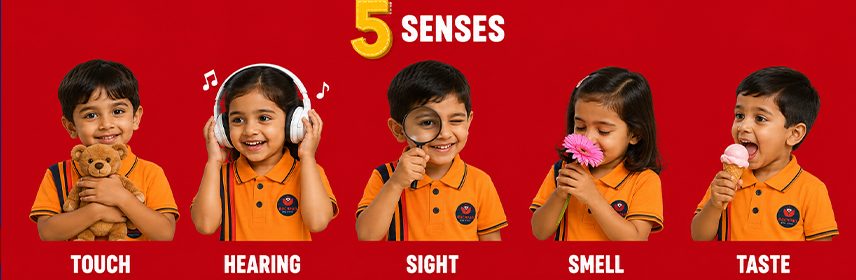
Children learn about the world through their senses from the very beginning. Understanding the five senses for kids helps them explore, observe, and interact with their surroundings more effectively. Through engaging activities and experiences, educators can teach the five senses to kids in enjoyable ways. Sensory exploration supports curiosity, confidence, and overall development, making it an essential part of early learning. Effective preschool methods for the five senses encourage children to discover, question, and learn through meaningful everyday experiences.
What Are the Five Senses? A Simple Explanation for Kids
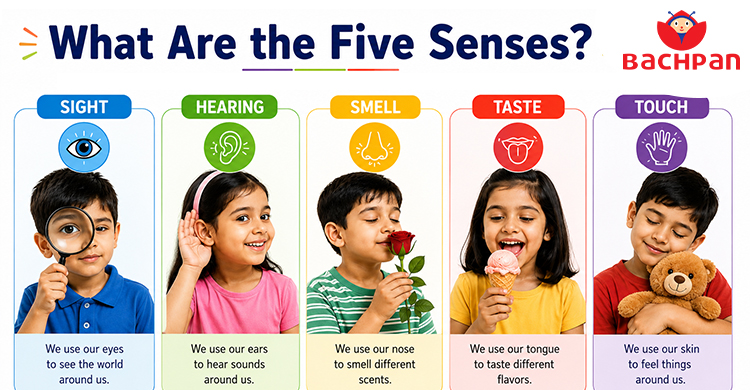
The five senses help children understand everything around them. They use their eyes to see, ears to hear, nose to smell, tongue to taste, and skin to touch. Together, these senses help young learners explore their environment and make sense of new experiences every day.
Sight – Learning Through Seeing
The sense of sight allows children to recognise colours, shapes, patterns, and movements. Through observation activities, picture books, and matching games, visual learning for kids becomes more engaging. Sight helps children identify objects around them and improves attention, memory, and early learning skills.
Hearing – Understanding Sounds Around Us
The sense of hearing helps children recognise voices, music, and environmental sounds. Listening games and sound activities for preschool encourage children to distinguish different noises. These experiences strengthen concentration, communication, and language development while making learning enjoyable and interactive every day.
Smell – Identifying Different Scents
The sense of smell introduces children to various fragrances found in everyday life. Flowers, fruits, spices, and foods provide exciting opportunities for exploration. Such sensory activities encourage children to compare scents, express observations, and build awareness of the world through meaningful experiences.
Taste – Exploring Flavours Safely
The sense of taste helps children identify sweet, salty, sour, and bitter flavours. Supervised tasting sessions and taste activities for kids make learning enjoyable while promoting healthy eating habits. These experiences encourage curiosity and help children safely understand different foods.
Touch – Feeling Textures and Objects
The sense of touch allows children to explore textures, temperatures, and surfaces. By handling soft fabrics, rough materials, or smooth objects, they develop awareness through direct experiences. Touch-based activities improve observation skills and help children better understand physical characteristics around them.
Why Teaching the Five Senses Is Important in Early Childhood
Sensory experiences are more than simple activities. They play a vital role in helping children understand information, build connections, and interact confidently with people and their surroundings during their formative years.
Cognitive Development Through Sensory Learning
Research highlights the role of sensory exploration in brain development. Sensory development in children supports problem-solving, memory, attention, and critical thinking. When children engage multiple senses simultaneously, they process information more effectively and develop stronger learning foundations for future academic success.
Emotional and Social Growth Using Sensory Activities
Sensory experiences encourage children to express feelings, communicate observations, and participate in group activities. Exploring together promotes cooperation, patience, and confidence. These interactions help children build relationships while developing emotional awareness and social skills that support positive behaviour and meaningful connections.
Best Preschool Methods to Teach Five Senses to Kids
Preschools use creative approaches that transform sensory learning into exciting experiences. Structured activities, exploration opportunities, and interactive lessons help children understand concepts naturally while remaining actively involved throughout the learning process.
Play-Based Learning Activities
Among the most effective play-based learning methods, sensory games encourage exploration through fun experiences. Many five senses activities for preschool involve sorting, matching, and identifying objects. These playful experiences keep children engaged while helping them learn through observation, participation, and discovery.
Hands-On Experiments and Sensory Play
Nothing captures attention like direct exploration. Hands-on learning for kids allows children to experiment, investigate, and discover independently. Activities involving water, sand, textures, and objects encourage sensory play, helping children develop observation skills while gaining confidence through active participation.
Storytelling and Visual Learning Tools
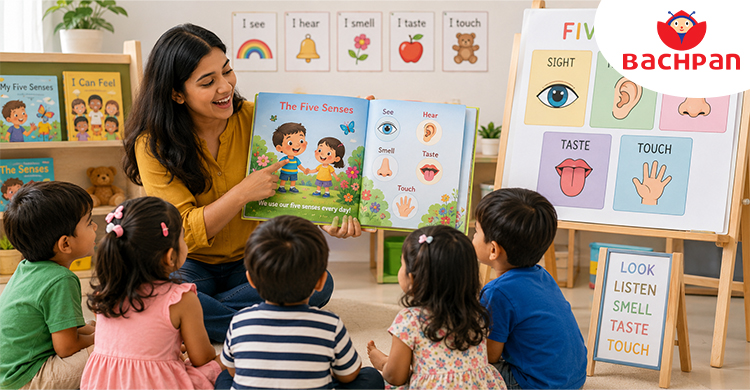
Stories bring sensory concepts to life by connecting learning with imagination. Many five senses lessons for kindergarten use books, flashcards, and visual aids to explain concepts clearly. Children understand ideas more easily when learning combines engaging narratives with visual exploration and discussion.
Music, Movement, and Sound Games
Music encourages active participation while strengthening listening skills. Activities focused on learning through sound help children recognise rhythms, patterns, and environmental noises. Fun hearing activities such as musical games, action songs, and sound identification exercises make learning memorable and enjoyable.
Five Senses Activities for Preschool and Kindergarten Kids
Practical activities help children connect sensory concepts with real-life experiences. Both indoor and outdoor environments offer valuable opportunities for exploration, discovery, and meaningful learning through observation and participation.
Indoor Five Senses Activities
Simple sensory activities at home or in classrooms can include texture baskets, scent jars, tasting stations, and observation games. These activities require minimal resources while encouraging children to use multiple senses, ask questions, and explore familiar objects in creative ways.
Outdoor Five Senses Learning Games
Nature offers endless opportunities for outdoor sensory play. Children can listen to birds, observe colours, smell flowers, feel natural textures, and explore different environments. Outdoor experiences stimulate curiosity while helping children connect sensory learning with the world around them.
How Bachpan Preschool Teaches Five Senses Effectively
At Bachpan, preschool sensory learning is integrated into everyday experiences. Children explore five senses in preschool through engaging activities designed to encourage observation, participation, creativity, and meaningful learning in an interactive environment.
Concept Rooms and Activity-Based Learning
Bachpan promotes exploration through activity-based learning experiences that encourage children to learn by doing. Specially designed preschool concept rooms provide interactive environments where young learners can engage with sensory materials, observe concepts practically, and develop a deeper understanding through participation.
Smart Classes and Interactive Tools
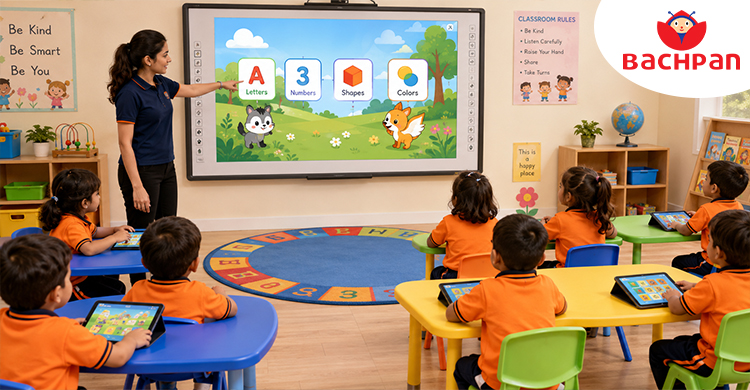
Technology enhances sensory exploration when used thoughtfully. Bachpan’s smart classes incorporate engaging visuals, sounds, and interactive content to support smart learning for kids. These tools make lessons more immersive, helping children understand concepts through multiple sensory experiences and active engagement.
Tips for Parents to Reinforce Five Senses Learning at Home
Parents play an important role in extending sensory learning beyond the classroom. Simple activities and conversations can help teach five senses to kids at home while making everyday experiences more meaningful and educational.
Simple Daily Activities Using the Five Senses
Encourage everyday sensory learning by involving children in cooking, gardening, nature walks, and household activities. Ask questions about what they see, hear, smell, taste, or touch. These simple interactions strengthen observation skills and help reinforce sensory concepts naturally throughout the day.
Conclusion: Making Five Senses Learning Fun and Meaningful
Sensory exploration helps children understand their surroundings, build confidence, and develop essential skills for lifelong learning. Learning five senses in preschool becomes more effective when children participate in engaging activities that encourage curiosity and discovery. Parents and educators can work together to teach the five senses to kids through play, observation, and meaningful experiences. By creating opportunities for sensory exploration, children gain a stronger understanding of the world while developing cognitive, social, and emotional skills that support future growth.