


Animal Sounds: 50 Animals and Their Sounds
Have you ever heard a dog barking, a cow mooing, or a bird chirping? Children hear different animal sounds every day, but do they know which animal makes each sound? Learning about animal sounds is a fun way to introduce little ones to the animal world and build their vocabulary. From familiar pets to wild animals, every animal communicates in its own way. In this blog, let’s explore 50 animals, the sounds they make, and some fun ways to help children remember them!
What Are Animal Sounds?
What sounds do different animals make? Simply put, sounds of animals are the vocal noises or calls creatures use to communicate with one another. From a dog’s bark to a lion’s roar, these distinct sounds help animals express emotions, warn of danger, or talk to their young, providing a fun foundation for early learning.
50 Animals and Their Sounds in English
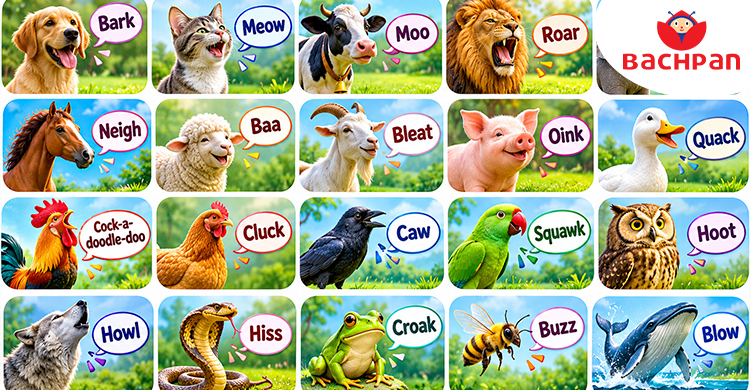
Animals make different sounds, and each sound has a name or a commonly used sound word. Below is a complete animals and their sounds chart for children. Use this handy list of animals and their sounds for kids to help early readers recognize common species and build vocabulary in English.
| No. | Animal Name | Sound Word | Sound They Make |
|---|---|---|---|
| 1 | Dog | Bark | Barks |
| 2 | Cat | Meow | Meows |
| 3 | Cow | Moo | Moos |
| 4 | Buffalo | Bellow | Bellows |
| 5 | Goat | Bleat | Bleats |
| 6 | Sheep | Bleat | Bleats |
| 7 | Horse | Neigh | Neighs |
| 8 | Donkey | Bray | Brays |
| 9 | Pig | Oink | Oinks |
| 10 | Hen | Cluck | Clucks |
| 11 | Rooster | Crow | Crows |
| 12 | Duck | Quack | Quacks |
| 13 | Goose | Honk | Honks |
| 14 | Turkey | Gobble | Gobbles |
| 15 | Pigeon | Coo | Coos |
| 16 | Sparrow | Chirp | Chirps |
| 17 | Crow | Caw | Caws |
| 18 | Owl | Hoot | Hoots |
| 19 | Parrot | Squawk | Squawks |
| 20 | Peacock | Scream | Screams |
| 21 | Lion | Roar | Roars |
| 22 | Tiger | Growl | Growls |
| 23 | Elephant | Trumpet | Trumpets |
| 24 | Monkey | Chatter | Chatters |
| 25 | Wolf | Howl | Howls |
| 26 | Fox | Bark | Barks |
| 27 | Bear | Growl | Growls |
| 28 | Deer | Bleat | Bleats |
| 29 | Giraffe | Bellow | Bellows |
| 30 | Zebra | Bray | Brays |
| 31 | Hyena | Whoop | Whoops |
| 32 | Rhinoceros | Snort | Snorts |
| 33 | Hippopotamus | Grunt | Grunts |
| 34 | Camel | Grunt | Grunts |
| 35 | Rabbit | Squeak | Squeaks |
| 36 | Mouse | Squeak | Squeaks |
| 37 | Rat | Squeak | Squeaks |
| 38 | Squirrel | Chatter | Chatters |
| 39 | Frog | Croak | Croaks |
| 40 | Toad | Croak | Croaks |
| 41 | Snake | Hiss | Hisses |
| 42 | Lizard | Chirp | Chirps |
| 43 | Crocodile | Growl | Growls |
| 44 | Dolphin | Click | Clicks |
| 45 | Whale | Sing | Sings |
| 46 | Seal | Bark | Barks |
| 47 | Sea Lion | Bark | Barks |
| 48 | Bat | Squeak | Squeaks |
| 49 | Bee | Buzz | Buzzes |
| 50 | Mosquito | Whine | Whines |
Domestic Animals and Their Sounds
Exploring domestic animals and their sounds helps children connect with creatures they see around homes and farms daily. Let’s look closer at these familiar, friendly animal noises and their distinct categories.
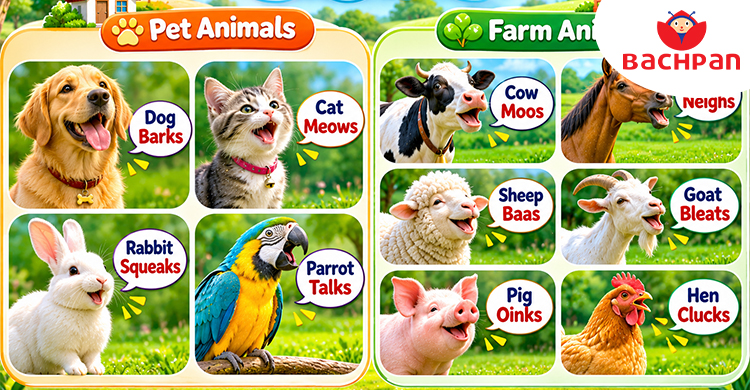
Pet Animals and Their Sounds
Pet animals and their sounds are usually the very first noises toddlers learn to imitate. Gentle cats meow, loyal dogs bark, and soft rabbits squeak. Learning these animal names and sounds builds warmth, empathy, and vocabulary as young learners interact with loving family pets in their everyday environment.
Children can also learn more about the animal world by discovering animals and their baby names, helping them recognise different species and expand their vocabulary.
Farm Animals and Their Sounds
Have you ever visited a farm? It is full of interesting animals and sounds! Cows moo, goats bleat, hens cluck, and horses neigh. These are some common farm animals and their sounds that children can easily learn through pictures, stories, and activities. Knowing these sounds also helps children become familiar with farm life and the animals that live there.
Wild Animals and Their Sounds
Wild animals live in forests, jungles, and grasslands, where they find their own food and shelter. Learning about wild animals and their sounds helps children explore different animal names, recognise their sounds, and understand more about the world of wildlife.
Big Cats and Other Large Animals
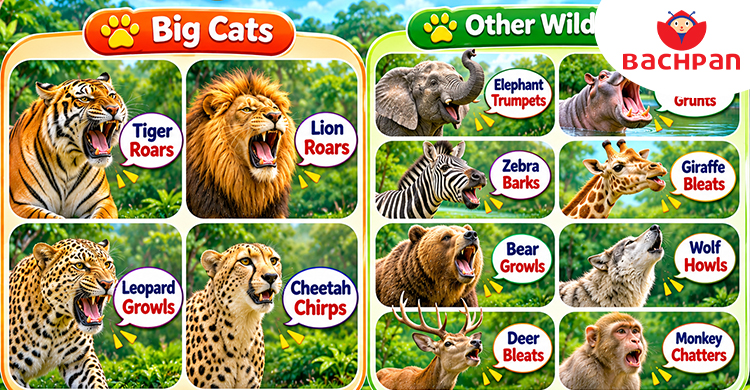
Mighty jungle creatures make powerful noises that fascinate young minds. Powerful lions roar, fierce tigers growl, giant elephants trumpet, and big rhinos snort. Introducing these impressive animal sounds names teaches children how large mammals express strength and communicate across huge distances in the wild.
Other Wild Animals and Their Sounds
Not all wild animals make loud sounds; smaller and exotic creatures have unique sounds of their own. Wolves howl under the moon, playful monkeys chatter in trees, snakes hiss softly, and dolphins communicate using clicks and whistles. Exploring different animals and their sounds makes learning about wildlife more engaging for kids while encouraging curiosity about nature.
Parents can make wildlife learning more interesting by introducing short animal stories for kids that feature animal characters and teach children simple values through storytelling.
Birds and Their Sounds
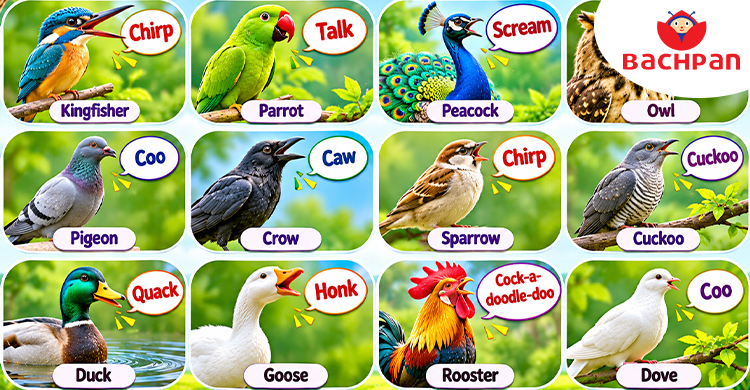
Feathered friends add wonderful melody to the natural world. Pigeons coo gently, sparrows chirp sweetly, crows caw loudly, and owls hoot softly in the night. Parrots, on the other hand, are known for their loud calls and their ability to mimic different sounds. Teaching these animal names and their sounds encourages children to step outside, listen closely to nature, and enhance their auditory awareness through fun animal sound activities for nursery kids.
Parents can also introduce nursery rhymes for kids to help children enjoy familiar sounds, rhythms, and words while developing their listening skills.
How to Teach Animal Sounds to Preschoolers
Young children learn best when they can see, hear, and experience something for themselves. Instead of simply asking them to memorise animal names, parents can introduce animal sounds for kids through simple games and everyday activities. Here are a few easy ways to make learning enjoyable.
Use Animal Pictures and Flashcards
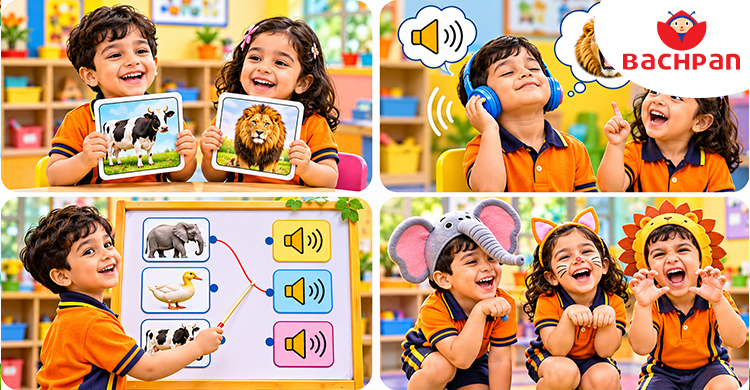
Pictures make it easier for children to recognise different animals. Show them colourful animal flashcards and say the animal’s name along with its sound. For example, point to a picture of a dog and say, “A dog barks!” Repeat the activity with different animals. This simple method helps children connect animal pictures, names, and sounds while building their vocabulary.
Flashcards can be combined with other preschool activities for kids to make animal recognition, vocabulary building, and early learning more interactive.
Listen and Guess the Animal Sound
Turn learning into a little guessing game. Play recordings of different animal sounds and ask your child to identify the animal. Start with familiar sounds like a dog barking, a cat meowing, or a cow mooing. You can make the game more exciting by adding new sounds as your child learns. This activity sharpens listening skills and helps kids identify wild animals and their sounds effectively.
Parents can extend this guessing game with other fun learning activities at home to encourage children to learn through play and everyday experiences.
Match Animals with Their Sounds
Make two sets of cards: one with animal pictures and another with their sound words. Ask your child to match each animal with the correct sound. For example, match a lion with a roar and a duck with a quack. You can start with three or four animals and gradually add more. This activity makes learning interactive and helps children remember animal names and sounds.
Play an Animal Sound Imitation Game
Children love pretending to be their favourite animals. Ask your little one to pick an animal and make its sound. They can bark like a dog, roar like a lion, or quack like a duck. You can also take turns guessing which animal they are pretending to be. This playful activity encourages self-expression, builds confidence, and makes learning memorable.
Animal Sounds Quiz for Kids
Let’s see how well you know animal sounds! Read each question and choose the correct answer.
1. Which animal says “Meow”?
a) Dog
b) Cat
c) Cow
d) Horse
2. What sound does a dog make?
a) Bark
b) Quack
c) Roar
d) Hoot
3. Which animal makes the sound “Moo”?
a) Goat
b) Sheep
c) Cow
d) Pig
4. What is the sound made by a lion called?
a) Chirp
b) Roar
c) Bleat
d) Coo
5. Which bird makes a “Quack” sound?
a) Crow
b) Parrot
c) Duck
d) Owl
6. What sound does a horse make?
a) Neigh
b) Oink
c) Buzz
d) Hiss
7. Which animal is known for howling?
a) Rabbit
b) Wolf
c) Cow
d) Hen
8. What sound does a frog make?
a) Croak
b) Bark
c) Meow
d) Trumpet
9. Which insect makes a buzzing sound?
a) Butterfly
b) Ant
c) Bee
d) Ladybird
10. What sound does an owl make?
a) Hoot
b) Cluck
c) Bray
d) Gobble
FAQs About Animals and Their Sounds
Animal sounds are noises that animals make to communicate with each other; it’s their language to express needs, attract mates, or signal warnings to others. For example, dogs bark, cats meow, and cows moo.
A dog makes a barking sound, commonly called a bark. Dogs may also whine, growl, or howl depending on how they feel.
The sound made by a lion is called a “Roar”. Lions use their loud roars to communicate with other lions and mark their presence.
Ducks make a quacking sound (“Quack”).
A cow makes a mooing sound (“Moo”).
Domestic animal sounds include the meow of a cat, the bark of a dog, the moo of a cow, the bleat of a sheep, and the neigh of a horse.
You can teach animal sounds using visual flashcards, a colorful animal sounds chart, singing nursery rhymes, playing sound-guessing games, and fun imitation activities. Repeating the sounds through play helps children remember them more easily.
Learning animal sounds helps children develop phonics, improves listening skills, expands early vocabulary, and builds a joyful connection with nature.
Conclusion: Learning 50 Animals and Their Sounds
Learning about animals is always an exciting experience for little ones. From a dog’s bark to a lion’s roar, every sound introduces children to something new. Exploring animal sounds through pictures, games, and everyday conversations makes learning simple and enjoyable. It also helps build vocabulary, listening skills, and curiosity about the world around them. Parents can continue this learning journey with these learning activities for preschoolers at home to introduce more fun ways to develop children’s knowledge and skills. So, the next time your child hears an animal, encourage them to guess its name and sound. After all, little discoveries make learning a lot more fun!