


Sensory Activities for Babies: Easy Ideas for Ages 0-12 months
The first year of a baby’s life is the most crucial stage of development, laying the foundation for cognitive growth, sensory awareness, and early learning. Every new experience, from recognizing familiar voices to exploring different textures, helps babies understand their surroundings better. Sensory activities for babies offer simple and encouraging ways to promote this sense of curiosity within children. These activities can also be integrated into everyday routines using simple household items.
What Are Sensory Activities for Babies?
Sensory play or sensory activities are experiences where the baby learns and explores the world through sight, sound, taste, touch, and movement. These experiences are important for the baby’s development and enhance the child’s curiosity, coordination, and early learning skills for growth.
Benefits of Sensory Play for Babies
Sensory play is a crucial baby development activity. Activities like tummy time and gentle swaying to music are a great step towards faster development. Some amazing benefits are as follows.
Encourages Sensory Exploration
Encouraging sensory exploration is important as babies use their senses of sight, hearing, and touch to learn about the world. They can experience their surroundings in unique ways when they are exposed to a variety of textures, colors, forms, and sounds.
Supports Visual and Listening Skills
Children use their eyes and ears to process information and explore the world. Proper sensory play activities for babies, like looking at high-contrast pictures and listening to familiar voices, can encourage babies to notice changes in their environment.
Encourages Movement and Coordination
Sensory activities for babies like reaching for toys, kicking, and moving towards something familiar can maximize the physical coordination among toddlers and lead to early motor development and proper muscle control during playtime. Some activities, like tummy time on different surfaces, can also lead to a healthy growth over time.
Sensory play can also support the development of hand movements and coordination as children grow. Parents can try these fine motor activities to help children practise grasping, holding, and using their hands during play.
Builds Curiosity Through Everyday Experiences
Everyday experiences can become exciting learning opportunities for babies. Watching sunlight move, listening to birds, or exploring a soft toy are some good sensory activities for babies. These small play times encourage their curiosity and help them develop different senses.
Strengthens Parent – Baby Interaction
Sensory play between child and parent is both enjoyable and highly engaging, as it helps strengthen the bond between parent and child. When a parent plays with their child, babies are provided with soothing physical contact and familiar sounds.
Simple activities such as talking, cuddling, singing, and playing together can strengthen the parent-child relationship. Parents can explore these ways to bond with their child to make everyday interactions more meaningful.
Sensory Activities for Newborns (0-3 Months)
During the first three months, babies gradually become familiar with the people, sounds, and surroundings around them. Sensory play for infants should be gentle activities with simple visual and auditory experiences to follow the babies’ comfort and attention span.
Black-and-White Contrast Cards for Newborn
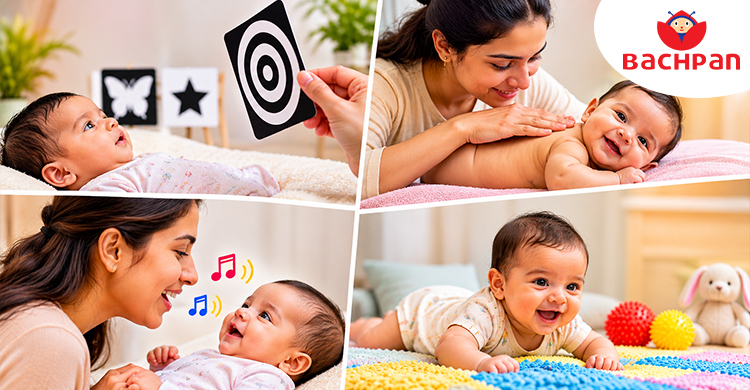
Simply hold a black or white card in front of your baby for some time, about 20-30 cm from their face, and then gently move it to their side. Allow them to observe the cards, then slowly move the card to their sides. This activity encourages visual attention and helps them track objects using their eyes.
Gentle Massage and Skin-to-Skin Time
A gentle massage can introduce your baby to comforting touches and proper sensation of the skin. Give your baby gentle massages with baby-safe body lotion and constant skin-to-skin contact for a gentle sense of nourishment. This activity encourages awareness of touch and a comfortable parent-baby bonding experience.
Singing, Humming, and Talking
The parent’s voice is the most recognizable to newborns. Singing lullabies, humming tunes, and talking to them every day introduce them to speech patterns and rhythms. Talking, humming, and singing are good sensory play activities for babies.
Parents can also introduce familiar nursery rhymes for kids to help babies become familiar with different sounds, rhythms, and patterns of speech.
Tummy Time with Textured Blankets
Tummy time sensory activities are one of the best activities that can help the baby strengthen their neck, shoulders, and arms while also teaching them to lift their heads up and use them for looking around and feeding. Place your baby on their tummy gently on a soft surface and stay close for supervision.
Sensory Activities for Babies 3-6 Months
Between 3 and 6 months, babies become more invested in moving around, reaching for objects, hearing sounds, and following movements. Sensory activities for 6-month-old babies or younger are very important as their curiosity starts taking on a whole new level.
Crinkle Toys and Soft Rattles
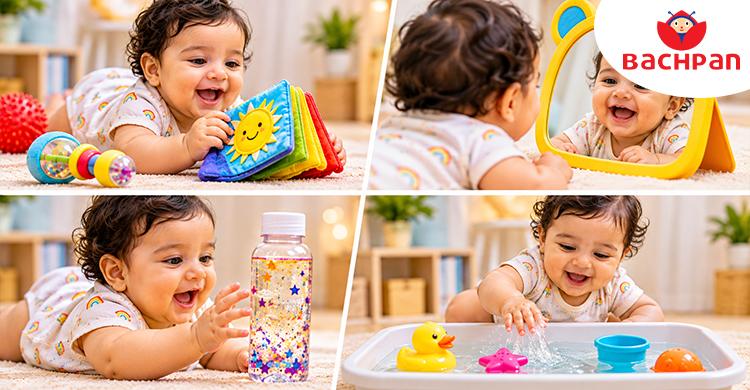
Some sensory play ideas for babies are introducing them to lightweight rattles and crinkle toys that have various textures and produce different kinds of sounds. Gently shake a rattle toy in front of your infant and watch their actions. Allow them to observe and feel the toy, and let them play with the sound.
Mirror Play
Babies enjoy looking at expressions the most. They chuckle when someone shows them a different expression. A sensory play activity you can do with your toddler is placing a baby-safe mirror in front of them, and they observe their own facial expressions. You can also smile, wave, and make gentle facial expressions and observe their reactions. It is advised to get a shatterproof and baby-safe mirror.
Sensory Bottles for Watching and Tracking
Sensory bottles for babies are used to introduce babies to colours, movements, and visual patterns. Choose a well-made, age-appropriate bottle and close the lid tightly. Hold it close and move the bottle gently so the baby can watch its contents move and observe them. This creates a sense of intrigue and curiosity in the child’s mind.
Water Play with a Shallow Tray
A DIY sensory activity for the baby is introducing the baby to shallow water and gentle splashes. During a supervised bath, let your baby feel a soft, wet washcloth in your hand. You can gently squeeze water from the cloth and allow your baby to watch or feel the movement. This activity introduces them to different sensations while encouraging them to explore visually.
Sensory Activities for Babies 6-9 Months
Between 6 and 9 months, babies start to roll tummy up and tummy down; many babies even start sitting without any help. Sensory activities at this stage can encourage exploration while helping babies practise their developing motor skills.
Taste-Safe Sensory Bins
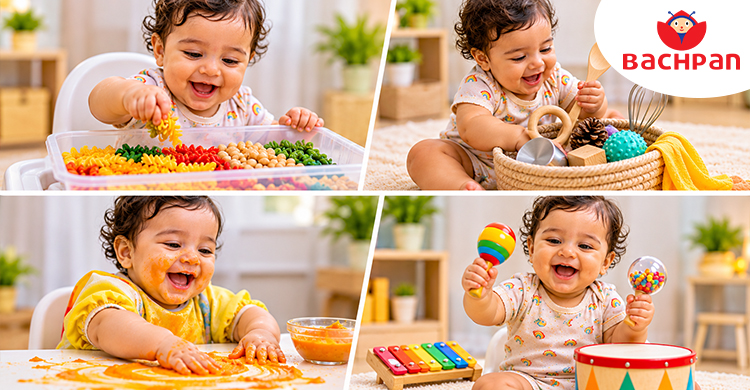
Taste-based baby sensory bins are a tool contained within a tub or a tray that lets children explore food-based sensory play and introduce babies to new textures. Once your baby is ready for solid foods, offer a small amount of soft food on an easy-to-clean tray. Let them explore its texture with their fingers while seated upright and closely supervised.
Treasure Baskets with Everyday Objects
A safe indoor sensory activity for babies is the treasure basket. It is a simple collection of safe and everyday objects that babies can explore under adult supervision. Choose some large, lightweight, and sturdy objects, such as a large silicone teether or a baby-safe textured toy. Place them in a stable basket and let your baby explore one object at a time.
Messy Play with Pureed Foods
Food exploration can be an enjoyable sensory play for your baby. Place a small amount of an age-appropriate puree on a clean and washable tray. Allow your baby to touch, spread, and explore the food with their fingers. You can even tell them about the food while observing them carefully.
Music and Shaker Play
Music and shaker play is a gentle sensory activity for the baby. Gentle sounds can make playtime more interactive while encouraging babies to listen and respond. Choose a baby-safe shaker or rattle and gently move it from side to side. Sing a gentle song, clap softly, or pause between sounds to see how your baby reacts.
Sensory Activities for Babies 9-12 Months
As babies approach their first birthday, they start to move around, interact with people more, and explore various different objects. They start crawling, pulling themselves up, and cruising along furniture. Sensory activities in this stage are generally related to problem-solving, movement, and hands-on exploration.
Cooked Pasta and Veggie Sensory Play
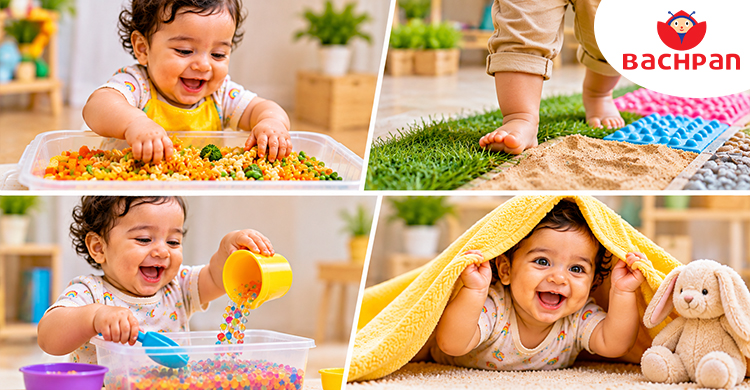
Soft foods can provide an interesting sensory experience for babies who have started complementary feeding. Prepare some plain pasta or suitable vegetables that are soft enough for your baby’s feed. Allow the food to cool down completely; place a small amount on a clean tray, and let your baby explore the textures with their fingers. Eating is a primary sensory activity for babies, as it regulates their jaw muscles and mastication.
Sensory Walks (Grass, Sand, and Textured Mats)
Babies who are beginning to crawl, stand, or move around may enjoy exploring different surfaces. Place your baby on a clean and safe surface such as a smooth play mat or a clean patch of grass. Let them touch the surface with their hands or feet while you remain nearby. This sensory play for babies encourages tactile awareness and provides opportunities for movement and balance.
Pouring and Scooping Play
One of the easiest sensory activities for babies is using a shallow container with a small amount of water and large, age-appropriate scoops. Parental guidance is advised for this activity at all times. Use a shallow stable container with a small amount of water and a large baby-safe cup. Sit with your baby and demonstrate how to move the water from one container to another.
Peekaboo and Hide-and-Find Games
Peekaboo is a simple DIY sensory activity game that many babies enjoy. It introduces an element of surprise and encourages interaction. Cover your face with your hands for a moment and then reveal it with a smile, saying ‘Peekaboo!’ You can also hide a familiar toy partly under a cloth and encourage your baby to find it. This enhances early social interaction, attention and early problem-solving skills.
Easy DIY Sensory Activities for Babies at Home
You don’t need expensive toys or complicated equipment to create engaging sensory experiences. Many everyday household items can become useful play materials when chosen carefully and used under parental supervision.
High-Contrast Cards
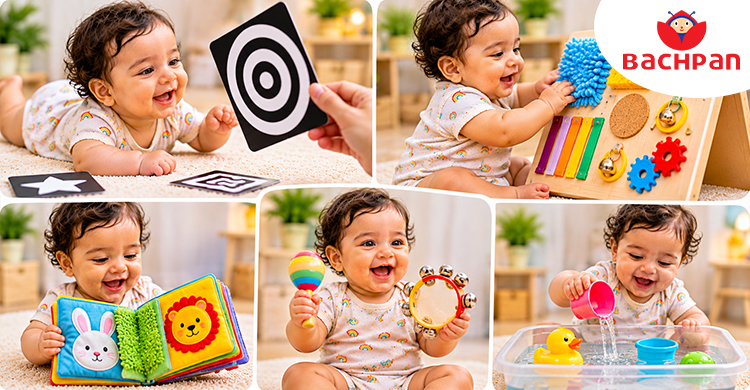
Black-and-white contrast cards for newborns are a good way to enhance a toddler’s memories and enhance their vision. You can create the cards using thick white and black chart paper and carefully pasting them on any flat surface like a visiting card. Carefully trim the edges and baby-proof the cards.
Sensory Board with Securely Attached Materials
Start by introducing your baby to different textures using a sturdy purpose-made sensory board. Choose smooth, soft and securely attached fabric panels. Let your baby touch the different surfaces while you describe how they feel. This activity enhances tactile exploration and curiosity.
Touch-and-Feel Fabric Book
Parents can simply create a fabric book using clean pieces of fabric featuring different materials and textures for babies to touch and feel. Sit with your baby and gently turn the pages while describing each texture of the book. This is a prominent sensory activity for exploration.
Baby-Safe Music and Sound Play
Use your voice and gentle nursery rhymes to calm your baby. Singing lullabies and songs to them is always a good idea, as it enhances their memories and hearing senses. Keeping sounds at a moderate and comfortable level is a must. This sensory activity supports listening, sound awareness and early communication.
Parents looking for more ways to keep children engaged indoors can also try these indoor activities for kids using simple materials and age-appropriate play ideas.
Supervised Water Play
Supervised water play is a great indoor sensory activity for babies. Use a small amount of water in a stable shallow container. Let your baby watch gentle ripples or feel water on a soft washcloth while you remain close and watchful. This enhances visual attention and parent-baby interaction.
How to Make Sensory Play Safe for Babies
Safe sensory play for babies is an important part of early learning. Babies explore their surroundings using their hands, eyes and mouths, which means parents need to be careful about the materials and activities they introduce.
Choosing Baby-Safe and Taste-Safe Materials
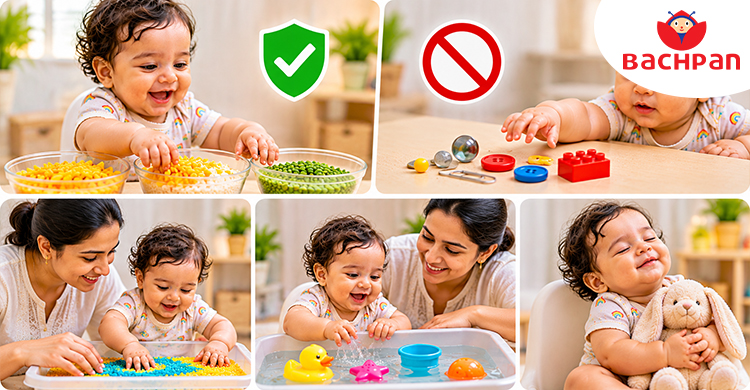
Safe sensory activities for babies are a must. Choose non-toxic and age-appropriate toys for your infant. Check product labels and inspect toys carefully for damage. Remember that a material being described as taste-safe does not automatically mean it is safe for babies to swallow.
Avoid Choking Hazards and Small Loose Parts
Keep beads, buttons, coins, small building pieces and other loose objects away from babies. Avoid toys with detachable parts or sharp edges. Choose objects that are specifically designed for your baby’s particular age group. Always have baby-safe bins for your baby.
Supervise Babies Throughout Every Activity
Always remain close during your baby’s sensory play. Babies are delicate and need constant adult supervision with plenty of guidance for exploration. Avoid leaving your infants alone with toys, food, water, or sensory materials.
Keep Water Play Within Arm’s Reach
Water activities require very careful and supervised play. Always take necessary precautions and never submerge the child in deep water. Stay within an arm’s reach to ensure proper attention to the baby. Empty out all of the containers of water right after play.
Follow Your Baby’s Cues and Allow Breaks
Babies respond to different experiences in a very different manner and oftentimes will tend to cry when put in a new and uncomfortable environment. It is very important to attend to these verbal cues and pay attention to each and every little or big gesture.
How Often Should You Do Sensory Activities with Your Baby?
Sensory play can be incorporated naturally into everyday routines, such as during tummy time, bath time, feeding or quiet moments together. The important thing is to provide opportunities for exploration without overwhelming your baby.
Short Sessions Work Best
Keep activities short, relaxed and simple for your baby’s age and attention span. Some babies may enjoy activities for only a few minutes, while others may remain interested for longer. It is always advised to follow your child’s cues and behaviour rather than have a fixed play time.
Building Sensory Play into Daily Routines
Sensory play can easily become a part of the daily routine. Always remember that the healthiest interactions are the ones that can happen naturally with the baby in a good and cheerful mood. Allowing your baby to explore a safe toy can become a meaningful learning experience.
Parents can make playtime, feeding, rest, and other everyday activities more predictable by following these daily routine ideas for young children.
FAQs About Sensory Activities for Babies
As mentioned above, some of the best sensory activities for 3-month-old babies are black-and-white contrast cards, gentle singing, and supervised tummy time on various soft surfaces. You can also use lightweight baby rattles and introduce different sounds to them.
Babies can start sensory play at the age of 0 to 3 months old. A few activities you can do with your little one include listening to gentle songs and indulging in some mirror play, among others.
A baby who is interested in an activity may look towards an object, reach for it, smile, make sounds, or remain engaged. Turning away, fussing, crying, or becoming restless may indicate that they need a break.
If you can, buying special toys is an option. However, most sensory activities for babies are mostly DIY, and you don’t really need any prominent toys or items to play with. You can just use the items available at home.
Babies in each age group react differently to the activities. 0-3 months old may only like the sensory play for only a day but the older babies of 9-12 months can enjoy the play for a longer period of time.
Final Thoughts on Sensory Activities by Age
A baby’s first year is filled with little discoveries that contribute to their growing understanding of the world. From listening to a familiar lullaby to reaching for a colourful toy or feeling a soft fabric, everyday experiences offer valuable opportunities for exploration and learning. Parents do not need expensive toys or elaborate activities to make playtime meaningful. Simple, age-appropriate sensory activities can encourage curiosity, support developing skills, and create wonderful opportunities for bonding. These early experiences also create a foundation for future learning, highlighting the importance of early childhood education. After all, for a baby, even the simplest everyday experience can become a wonderful new discovery!