


Pet Animal Names for Kids in English: 25+ Common Pets
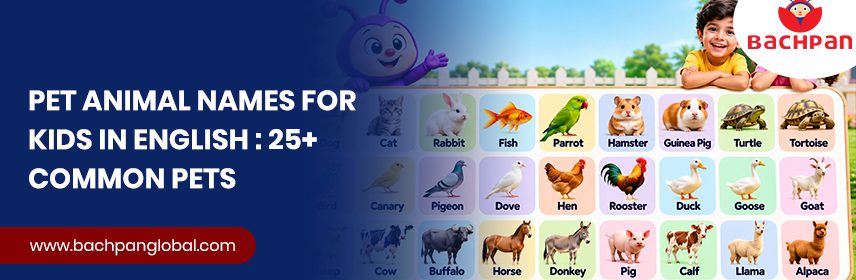
Children naturally adore furry puppies, playful kittens, and colourful birds. Learning pet animal names for kids is a joyful way to build early animal vocabulary, spark curiosity about the world around them, recognise familiar creatures, and understand different animal characteristics, whether your child is exploring easy pet animal names or practising English at home.
This guide shares pet animal names with short descriptions, pictures, and sounds for common household pets.
What Are Pet Animals?
Pet animals are animals that people keep at home for companionship and enjoyment. They are cared for by humans and need proper food, water, shelter and attention. Dogs, cats, rabbits, and fish are some familiar examples. Learning about pets also helps children understand kindness towards animals and the importance of caring for them.
25+ Pet Animal Names in English for Kids
There are many different types of pet animals for children to learn about—some live on land, some fly in the air, and others swim in water. Below is a list of common pet animal names and simple descriptions to help young learners remember each one easily.
1. Common Pet Animals for Kids
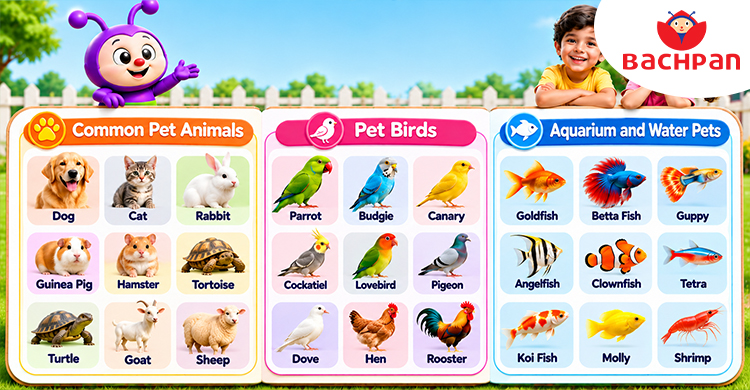
Dogs, cats, and rabbits are some of the most familiar pets children see around them. Apart from these, there are several small animals that can also be kept as pets. Here is a simple list of pet animals with their names in English and easy descriptions to help children learn more about their furry friends.
| No. | Pet Animal Name | Simple Description |
|---|---|---|
| 1 | Dog | A friendly animal that can be a loyal companion. |
| 2 | Cat | A small furry animal that likes to play and sleep. |
| 3 | Rabbit | A furry animal with long ears. |
| 4 | Hamster | A tiny pet that likes to run on a wheel. |
| 5 | Guinea Pig | A small animal that makes gentle squeaking sounds. |
| 6 | Mouse | A small animal with a long tail. |
| 7 | Rat | An intelligent animal that can be kept as a pet. |
| 8 | Gerbil | A small furry animal that likes to dig. |
| 9 | Ferret | A playful animal with a long, slim body. |
| 10 | Chinchilla | A small animal with very soft fur. |
Children can also learn what young pets are called, such as puppies, kittens, and hamster pups, through this guide to animals and their babies’ names.
2. Pet Birds for Kids
Have you ever heard a parrot squawk or a canary sing? Birds kept as pets are fascinating because of their colourful feathers, cheerful songs, and playful behaviours. Some are easy to care for, while others need extra attention and larger cages. Let’s explore some familiar names of pet animals from the bird family.
| No. | Pet Bird Name | Simple Description |
|---|---|---|
| 11 | Parrot | A colourful bird that can imitate some sounds. |
| 12 | Budgie | A small, colourful bird also called a budgerigar. |
| 13 | Canary | A small bird known for its singing. |
| 14 | Cockatiel | A pet bird with a crest on its head. |
| 15 | Lovebird | A small, colourful bird often kept in pairs. |
| 16 | Finch | A small bird with a short beak. |
| 17 | Dove | A gentle bird with soft feathers. |
3. Aquarium and Water Pets
Not all pets walk, run, or fly. Some live in water and can be seen swimming around in aquariums. Watching colourful fish move through the water can be fascinating for children. These aquarium pets introduce little learners to a different kind of animal habitat. Here are some popular pet fish names to explore.
| No. | Pet Animal Name | Simple Description |
|---|---|---|
| 18 | Goldfish | A popular fish with golden or orange scales. |
| 19 | Betta Fish | A colourful fish with flowing fins. |
| 20 | Guppy | A small fish with bright colours. |
| 21 | Angelfish | A fish with a tall, triangular body shape. |
| 22 | Neon Tetra | A tiny fish with bright blue and red stripes. |
| 23 | Molly Fish | A small aquarium fish that comes in different colours. |
4. Other Animals Sometimes Kept as Pets
Some reptiles and small creatures are also kept as pets, but they have very different needs from dogs, cats and birds. Turtles, tortoises, geckos and frogs require specialised habitats, temperatures and diets. They may not be suitable for every household, especially without proper knowledge and care. Let’s look at a few more names.
| No. | Pet Animal Name | Simple Description |
|---|---|---|
| 24 | Turtle | A reptile with a hard shell, usually adapted to living in or around water. |
| 25 | Tortoise | A land-dwelling reptile with a strong shell. |
| 26 | Gecko | A small lizard with special gripping feet. |
| 27 | Hermit Crab | A small crustacean that lives in a borrowed shell. |
| 28 | African Dwarf Frog | A small frog that lives in water. |
Pet Animal Names and Their Sounds for Kids
Animals communicate in different ways. Some bark, some chirp, while others make soft squeaking sounds. Learning pet animal names and their sounds is a fun way for children to connect animal names with the sounds they make. Here are some familiar examples.
| No. | Pet Animal | Sound |
|---|---|---|
| 1 | Dog | Barks |
| 2 | Cat | Meows |
| 3 | Rabbit | Grunts or squeaks softly |
| 4 | Parrot | Squawks |
| 5 | Canary | Sings |
| 6 | Budgie | Chirps |
| 7 | Guinea Pig | Squeaks |
| 8 | Hamster | Usually makes quiet squeaks |
| 9 | Frog | Croaks |
| 10 | Fish | Usually makes no sounds that people can hear |
Children can discover more animal sounds and learn how different creatures communicate through this guide to animal sounds for kids, which includes familiar pets, birds, and other animals.
How to Teach Pet Animal Names to Kids
Wondering how to teach pet animal names to kids in a fun, memorable way? Pairing pet animals with pictures, hands-on games, and sensory play helps children connect words to real creatures.
Parents can make animal vocabulary practice more engaging by combining these ideas with other preschool activities parents can try at home, including simple matching, sorting, and hands-on learning games.
Picture Identification Game
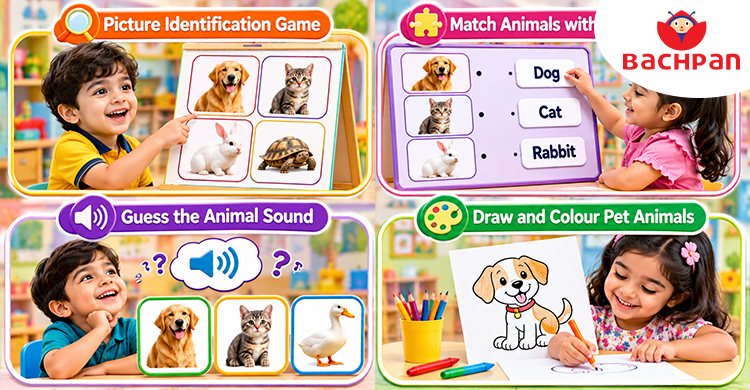
Show children flashcards or pet animals with pictures and ask them to name each one. Start with common pet animals like dogs, cats, and rabbits before introducing less familiar ones. Ask questions like “Which animal has long ears?” or “Which bird has colourful feathers?” This builds observation, memory, and recognition skills while making learning enjoyable.
Match Animals with Their Names
Create two columns on a sheet—one with simple animal drawings and another with written words. Ask your child to draw lines connecting pet animals and their names. This puzzle reinforces the names of pet animals for nursery kids while improving early reading and fine motor skills.
Guess the Animal Sound
Make playful animal sounds like “woof,” “meow,” or “chirp” and let your child guess the creature. You can also play short audio clips. This joyful listening activity strengthens memory, sparks laughter, and reinforces pet animal names for kids through active, screen-free sensory play at home.
Draw and Colour Pet Animals
Give your little artist crayons and paper to sketch common pets for children, such as a puppy, bunny, or goldfish. Talking about colours and features while colouring encourages creativity and helps children practise pet names in English naturally.
How to Take Care of Pet Animals
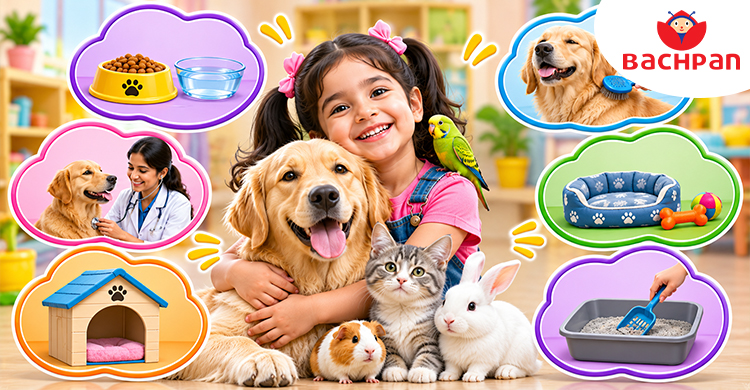
Caring for pets teaches responsibility from an early age. All pets rely on humans for fresh water, suitable pet food, clean animal habitats, and regular attention. Dogs need daily walks, cats need a clean litter tray, and fish require a well-maintained aquarium. Because types of pet animals vary widely, each needs its own care routine. Simple pet care for children includes being gentle, never disturbing animals while they eat or sleep, and helping with feeding under adult supervision. Most importantly, children learn that pets are living beings deserving patience, love, and respect.
Pet Animals Worksheet for Kids
Make learning more enjoyable with this simple worksheet on pet animal names for kids. It includes engaging questions on familiar pet animals, their sounds, identifying features, and correct spellings, helping children revise what they have learned through fun and interactive practice.
| No. | Question | Answer |
|---|---|---|
| 1 | Which pet animal is known for barking? | Dog |
| 2 | Which pet animal says “Meow”? | Cat |
| 3 | Which pet animal has long ears and likes to hop? | Rabbit |
| 4 | Which colourful pet bird can imitate some sounds? | Parrot |
| 5 | Which pet animal is commonly kept in an aquarium? | Goldfish |
| 6 | Fill in the missing letters: H _ M S T E R | HAMSTER |
| 7 | Which pet bird is known for singing? | Canary |
| 8 | Which small pet animal makes squeaking sounds? | Guinea Pig |
| 9 | What is the name of a land-dwelling reptile with a hard shell? | Tortoise |
| 10 | Fill in the missing letters: G U P P _ | GUPPY |
Pet Animals Quiz for Kids
Let’s see how much your little one has learnt. Try this quick 5-question quiz to revise pet animal names for kids together:
FAQs About Pet Animal Names for Kids in English
Some commonly known pets include dogs, cats, rabbits, hamsters, guinea pigs, fish, parrots, budgies, canaries, and turtles. However, the suitability of an animal as a pet depends on its care requirements and the household’s ability to meet them.
Dogs, cats, and some small pets may be suitable for families with children, depending on their age, temperament, and care needs. Adults should always supervise interactions and take responsibility for the animal’s well-being. No pet should be considered a child’s responsibility alone.
Some familiar pet bird names include Parrot, Budgie, Canary, Cockatiel, Lovebird, Finch and Dove. Each bird has its own appearance, behaviour, and care requirements.
Goldfish, Betta Fish, Guppy, Angelfish, Neon Tetra and Molly Fish are some animals that live in water and are commonly kept in aquariums. African Dwarf Frogs are also aquatic pets.
Pet animals are kept and cared for by people, usually as companions. Wild animals live independently in their natural habitats and find their own food and shelter. Wild animals should not be taken from their natural surroundings to be kept as household pets.
Children can learn animal names through picture cards, matching games, colouring activities, stories and animal sound games. Repeating names aloud and identifying animals in books also helps improve vocabulary and memory.
Conclusion: Help Kids Learn Pet Animal Names in English
Exploring pet animal names for kids makes learning about animals a fun and meaningful experience. Whether children are spotting a neighbour’s dog, admiring colourful aquarium fish or practising animal sounds during storytime, every new word helps build their English vocabulary and confidence. Parents can use the tables, worksheet and quick quiz in this guide to make learning more interactive. These simple activities also help children recognise different pets, remember their names, and develop curiosity with love and kindness towards animals from an early age.