



Mahatma Gandhi Facts for Kids: 20 Interesting Facts
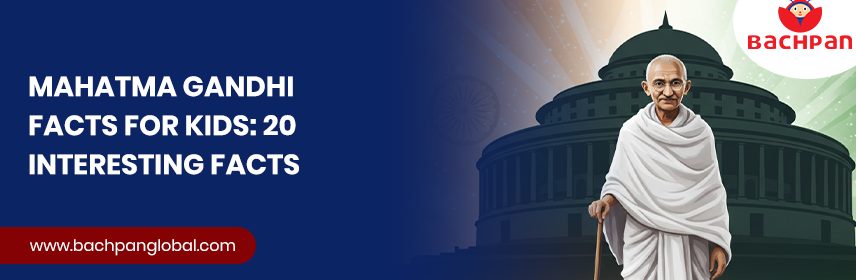
Introducing children to legendary figures helps nurture empathy, courage, and a sense of responsibility. Exploring Mahatma Gandhi facts for kids offers them an engaging glimpse into India’s journey to freedom. Fondly known as Gandhiji, his values of truth, peace, and non-violence continue to inspire generations. These Mahatma Gandhi facts for children make history easier and more enjoyable to learn. They also help young minds understand how one person’s courage, choices, and strong values can create a lasting impact on an entire nation.
Who Was Mahatma Gandhi?
Mahatma Gandhi was a great Indian leader who guided our nation to freedom from British rule through peaceful means. His full name was Mohandas Karamchand Gandhi. He is fondly called the “Father of the Nation” for his dedication to India’s freedom. Today, his life remains a timeless guide, making a Mahatma Gandhi biography for kids essential for understanding courage and compassion.
Mahatma Gandhi was one of the many remarkable leaders who played an important role in shaping India. Children can explore more inspiring personalities in our guide to great national leaders of India who shaped the nation.
20 Interesting Mahatma Gandhi Facts for Kids
Here are 20 Interesting facts about Mahatma Gandhi for kids that highlight his journey, principles, and inspiring leadership. Let us explore these interesting facts about Mahatma Gandhi together!
1. Mahatma Gandhi’s Full Name Was Mohandas Karamchand Gandhi
One of the simplest Mahatma Gandhi facts for children is about his full name. He was born as Mohandas Karamchand Gandhi. The name “Mahatma” means “great soul” and became a popular way of addressing him. He was also lovingly called Gandhiji by people across India. His life later became closely associated with truth, simplicity, and peaceful resistance.
2. Gandhi Was Born on 2 October
Mahatma Gandhi’s birthday is observed on 2 October 1869. His birthday is remembered every year as Gandhi Jayanti. It is a national holiday in India and is also observed as the International Day of Non-Violence around the world. For anyone looking for Mahatma Gandhi early life facts for children, remembering his birth date is a good place to begin.
3. He Was Born in Porbandar, Gujarat
Mahatma Gandhi was born in Porbandar, a coastal town in present-day Gujarat. He grew up in a family where honesty, discipline, and strong moral values were deeply respected. His early experiences shaped his character and beliefs. Learning about his birthplace and childhood is among the key Mahatma Gandhi early life facts children discover.
4. Gandhi Studied Law in London
After completing his early education in India, Gandhi travelled to London, England, in 1888 to study law. He trained to become a barrister at the Inner Temple. Living in a new country gave him new experiences and helped broaden his understanding of the world. After completing his studies, he returned to India and began his career as a lawyer.
5. He Worked as a Lawyer in South Africa
In 1893, Gandhi went to South Africa to work as a lawyer. He stayed there for over 20 years. During this time, he faced unfair treatment because of his race. This experience made him speak against injustice and fight for equal rights. It became an important part of his Mahatma Gandhi biography for kids.
6. South Africa Changed Gandhi’s Life
Gandhi’s time in South Africa changed his life. He saw Indian people facing unfair laws and discrimination. Instead of choosing violence, he looked for peaceful ways to stand against injustice. These experiences shaped his ideas of truth, Satyagraha, and peaceful resistance. They later influenced his work for India’s freedom.
7. Gandhi Fought Against Injustice
Gandhi believed that people should not quietly accept unfair treatment. He encouraged people to stand against injustice with courage while avoiding hatred and violence. His approach was not about fighting people with anger but about peacefully challenging unfair systems. This idea became an important part of Mahatma Gandhi principles and later influenced many of his movements in India.
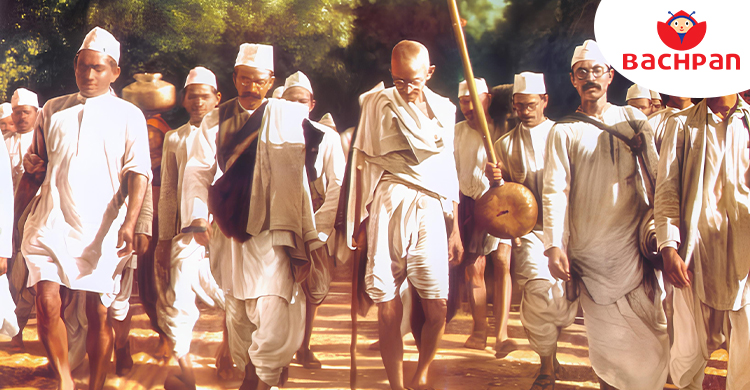
8. He Developed the Idea of Satyagraha
Satyagraha became a form of peaceful resistance based on truth, courage, and non-violence. Instead of using force, people could protest peacefully and refuse to cooperate with injustice. Satyagraha became an important part of Mahatma Gandhi freedom struggle and is one of the key ideas children learn about when studying his life.
9. Gandhi Believed in Non-Violence
Mahatma Gandhi non-violence was a belief he followed in his life and freedom movements. He showed that people could stand against injustice without hurting others. Peaceful marches, protests, boycotts, and non-cooperation became ways to raise their voices. His message of peace earned him respect and admiration across India and the world.
10. He Returned to India in 1915
After spending many years in South Africa, Gandhi returned to India in 1915. He travelled around the country to understand the problems faced by ordinary people. Soon, he became actively involved in movements against unfair practices and British rule. His return marked an important turning point in Mahatma Gandhi freedom struggle.
11. Gandhi Led Important Freedom Movements
Gandhi became one of the leading figures of India’s freedom movement. From local struggles to nationwide campaigns, he encouraged ordinary people to participate in peaceful resistance. He believed that freedom was not only about political change but also about creating a fairer society. His leadership and methods became central to the Mahatma Gandhi freedom struggle.
12. He Played a Major Role in the Non-Cooperation Movement
The Non-Cooperation Movement began in 1920 under Gandhi’s leadership. Indians peacefully refused to support British institutions, schools, courts, and goods. They boycotted foreign products and promoted Indian-made items. This movement united many people and became an important part of India’s freedom struggle, showing the power of peaceful protest.
13. Gandhi Led the Famous Dandi March
In 1930, Gandhi led the famous Dandi March, also known as the Salt March. He and his followers walked from Sabarmati Ashram to Dandi in Gujarat to protest the British salt laws. The long march became a powerful symbol of peaceful resistance. It remains one of the most memorable events among the Mahatma Gandhi freedom struggle facts for kids.
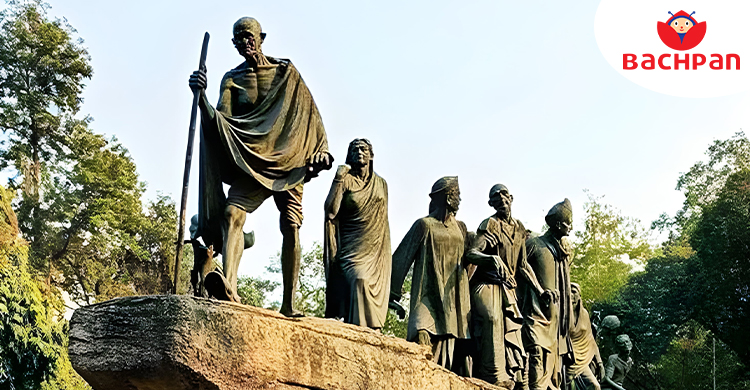
14. He Supported the Quit India Movement
In 1942, Gandhi led the Quit India Movement, demanding an end to British rule. It became one of India’s largest freedom movements. Although Gandhi and other leaders were arrested, people continued protesting. The movement strengthened India’s demand for independence, which was finally achieved in 1947.
15. Gandhi Promoted Khadi and the Spinning Wheel
Gandhi encouraged people to wear Khadi, hand-spun and handwoven cloth, and promoted the use of the spinning wheel or charkha. For him, spinning and wearing Khadi were connected with self-reliance and support for Indian workers. The charkha also became closely associated with his message of simplicity and independence.
16. He Lived a Simple Life
Despite becoming one of India’s best-known leaders, Gandhi chose to live simply. He wore simple clothes, followed a modest lifestyle, and focused on basic needs rather than luxury. His way of living reflected his belief that people should not be defined by wealth or possessions. This is one of the simple facts about Mahatma Gandhi for kids that children can easily understand and relate to.
17. Gandhi Was Known for His Strong Belief in Truth
Truth was at the heart of Gandhi’s thoughts and actions. He believed that people should be honest not only in their words but also in their actions. His commitment to truth was so strong that it became closely connected with his idea of Satyagraha. This is why truth remains one of the primary Mahatma Gandhi principles to remember.
18. Gandhi Worked for Equality and Social Reform
Gandhi spoke against social discrimination and worked towards greater equality. He supported efforts to improve the lives of people who faced social exclusion and encouraged people to treat one another with dignity. He also promoted cleanliness, education, self-reliance, and community service. These efforts form an important part of Mahatma Gandhi achievements beyond the freedom movement.
19. Gandhi’s Birthday Is Celebrated as Gandhi Jayanti
Every year on 2 October, India celebrates Gandhi Jayanti to remember Mahatma Gandhi. Schools and communities often organise special activities, speeches, drawing competitions, cleanliness drives, and discussions about his teachings. Mahatma Gandhi birthday is also a reminder of the values of truth, peace, and non-violence.
20. Gandhi’s Ideas Continue to Inspire People Around the World
Gandhi’s ideas did not remain limited to India. His belief in peaceful resistance, truth, equality, and courage influenced people and movements around the world. Leaders and activists in different countries studied his methods of non-violent protest. This lasting influence is one of the most meaningful Mahatma Gandhi interesting facts for children to discover.
What Did Mahatma Gandhi Teach Us?
Mahatma Gandhi’s life serves as a beautiful classroom for children. Through his actions, he taught timeless values that help young minds grow into compassionate, wise, and courageous individuals.
Always Speak the Truth
Gandhi believed that truth should guide our words and actions. For children, this can be as simple as admitting a mistake instead of hiding it or telling the truth even when it feels difficult. Being honest helps build trust with friends, teachers, parents, and others. His life reminds us that telling the truth may not always be easy, but it is always worth choosing.
Honesty is one of the important habits children can practise every day. Explore these 10 good habits for kids for more simple values and positive habits children can develop.
Believe in Non-Violence
One of the strongest lessons from Gandhi is to solve disagreements peacefully. Mahatma Gandhi Non-Violence teaches us that anger does not have to lead to fighting. Children can practise this by talking about their feelings, listening to others, and finding peaceful solutions when they disagree. Being peaceful does not mean being weak; it takes courage and self-control to choose kindness over anger.
Stories with simple moral lessons can help children understand values such as kindness, empathy, and peaceful behaviour. Explore these best short moral stories for kids for more age-appropriate stories and lessons.
Stand Against Injustice
Gandhi taught people not to stay silent when something is unfair. Children can learn this lesson in simple ways by speaking up when someone is being bullied, including others in games, or telling a trusted adult when something does not feel right. Standing against injustice means choosing what is fair while treating everyone with respect.
Live Simply
Gandhi’s simple lifestyle reminds us that happiness does not always come from having more things. Children can learn to value what they have, avoid unnecessary waste, take care of their belongings, and appreciate people around them. Living simply can also mean being grateful, helping at home, and making thoughtful choices every day.
Respect Everyone
Gandhi believed in treating people with dignity and working towards equality. Children can put this lesson into practice by respecting classmates, teachers, family members, helpers, and people from different backgrounds. A kind word, a helping hand, or simply listening to someone can make a big difference. Respect begins with small actions that show others they matter.
Mahatma Gandhi’s Role in India’s Freedom Struggle
Gandhi returned to India in 1915 after his important years in South Africa. In India, he became involved in struggles such as the Champaran Satyagraha in 1917, which supported farmers facing unfair conditions. He later led the Non-Cooperation Movement, the Dandi March, and played a major role in the Quit India Movement of 1942. His peaceful methods brought millions of ordinary Indians into the freedom movement. India finally became independent on 15 August 1947. These events form an important part of Mahatma Gandhi life and achievements for kids.
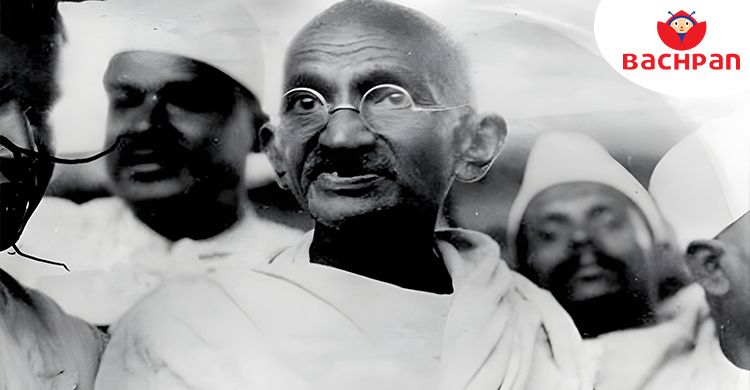
Why Is Mahatma Gandhi Important for Kids to Learn About?
Children can learn much more from Gandhi’s life than dates and historical events. His journey shows the importance of courage, truth, non-violence, equality, and helping others. He demonstrated that peaceful protest can be a powerful way to stand against injustice. His story also encourages children to speak up for what is right without hurting others. Learning about Gandhi helps young minds understand how everyday values such as honesty, kindness, respect, and courage can create positive change.
Mahatma Gandhi – Quick Facts for Kids
Here are some quick Mahatma Gandhi facts for kids to help them revise the important details at a glance.
| Fact | Information |
|---|---|
| Full Name | Mohandas Karamchand Gandhi |
| Popular Name | Mahatma Gandhi / Gandhiji |
| Born | 2 October 1869 |
| Birthplace | Porbandar, Gujarat |
| Profession | Lawyer, leader, social reformer |
| Famous For | Non-violence and Satyagraha |
| Major Movement | Indian Independence Movement |
| Famous March | Dandi March |
| Birthday | Gandhi Jayanti |
| Date of Death | 30 January 1948 |
These quick details are useful Mahatma Gandhi facts for school students who want to revise his life before a class activity, quiz, or history lesson.
Frequently Asked Questions About Mahatma Gandhi
Mahatma Gandhi was an Indian lawyer, social reformer, and a major leader of India’s freedom movement. He became famous for using truth and peaceful resistance to oppose injustice and British rule.
Gandhi was famous for his leadership in India’s freedom movement and his belief in truth, Satyagraha, and non-violence. His peaceful methods inspired millions of people.
Mahatma Gandhi was born on 2 October 1869, in Porbandar, Gujarat, India.
Gandhi is widely remembered in India as the Father of the Nation because of his major role in the freedom movement and his influence on India’s struggle for independence. The title reflects his enduring place in India’s national memory.
His most famous principles include truth and non-violence. He believed that people could stand against injustice without using violence.
Gandhi Jayanti is celebrated every year on 2 October to commemorate his contribution to India’s freedom movement and message of truth and non-violence.
Gandhi taught us to speak the truth, respect everyone, stand against injustice, live simply, and choose peaceful ways to solve problems. These are values children can practise in their everyday lives.
Conclusion
Mahatma Gandhi’s life is more than a collection of dates and historical events. It is a story of courage, truth, simplicity, and peaceful action. From his early years in Porbandar to his work in South Africa and his leadership in India’s freedom movement, every chapter offers something for children to learn. These Mahatma Gandhi facts for kids can help young learners understand why Gandhiji continues to be remembered and why his values still matter today. After all, big changes can begin with small acts of courage, honesty, and kindness.
Children can continue exploring India’s history and national identity through age-appropriate learning resources, including these patriotic songs for kids.