


Best Learning Activities for Preschoolers at Home
Parents, here’s a liberating secret when it comes to early childhood education: You don’t need a closet full of pricey flashcards or a formal teaching degree to tap into your child’s holistic potential. In fact, your living room is already the ultimate skill development classroom, perfect for activities to improve learning in preschool children. By weaving simple learning activities for preschoolers at home into your daily routine, you naturally trigger cognitive development and motor skills development without the stress.
Let’s jump right in.
Why Learning Activities Are Important for Preschoolers
Childhood development doesn’t wait for kindergarten. By steering your child’s natural energy towards specific educational games for 3–5 year olds at home, you trigger key milestones well in time.
Support Early Brain Development
Every time your child figures out a new game, their brain forms important neural connections at lightning speed. This rapid play-based learning and cognitive development rely entirely on the everyday problem-solving you provide at home.
By introducing targeted, fun home learning activities for preschoolers, you actively shape the physical architecture of your child’s growing mind. You also nurture a strong foundation for their future success.
Improve Language and Communication Skills
Have you ever noticed how a toddler sometimes loves to narrate exactly what they are doing, like a tiny sports commentator? “Now the black car goes fast!” When you use learning activities for preschoolers at home, you naturally facilitate their language development. It turns an everyday afternoon into a rich, chatty conversation that builds massive confidence.
Build Problem-Solving Abilities
When you set up home-based learning games for preschool kids, you are essentially giving them a safe laboratory to test theories until they succeed. Figuring out why a block tower keeps leaning or how to find the missing piece of a puzzle builds incredible logic. By encouraging these moments, you help them develop the needed resilience and sharp problem-solving skills. They will need to face life’s trickier challenges down the road.
Encourage Creativity and Curiosity
Children are born with an insatiable urge to ask “Why?”. When you provide opportunities for creativity building through preschool learning activities at home, that’s like giving them permission to think outside the box.
Using dedicated early learning activities for kids feeds your child’s innate wonder and curiosity. This happens whether they are turning a cardboard box into a spaceship or mixing colors to see what happens.
Home learning activities become even more effective when parents understand the importance of early learning and development. Read more about the importance of preschool and early childhood education and its impact on children.
How to Choose the Right Learning Activities for Preschoolers
So, parents, how do you sort through the endless educational activities for preschoolers and pick the ones that will actually work for your child?
Consider Your Child’s Age
It is unbelievably easy to accidentally pick hands-on activities that are either way too simple or way too complicated. When hunting for easy preschool activities parents can do at home, the trick is finding that developmental sweet spot.
Every child grows at their own unique pace, so look at where your little one is right now rather than focusing strictly on age brackets. If a game is too advanced, they will get frustrated and quit. If it is too basic, they will tune out.
Focus on Learning Through Play
The secret to success lies in structured, play-based learning, where education is cleverly disguised as pure entertainment. Preschoolers absorb information best when they are actively moving and experimenting. Therefore, blending cognitive milestones with genuine fun ensures that they absorb new concepts spontaneously. Make learning and discovery feel like a game through fun learning activities for kids.
Use Simple Household Materials
You do not need a massive budget to foster activity-based learning for preschoolers through an exclusive learning environment. In fact, the best learning activities for preschoolers at home that work usually start in your kitchen pantry or recycling bin. Objects like plastic cups, clothes pins, empty cardboard boxes, and dry pasta make perfect tools for high-quality, hands-on activities.
Keep Activities Short and Engaging
If you expect a three-year-old to sit still for an hour, you are setting yourself up for a battle of wills. The most effective learning activities for preschoolers at home are designed to be dynamically quick and hyper-focused.
Preschoolers are famous for their brief attention spans, and that is completely normal. By prioritizing quality over duration, you ensure that your child finishes the game feeling accomplished.
Best Learning Activities for Preschoolers at Home
Now, grab a cup of coffee and let’s look at the absolute best preschool activities at home you can set up in minutes. Do share which one you think your child would want to try first.
Alphabet Matching Activities
Letter recognition is the first big milestone on the road to reading. Matching games are one of the indoor learning activities for preschoolers that make it a piece of cake. Instead of flashcards, however, turn it into a physical hunt. You can write uppercase and lowercase letters on sticky notes and hide them around the room. You can also write letters on plastic bottle caps and have your child match them to a master sheet.
Letter Recognition Games
Instead of asking your child to memorize static shapes on a page, you can make the alphabet a multi-sensory experience. Try filling a shallow baking sheet with salt or flour and letting your child trace lines with their fingers to uncover hidden letters underneath. By transforming abstract symbols into sensory activities, you effectively help them map out the foundational building blocks of reading.
Activities that involve letter recognition and tracing can also help improve writing readiness. Explore these practical tips on how to improve handwriting for kids through fun exercises and games.
Number Counting Activities
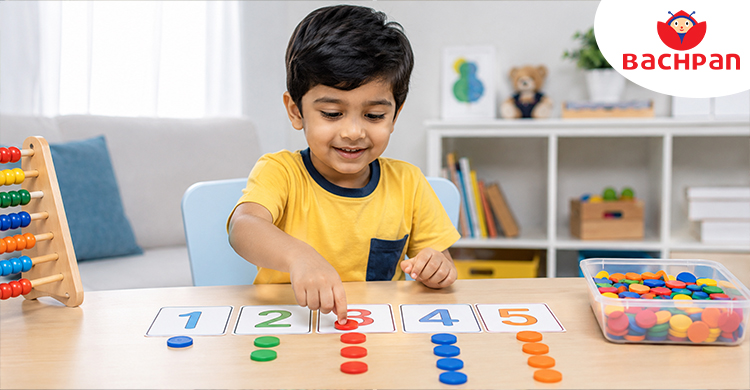
Try having your child count out exactly four blocks to build a tower. You can also place numbered paper cups on the floor and ask them to drop the matching number of dry pasta pieces into each one. This physical connection turns abstract math into a tangible reality. By letting them touch and move each object as they count, you are building a rock-solid foundation for your child’s future math skills.
Parents can also make number learning more interesting by introducing children to different number systems. Explore these Roman numerals for kids for simple charts, rules and practice examples.
Shape Sorting Games
Engaging in learning activities for preschoolers at home like shape sorting is an incredible way to introduce foundational math concepts. Try cutting different shapes out of colored paper and taping them to the floor, then challenge your child to sort their toys onto the matching cutouts (like a round coaster on the circle, or a square book on the square).
Parents can make early maths learning more engaging by helping children identify everyday shapes using these shape names for kids with pictures and examples.
Color Recognition Activities
Place some colored pieces of paper on the floor and challenge your toddler to race around the room collecting objects that match each color. For example, a purple sock for the purple basket, or a green block for the green paper. This active movement connects visual perception with physical sorting and keeps them thoroughly entertained while they learn.
Storytelling and Reading Time
When you are telling stories or playing together, try consciously shifting how you phrase things. Instead of always using simple lines like “The dog is barking,” include descriptive layers. For instance, you might say, “The fluffy brown dog started barking loudly.” Doing this gives your child a natural template for advanced language development.
Story sessions are a wonderful way to improve vocabulary and imagination. Parents can also enjoy these best Disney stories for kids during reading time.
Rhyming Word Games
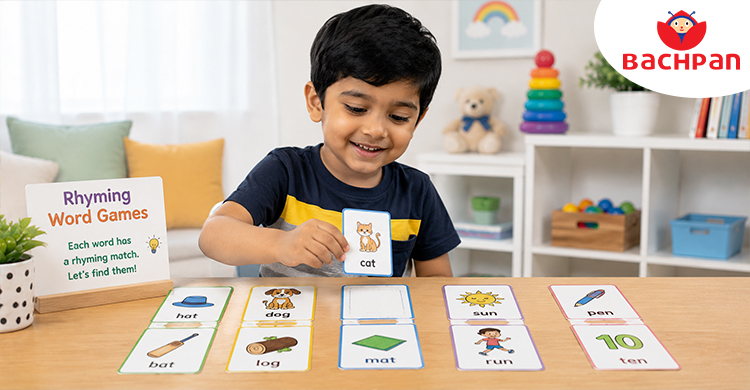
Playing with rhymes is counted among the fantastic, fun preschool activities for brain development and auditory awareness. You can easily turn this into a quick, verbal game while making lunch or riding in the car. Start with a simple word like “cat” and take turns bouncing back rhyming matches like “hat” or “bat”. Even silly, made-up words count as long as the sound fits!
Rhymes and songs help improve memory, language development, and listening skills. Discover these popular nursery rhymes for kids with lyrics for more learning fun.
Puzzle Activities
Incorporating puzzles into your child’s routine is one of the most rewarding simple learning activities for preschoolers at home that you can try today. Start with simple wooden peg puzzles or 4-to-6 piece chunky puzzles. Watch how their persistence turns into a massive burst of skill development when that final piece clicks home.
Memory Matching Games
Playing memory matching games is one of the most effective home learning activities for preschoolers. Sitting down with a grid of facedown cards and flipping them over two at a time forces your child to visualize locations and hold information in their short-term memory. To keep it extra engaging, you can even create a custom version using duplicate family photos.
Sensory Play Activities
Diving into learning activities for preschoolers at home that involve sensory play is a brilliant way to stimulate your child’s brain development through hands-on exploration. You can set up a simple sensory bin by filling a plastic container with dry rice or water, and tossing in small toys. As your child digs in, this activity deepens their raw curiosity.
Activities such as pasting, threading, button sorting, and paper tearing help strengthen finger muscles and improve hand-eye coordination. Parents looking for more ideas can explore these fine motor activities for preschoolers at home to further support pencil grip and writing readiness.
Creative Learning Activities for Preschoolers
Now, let’s channel your child’s dynamic energy into creative self-expression. Take a look at these creative home-based learning games for preschool kids, and discover where your little explorer wants to begin.
Creative Learning activities help children express themselves while improving problem-solving and motor skills. Explore different types of preschool activities for kids by category for more engaging ideas.
Drawing and Coloring Activities
Instead of asking your child to draw a specific object, try encouraging pure experimentation. You can roll out a long strip of butcher paper on the floor and invite them to map out an imaginary city, or experiment with blending different shades together to see how colors transform. Focus on the joyful process of creation rather than a perfect final product.
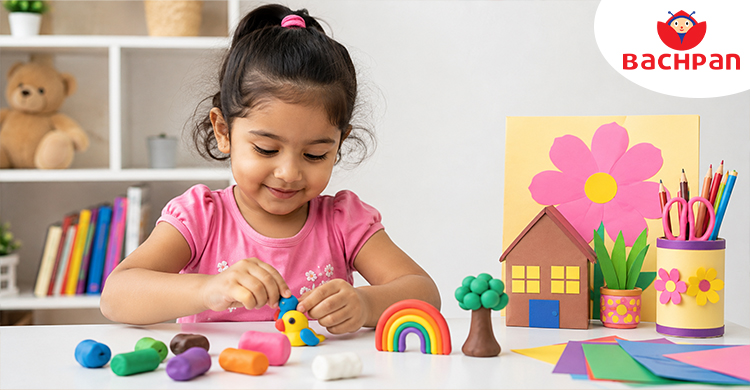
Clay Modeling and Craft Work
As small hands squeeze dough or press beads into sticky surfaces, they build essential bilateral coordination. It is the effective ability to use both hands simultaneously.
Use household recyclables like egg cartons and cardboard tubes, and then let your little innovator engineer their own structures. Providing a variety of textures, from smooth yarn to bumpy foil, challenges their sensory processing and teaches them about material properties through direct experience.
DIY Art and Craft Projects
Got a pile of empty tissue boxes, or paper towel rolls, or bottle caps? Don’t throw them out! To your child, that recycling bin is full of hidden treasures waiting to become a cool robot or a giant castle. When a box keeps tipping over or a wheel won’t stay on, your little builder has to stop and think about how to fix it. This enhances their problem-solving skills.
Hands-on activities such as pottery, clay modelling, and craft work help children improve creativity, finger strength, and hand-eye coordination while making learning more enjoyable.
Sensory Learning Activities at Home
Now, let’s take a look at some fun early learning activities for kids to help them explore the world through touch, sight, sound, taste, and smell! Ready for some amazing sensory activities?
Water Play Activities
Who knew that a simple tub of water could keep a child busy for hours?
Fill a shallow plastic bin with warm water, and gather a few plastic cups, spoons, and sponges from around the kitchen. You can turn this splashy fun into an exciting science experiment by playing a quick game of “Sink or Float”. Drop in an apple or something and ask your child to guess what will happen before each splash.
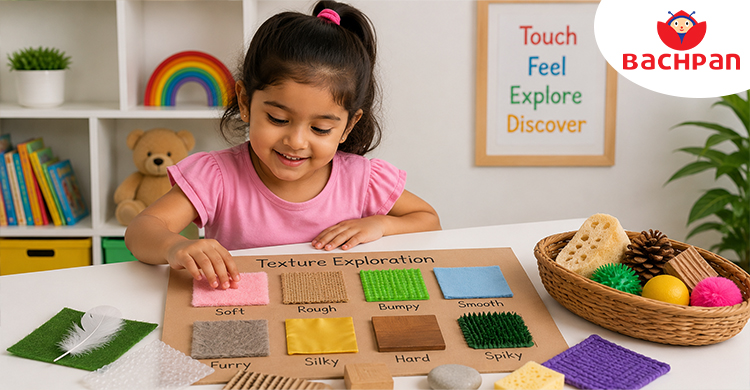
Texture Exploration Games
Our world is full of different textures, from the smooth glass of a window to the rough bark of a tree.
Gather a few everyday items with contrasting surfaces. Find something fuzzy like a winter hat, something bumpy like bubble wrap, and something slick like a metal baking sheet. Then, challenge your child’s vocabulary and sense of touch.
Sensory Bins
Boost your toddler’s brainpower with a simple plastic tub! Fill it with dry rice and hide small toys inside. Hand your child a spoon and cup, and then challenge them: “Can you find the hidden toy elephant?” This type of activity-based learning for preschoolers helps nurture their motor skills development.
So, what will you hide in your bin today?
Fun Educational Games for Preschoolers at Home
Time to jump into some super easy, giggle-filled fun learning activities for kids that combine moving around with basic math and reading skills.
Indoor Scavenger Hunt
You don’t need a backyard to go on an adventure. You can turn your entire living room into a giant puzzle board using things you already own. Also, instead of naming specific items, you can give your little detective a clue based on descriptions. For example:
“Find something rounder than a ball!”
“Bring me something softer than your pillow!”
On days when outdoor play is not possible, these indoor activities for kids on a rainy day can keep children active and entertained.
Role Play and Pretend Games
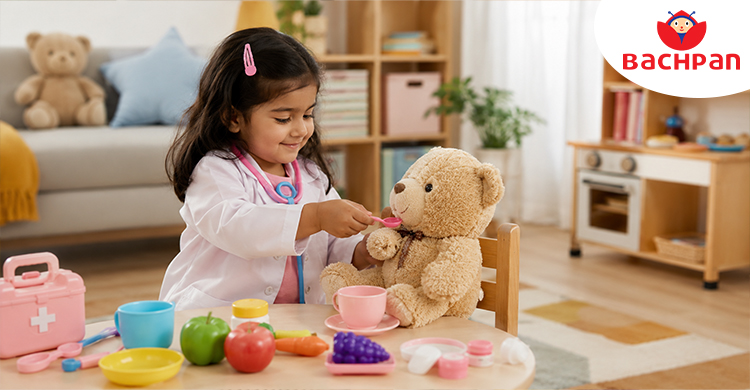
Some of the most creative indoor learning activities for preschoolers start right on your living room couch, which can instantly transform into a spaceship, or a busy grocery store, or a vet clinic. When your child steps into a new character, they practice talking and understanding how others feel.
Building Block Activities
Those wooden or plastic bricks scattered across your home are actually incredible learning activities for preschoolers at home. Every time your child stacks one piece on top of another, they are testing out weight and gravity in a hands-on way.
Shake up their usual building routine every now and then. For instance, challenge them to build a bridge that is wide enough for a toy car to drive under.
Tips for Making Learning Activities More Effective
Here are a few quick ways to get the absolute most out of the above educational games for 3–5 year olds at home. With just a few minor tweaks to your daily routine, you can make every single activity double as a striking brain booster.
Keep Sessions Short and Fun
Preschoolers have short attention spans. To keep things exciting, aim for quick bursts of play.
You can turn transition times into a fun game itself by using a visual countdown.
“Let’s see if we can pack up these blocks before the sand timer runs out!”
“Can we do five big frog hops over to the snack table?”
Encourage Active Participation
Instead of telling your child exactly where to put a puzzle piece or how to color a picture, step back and ask open-ended questions that get their gears turning. This keeps them actively engaged rather than just watching you do the work.
“Wow, look at that! How did you figure out how to fix that wing?”
Avoid Pressure and Focus on Enjoyment
If your child builds a lopsided tower or mixes all the playdough colors into a giant brown blob, celebrate their efforts and creativity anyway. Pressuring them to do an activity “the right way” can take away the joy of learning and make them hesitant to try new things.
“Your efforts are commendable!”
Appreciate and Motivate Your Child
A little bit of praise goes a long way in building your child’s confidence.
Make your motivation interactive by using a “High-Five Habit” or celebratory phrases during play, like: “You didn’t give up on that puzzle even when it was tricky. High five!”
Noticing their persistence teaches them that trying hard is what matters most.
Common Mistakes Parents Should Avoid
It is just as important to know what not to do when setting up fun activities to improve learning in preschool children. Avoiding a few common, everyday pitfalls will keep the process smooth.
Making Activities Too Difficult
It is easy to get excited and set up a complex game, but if an activity is too hard, your child will quickly get frustrated and walk away. To keep things interactive and frustration-free, use the “Plus-One Rule” to find the perfect level of challenge.
Start simple: If you are practicing counting, start with just 3 items instead of 10.
Focusing Only on Academics
At this age, children learn best when their whole body is involved, not just their brains. So, to balance things out, try the “Move and Learn” approach and keep things interactive. For example, instead of writing numbers: Tape paper numbers to the floor and have your child jump onto the correct one when you call it out.
Overusing Screens for Learning
Educational apps and videos can be enticing, but too much screen time replaces the hands-on engagement that young brains crave. So, to break the screen habit, try a simple “Swap and Copy” approach.
The Swap: If your child loves a digital puzzle app, swap the device for real puzzle pieces.
The Copy: If they watch an educational cartoon about animals, challenge them to physically mimic the animal: “Show me how that frog hops!”
Comparing Children with Others
It can be tempting to wonder why another child is already counting to twenty while yours is still mastering ten, but verbal comparisons can make a child feel self-conscious and anxious.
To keep your focus entirely on your own child’s unique journey, try the “Beat Your Own Record” game.
Track a skill, and celebrate progress: “Wow! Last week you hopped three times, and today you hopped four times! You are getting so strong!”
FAQs About Learning Activities for Preschoolers
To keep things fresh, the best educational activities for preschoolers are about mixing and matching the different activities we have covered throughout this blog. By rotating between creative role-play games and hands-on building block challenges, you naturally touch on varied skills without overwhelming your child.
At this age, a child’s developmental attention span is roughly 2 to 3 minutes per year of life, meaning a 3- or 4-year-old can realistically focus on a guided task for about 6 to 12 minutes before their brain needs a break.
So, the sweet spot for learning activities for preschoolers at home is just 30 to 60 minutes total per day, broken up into short 10- to 15-minute bursts.
Yes, home learning activities are highly effective for children’s early childhood education, as they rely heavily on a concept neuroscientists call “serve and return” interactions. This refers to the back-and-forth conversation and shared reactions between a child and a responsive caregiver.
The best age to start learning activities is as early as 12 to 18 months, because a child’s brain is already forming one million new neural connections every single second during their first few years of life.
Conclusion
As we have explored, the most powerful preschool learning activities at home are rooted in everyday little moments. By intentionally choosing engaging educational games for 3–5 year olds at home, you are providing your child with the exact hands-on, sensory experiences their growing brains crave.
Now, if you are looking for even more creative inspiration to keep your little one engaged, don’t stop here! For a deeper dive, check out this another excellent resource: Best Preschool Activities Parents Can Try at Home With Kids.