



How to Improve Handwriting for Kids: 15 Simple Activities
If you have ever wondered or been concerned about how to improve handwriting for kids, you are not alone. Children’s handwriting journey often starts with tiny hands gripping a pencil too tightly or wobbly lines that barely resemble the alphabet. Like learning to ride a bicycle or button a shirt, handwriting development is a skill that patiently grows with regular practice.
Developing neat handwriting starts with a strong foundation in early learning. Discover why preschool and early childhood education play a vital role in building essential developmental skills.
In this blog, you will discover 15 fun and easy handwriting activities for kids at home that will help your child develop the confidence and control needed for neat, comfortable writing.
Quick Overview of 15 Handwriting Activities for Kids
To help you choose the right handwriting practice for kids, here is a quick overview of some simple activities that improve pencil control, letter formation, hand strength, and writing confidence.
Handwriting Activities for Kids at a Glance
| No. | Activity | Skill Developed | Best Age |
|---|---|---|---|
| 1 | Tracing Lines | Pencil control | 3–4 years |
| 2 | Shape Tracing | Hand coordination | 3–5 years |
| 3 | Sand Writing | Letter formation | 3–6 years |
| 4 | Play Dough Letters | Finger strength | 3–5 years |
| 5 | Dot-to-Dot Activities | Hand-eye coordination | 4–6 years |
| 6 | Coloring Within Lines | Pencil control | 3–6 years |
| 7 | Alphabet Tracing | Letter recognition | 4–6 years |
| 8 | Maze Activities | Fine motor skills | 4–6 years |
| 9 | Connect the Dots | Precision | 4–6 years |
| 10 | Finger Painting Letters | Sensory learning | 3–5 years |
| 11 | Chalk Writing | Grip improvement | 3–6 years |
| 12 | Copy Simple Words | Writing confidence | 5–6 years |
| 13 | Pencil Grip Exercises | Hand strength | 4–6 years |
| 14 | Daily Writing Practice | Consistency | 5–7 years |
| 15 | Fun Writing Games | Motivation | 4–7 years |
How to Improve Handwriting for Kids
Every child can develop better handwriting with the right guidance and consistent practice. Start with the handwriting improvement activities below and choose the ones that best match your child’s age and developmental stage.
Before starting handwriting practice, make sure your child holds the pencil correctly. A proper grip improves comfort, control, and letter formation. You can also read our detailed guide on how to improve pencil grip in children to learn simple exercises and techniques that build a strong foundation for neat handwriting.
Pre-Writing Activities to Improve Handwriting for Kids
Before children can write confidently, they need to develop the strength and control that make handwriting feel natural.
These pre-writing activities are an important first step in how to improve handwriting for kids and prepare their little hands for better pencil control and easier letter formation.
These early writing exercises work even better when combined with engaging preschool activities parents can do at home, helping children build confidence through everyday learning.
1. Tracing Straight and Curved Lines
Every letter of the alphabet is made up of simple lines and curves. Helping your child master these basic strokes makes writing letters much easier later on.
Start with worksheets featuring straight, curved, wavy, or zigzag lines, and encourage slow, controlled tracing instead of rushing to the finish. As your child’s confidence grows, gradually introduce more challenging patterns and handwriting activities for kids.
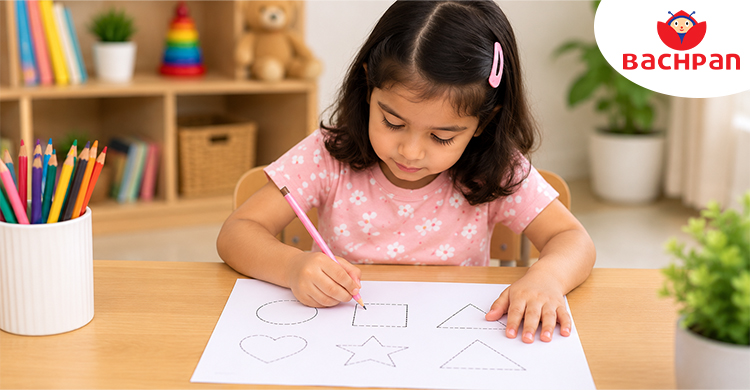
2. Shape Tracing Practice
Tracing shapes is a natural step to improve handwriting for children learning to write letters. Circles, squares, triangles, and rectangles teach them how to change direction and control pencil movements while staying within boundaries. Once your child becomes comfortable tracing each shape, encourage them to draw it independently.
This simple handwriting practice for kids strengthens their hand-eye coordination and builds the control they need to write clear, well-formed letters.
3. Sand or Salt Tray Writing
Before moving on to advanced handwriting exercises for preschoolers, taking the pencil away is exactly what a child needs, sometimes.
Spread a thin layer of sand or salt in a tray and encourage your child to trace letters with their finger. The sensory experience helps children remember the movements needed to form letters, while the ability to erase and try again removes the fear of making mistakes.
4. Play Dough Letter Formation
As children roll, pinch, stretch, and shape the play dough into letters, they strengthen the small muscles in their hands that support writing. It also helps them understand how each letter is formed without the pressure of using a pencil. No wonder, simple, hands-on activities like this are counted among the best handwriting exercises for kids.
Play-based learning activities like these are excellent examples of hands-on learning. You can explore more types of preschool activities for kids by category to support your child’s overall development.
Pencil Control Activities for Better Handwriting
Good handwriting begins with good pencil control. As children learn to guide a pencil with greater precision, writing starts to feel easier and more natural.
These simple pencil grip exercises and activities encourage steady progress while keeping handwriting practice at home enjoyable as well as free from pressure.
5. Dot-to-Dot Activities
One of the simplest ways to learn how to improve handwriting in preschoolers is through dot-to-dot activities. Children love discovering the picture hidden behind a series of dots, which makes this activity feel more like a game than handwriting practice.
Start with simple dot-to-dot worksheets and gradually increase the difficulty as your child’s confidence grows.
6. Coloring Within the Lines
Coloring may seem like an ordinary art activity, but it plays an important role in handwriting development. Encouraging children to stay within the outlines teaches them to control the direction and pressure of their pencil as well as crayon.
Begin with large, simple pictures and gradually introduce more detailed illustrations as their skills improve. Over time, this fun handwriting practice for children strengthens the precision needed for clear handwriting.
Activities that improve pencil control also become enjoyable indoor learning experiences. Here are some more indoor activities for kids on a rainy day that keep children engaged while developing important skills.
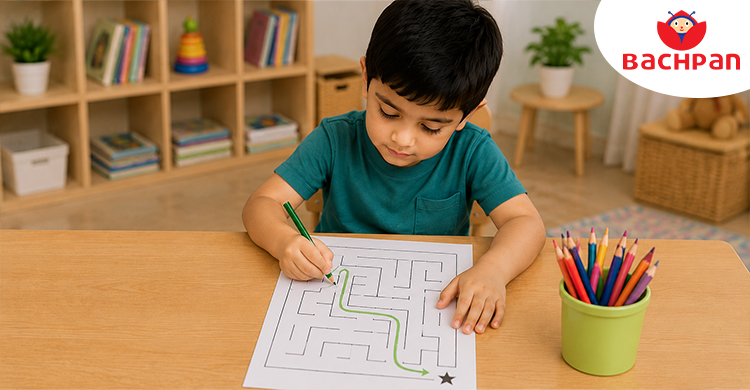
7. Maze Worksheets
Children rarely think of mazes as handwriting practice, and that’s exactly what makes them one of the most effective handwriting games for young children. As they carefully guide their pencil from the start to the finish, they learn to control every movement without lifting the pencil unnecessarily.
Begin with wide, simple paths and gradually introduce narrower, more challenging mazes.
8. Connect the Dots
Connect-the-dots activities encourage children to slow down and focus on every pencil stroke. Whether they are following numbers or letters, each line they draw helps improve accuracy and support the development of writing skills for children. As the pictures become more detailed, children naturally develop steadier hand movements without feeling like they are practicing handwriting.
Letter Formation Activities to Improve Handwriting for Kids
Once children have built enough pencil control, they can begin focusing on forming letters more clearly. This is an important stage in how to improve handwriting for kids, where simple practice starts turning into real writing.
9. Alphabet Tracing
Alphabet tracing is one of the best fine motor activities for handwriting improvement, which helps children recognize each letter while learning how it is formed through guided movement. Start with dotted letters and encourage slow, careful tracing instead of rushing.
With regular handwriting practice at home, children gradually gain confidence and develop smoother, more controlled writing.
Letter tracing becomes much more effective when children have already developed strong finger muscles. Explore these fine motor activities for preschoolers at home to further strengthen handwriting readiness.
10. Finger Painting Letters
Finger painting turns early writing into something playful and sensory. Instead of holding a pencil, children use their fingers to draw large letters on paper or walls, which helps them understand letter shapes through movement rather than pressure or precision. As part of simple handwriting improvement activities for kids, it strengthens coordination and makes handwriting practice feel less formal and more creative, especially in the early stages of learning.
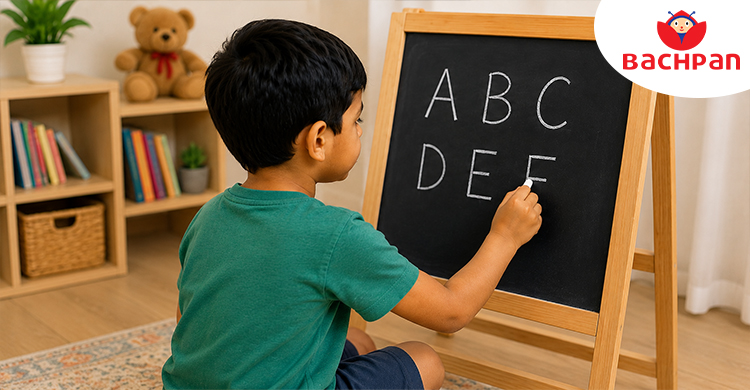
11. Chalkboard Writing Practice
This is one of the simplest activities to improve pencil control and a highly effective, fun handwriting practice for children.
A chalkboard gives children the freedom to write big and move their arms more naturally, which is especially helpful in the early stages of learning. As they form letters, erase, and try again, they slowly gain better control over their pencil movements.
12. Copy Simple Words
Once children are comfortable forming individual letters, the next natural step is copying simple words. Start with short, familiar words like “monkey”, “moon”, “sun”, or their own name. This helps them understand how letters connect and how spacing works between them.
Also, remember to encourage slow, careful writing instead of speed. Over time, this activity supports a smoother transition from tracing to independent writing.
Daily Activities to Improve Handwriting for Kids
Short, consistent practice works far better than long writing sessions once in a while. Just a few minutes each day helps children stay connected to what they are learning without feeling overwhelmed. When paired with simple handwriting tips for kids, this daily habit makes handwriting feel more effortless.
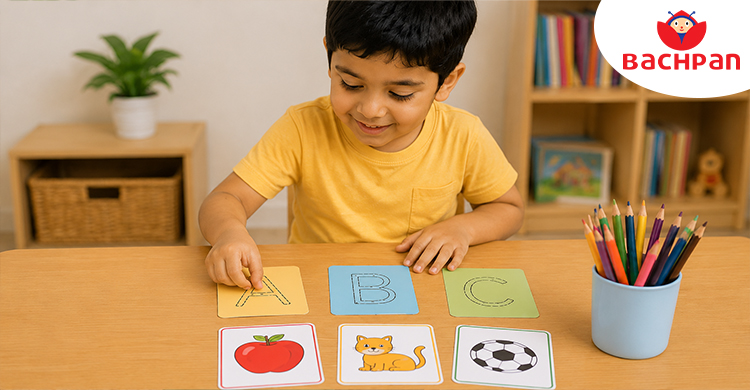
13. Pencil Grip Exercises
Have you noticed your child gripping the pencil so tightly that their hand gets tired after just a few minutes?
A comfortable pencil grip takes time to develop, and a little playful practice can make all the difference. Try squeezing a soft ball, transferring pom-poms with tweezers, or clipping clothespins onto a box. These simple pencil grip exercises make it easier for children to hold a pencil comfortably and write with better control.
14. Daily Writing Practice
Think of handwriting like any other skill. It improves with regular practice, not occasional marathon sessions.
Set aside just 10 to 15 minutes each day for writing, keeping the activity appropriate for your child’s age and ability. Younger children can trace letters or write their names, while older children can copy short sentences or maintain a simple journal.
Reading and writing go hand in hand. Encourage children to copy simple sentences from these nursery rhymes for kids with lyrics to improve handwriting while building language skills.
15. Fun Writing Games
Children are far more likely to practice writing when they don’t realise they are practicing at all. So, turn handwriting into a game by creating word hunts, letter scavenger hunts, treasure maps, shopping lists, or “guess the word” challenges. You can even ask your child to write clues for a family treasure hunt or label drawings they have created. These handwriting games for young children help them stay motivated.
Benefits of Good Handwriting for Kids
Handwriting improvement activities support early literacy. As writing becomes easier and more automatic, children can spend less time thinking about each stroke and more time focusing on expressing their ideas with confidence.
Improves Fine Motor Skills
At the heart of how to improve handwriting for kids is strong fine motor development. Every time children draw or write, they strengthen the small muscles in their hands while improving the coordination needed to control a pencil. These skills extend beyond handwriting and make everyday tasks like using scissors, fastening buttons, tying shoelaces, and handling small objects far less tiring.
Builds Writing Confidence
Children are more likely to enjoy writing when they feel successful doing it. As they master new letters and notice their own progress, their confidence naturally begins to grow. Regular handwriting exercises for preschoolers create these small moments of success and help children overcome the fear of making mistakes while encouraging them to write more often.
Supports Better Academic Performance
Good handwriting does more than make schoolwork look neat. It supports overall writing skills for children by allowing them to focus on spelling, vocabulary, sentence construction, and expressing their ideas instead of thinking about every pencil stroke. As writing becomes more automatic, children also complete classroom tasks more efficiently and keep up with lessons more confidently.
Strong handwriting skills make it easier for children to express their ideas in school and participate confidently in classroom learning. A well-designed preschool curriculum also helps develop these foundational literacy skills through structured, age-appropriate activities.
Tips to Improve Your Child’s Handwriting
The following handwriting tips for kids are absolutely easy to follow and designed to help children develop neat, confident handwriting without turning practice into a chore. Small habits can make a noticeable difference over time.
Choose the Right Pencil
The pencil your child uses can influence how comfortably they write. In fact, a pencil that’s too thin, too thick, or too heavy can make it harder to maintain a proper grip and control each stroke. Therefore, for preschoolers and early learners, always choose a thick, easy-to-hold pencil or a triangular pencil designed for small hands.
Encourage Proper Sitting Posture
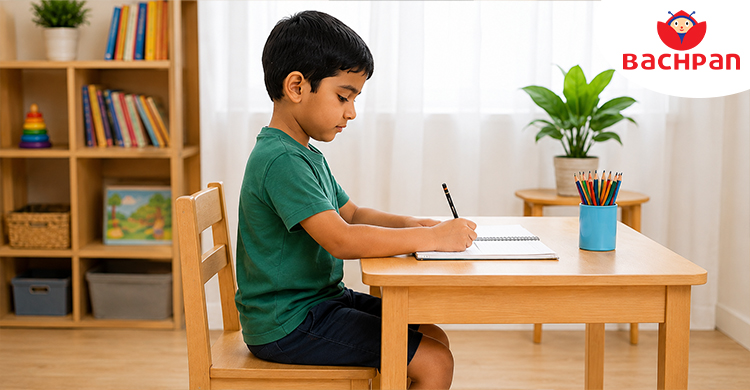
Good handwriting activities for kids start with good posture. Encourage your child to sit with both feet flat on the floor and their back supported, with the table at a comfortable height. Their forearms should rest naturally on the desk, allowing the writing hand to move freely while the other hand steadies the paper.
Maintain Correct Pencil Grip
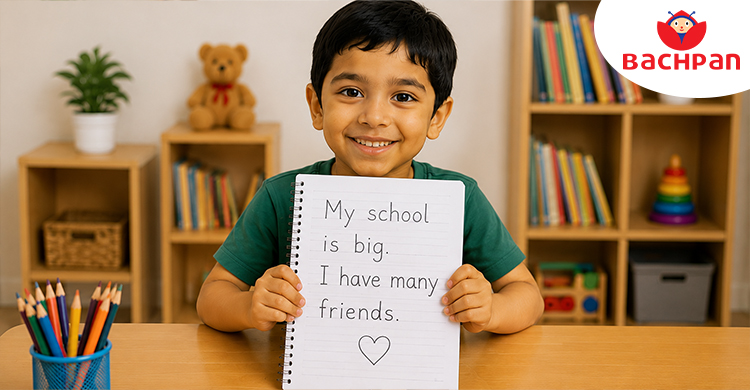
A proper pencil grip gives children better control over every stroke. Encourage your child to hold the pencil using the thumb, index finger, and middle finger, commonly known as the tripod grip, without squeezing it too tightly. If they find this difficult, use short pencils or child-friendly pencil grips to guide their fingers into the correct position.
Practice Regularly
Like reading or riding a bicycle, handwriting improves with consistent practice. A short session of 10 to 15 minutes each day is often more effective than an hour of writing once a week. Regularly keep fine motor activities for handwriting varied by mixing tracing, word writing, drawing, or simple writing games to maintain your child’s interest.
Common Handwriting Mistakes Parents Should Avoid
Even the most effective and easy handwriting activities for kids at home can lose their impact if they are paired with the wrong approach. By recognising and avoiding these habits, you can keep handwriting practice far more productive.
Forcing Long Writing Sessions
More practice doesn’t always mean better results. Young children have limited attention spans, and long writing sessions can quickly lead to tired hands and a dislike for handwriting.
Instead, keep practice short and purposeful, ideally 10 to 15 minutes at a time. Frequent, enjoyable sessions are far more effective than asking your child to fill pages with repeated letters.
Ignoring Pencil Grip
It’s easy to overlook how a child holds a pencil, especially when they are focused on writing their letters. However, an incorrect grip can make handwriting uncomfortable and difficult to control. Gently correcting your child’s grip early and encouraging proper finger placement can make handwriting feel much more natural as they grow.
Expecting Immediate Results
Every child develops handwriting at their own pace, so it’s important not to expect perfect results overnight. Like any new skill, neat handwriting improves through consistent practice and repeated exposure. Celebrate small milestones, whether it’s forming a difficult letter correctly or writing a word more beautifully than before.
Skipping Fine Motor Activities
It’s tempting to jump straight into writing letters, but skipping fine motor activities can make handwriting much harder for young children. Before they can control a pencil confidently, they need to develop strength and coordination in their hands and fingers.
Simple activities like playing with dough, threading beads, using tweezers, or cutting with child-safe scissors build the foundation that makes handwriting neater.
Signs Your Child’s Handwriting Is Improving
As you explore how to improve handwriting in preschoolers, it’s helpful to know what progress actually looks like. Improvement doesn’t happen all at once, and it’s not just about neater letters.
Better Letter Formation
One of the clearest signs of progress is that letters begin to look more consistent. You will notice fewer reversed letters, smoother curves, straighter lines, and more uniform sizes. Your child may also spend less time thinking about how to form each letter because the movements become more familiar.
Improved Spacing Between Words
Another encouraging sign of progress is more consistent spacing between words. Instead of writing words too close together or leaving large gaps, children begin to judge the right amount of space naturally. This makes sentences easier to read and helps them organise their thoughts more clearly on the page.
Stronger Pencil Control
You will also notice your child becoming more comfortable with the pencil itself. Instead of gripping it too tightly or pressing hard on the page, they will begin to guide it with smoother, more controlled movements. Lines become steadier and curves look more natural, while there are fewer unnecessary lifts or shaky strokes.
Increased Writing Confidence
Perhaps the most rewarding sign of progress is your child’s growing confidence. Instead of avoiding writing tasks or asking for constant help, they will begin to pick up a pencil willingly and complete activities with greater independence. You will notice less hesitation and a greater willingness to write new words or short sentences.
FAQs on How to Improve Handwriting for Kids
The best way to improve your child’s handwriting at home is through short, consistent practice rather than long writing sessions. Start with pre-writing activities like tracing lines and play dough exercises to build hand strength and pencil control. As your child progresses, introduce alphabet tracing and copying simple words.
Handwriting development begins long before children start writing letters. Around 2 to 3 years, children can begin pre-writing activities such as drawing lines, scribbling, coloring, and playing with dough to strengthen their hand muscles.
By 3 to 4 years, they can start tracing lines and shapes, while 4 to 5 years is generally a good time to introduce letter tracing and simple handwriting practice.
Some of the most effective handwriting activities for preschoolers include tracing lines and shapes, writing in sand or salt trays, forming letters with play dough, coloring within the lines, solving mazes, connecting dots, and practicing alphabet tracing. Keeping the activities playful and engaging encourages regular practice without making handwriting feel like a chore.
For most young children, 10 to 15 minutes of focused handwriting practice each day is enough to build steady progress without causing fatigue or frustration.
A correct pencil grip gives children better control over every movement, making it easier to form letters neatly and write comfortably. It also reduces unnecessary strain on the fingers and wrist and allows children to write for longer periods without their hands getting tired.
Conclusion – Helping Kids Develop Better Handwriting
Learning how to improve handwriting for kids is a journey that unfolds one small step at a time. With regular practice, the right activities, and consistent encouragement, parents can successfully learn how to improve handwriting for kids while making the process enjoyable and stress-free. Every line your child traces and every letter they form helps build confidence that extends far beyond the page. At Bachpan Play School, we believe children learn best through hands-on experiences. That’s why our SPROUT Curriculum also blends play-based learning with carefully designed activities that strengthen the skills needed for confident writing, rather than relying on repetitive drills.
Fine motor development is one of the building blocks of neat handwriting. To further strengthen your child’s pencil control, hand coordination, and finger strength, explore our guide on 20 Best Fine Motor Activities for Preschoolers at Home.