


Hands-On Learning Activities for Preschoolers at Home
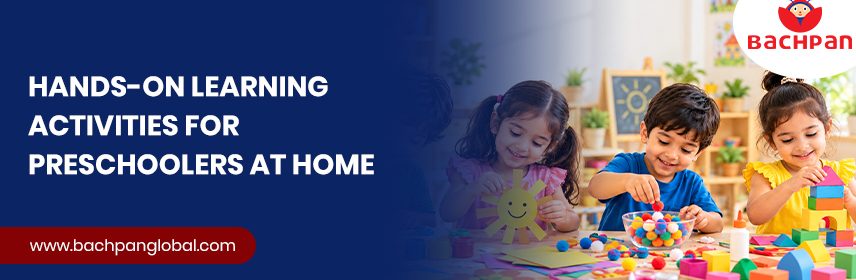
Hands-on activities are perfect for your kids’ learning. Turn a cardboard box into a robot. Turn a line of blocks into a counting activity. Hands-on learning activities for preschoolers at home help you turn familiar areas of your home into learning opportunities where your child can learn about shapes, numbers, words, and concepts. Whether you have only 10 minutes or a longer session, think about what your child enjoys and use play as a starting point to learn, talk, and create together.
Why Are Hands-On Learning Activities Important for Preschoolers?
Preschoolers need to be given opportunities to use resources, experiment, and discuss their findings. Learning through play helps them connect abstract concepts to real-life examples; for instance, how adding or taking away blocks will change the tower or group. Hands-on learning for preschoolers also provides opportunities for children to practice using their fine motor skills, communication, and problem-solving skills. Interacting with an adult and taking their help boosts engagement for kids.
10 Hands-On Learning Activities for Preschoolers at Home
These easy hands-on learning activities for preschoolers use easy-to-source materials and are great fun. Begin with the easiest activities and let your child’s questions lead you to build up the complexity. Each activity has a corresponding Bachpan Box, so your kids can play with ready-made materials.
1. Shape Sorting and Matching Activities
Gather together a variety of large cardboard shapes (circles, squares, and triangles). Provide paper copies of the same shapes and ask your child to match them up. Can they find any other shapes that are the same? How are they different from each other? Can they turn the triangle and see if they still call it a triangle? This activity helps your child learn new vocabulary around shapes, matching, and spatial awareness. For additional DIY learning activities for kids, try the Smart Shapes Kit. Be sure to check the age recommendations and what is in the kit.
2. Counting, Addition and Subtraction Games
Use 5 big blocks, 2 bowls, and some homemade number cards. Ask your child to count as they move one block at a time. Place 2 blocks in one bowl, then ask how many blocks there are when you add another. Then take one away and ask them to count. Such learning games for preschoolers at home will help them see how the numbers work. Don’t rush into showing them the theory part of numbers. Make sure to challenge them according to their practical understanding. For a similar activity, have a look at the Math Quest Kit or watch the demo video.
Once children become comfortable with counting and simple addition, they can gradually explore multiplication concepts, such as the 8 times table in maths, through repeated counting and practical examples.
3. Alphabet, Spelling and Word-Building Activities
Make some large cards with letters on them and some images of objects your child knows. Start by matching letters that are in their name. Once they are confident with this, you can move on to the sounds that the letters make. If they are confident with blending sounds, you can create a simple word like sun and blend the sounds. Don’t forget to keep letter recognition and reading separate. Not all preschoolers will be ready for spelling activities. These number and alphabet activities for preschoolers can be delivered in a fun way. You could also look at our Spell & Tell Kit. Just check the recommended age and level of learning.
4. Art and Craft Activities Using Different Materials
Provide your child with paper, thick crayons, washable colours, large bits of fabric and glue. Next, ask them to design their own garden, animal or vehicle. As they create, talk to them about the different colours and textures they are using. In this way, the activity helps improve your child’s fine motor skills by tearing, drawing, and putting together different materials. Finally, encourage your child to be creative and try different things with these creative learning activities for preschoolers. Other similar activities include My Crafty Bag, QuillCraft Studio, and Mask a Magic.
For more ideas that strengthen hand control and coordination, explore these fine motor activities for preschoolers at home, which children can enjoy using simple materials.
5. Gardening and Plant-Observation Activities
Get a small pot with drainage holes, some potting compost, and some seeds. Get your child to help you fill the pot with compost and plant the seeds as instructed on the packet of seeds. Next, find a suitable place to grow them. Regularly check on the plants and draw to show how they are changing. Ask your child what they can see today. In this way, planting journals help children observe and draw. You could look at My First Kitchen Garden Kit or Paint & Plant Kit for some ideas. Ensure that you are helping your child with the seeds, and wash your hands afterwards.
As the seeds grow, teach children about the parts of a plant for kids, including roots, stems, leaves, flowers, and fruits, to help them understand how plants develop.
6. Simple Magnet Exploration Activities
Use a magnet toy with an age rating. They should have magnets that are enclosed and safe. Gather some big items made of wood, plastic, and the right type of steel. Ask your child to guess what they will attract. Test them to see. Discuss how not all metals are attracted to magnets. This should be an adult-led activity. Never use free-flowing magnets, magnetic beads, or powerful magnet sets. Use the Wonder Magnets! Kit for reference.
7. Building and Construction Challenges
Gather some big blocks, cardboard boxes, and toy cars. Ask your child to build a bridge that a car can drive upon. Does it hold up? If not, ask them what they could do to make the base more stable. Try out different widths of base. How many blocks did they use to build the bridge? This is a great way to get your child thinking about measuring, using construction vocabulary, and problem-solving. They don’t have to make it look like a real bridge. It is one of the most engaging indoor learning activities for kids. You could also try the BuildCraft Box.
8. Transport Sorting and Identification Games
Gather together a selection of large toy vehicles or make your own picture cards of buses, bikes, boats, planes and trains. Ask your child to sort the pictures into sections on a piece of paper. You could create areas for road, water, air and rail. Ask them to give you a reason why they have sorted the pictures in that way. Can they tell you where each vehicle could go? To extend this game, ask them to imagine they are going on a journey. Can they tell you who they are taking with them? This game will help with sorting, vocabulary, and talking. Look at the Transport Treasures Kit for a similar theme.
9. Dinosaur-Themed Learning and Creative Play
Supplies needed for this activity will be large dinosaur cut-outs or pictures, paper, crayons, and some cardboard scenery. Let your child create their own dinosaur landscape, discuss the long and short tails, or come up with a story about how they found their food. Ask them what they can imagine and then look up a suitable book to find out some facts about dinosaurs. It is also a great way to introduce fun learning activities for kids. You could also look at the Craft Your Own Saurus-Park Kit.
10. Puzzles and Geography-Based Learning
Choose a simple jigsaw puzzle, a puzzle with large pieces, or a map of India that is appropriate for your child’s age. Start by looking at the picture as a whole and then look at the pieces. Use the colours, shapes, and any local details to help them match up the pieces. Ask them to explain how they worked out where the piece belonged. Other good options include India Expedition, Pixel Math Quest, and Pizza Puzzler. Check the difficulty level for each activity kit.
Hands-On Learning Activities for Preschoolers by Age Group
These are guidelines, not a deadline. Each child will develop at different rates and will have varying levels of experience, interests, language, and motor skills. Adjust the resources and difficulty to suit your child’s comfort level in the hands-on activities for 3 to 5 year olds.
| Age Group | Suggested Activities | Learning Focus |
|---|---|---|
| 2–3 years | Shape matching, large-block building, supervised water play | Exploration and early coordination |
| 3–4 years | Colour sorting, counting objects, simple art | Matching, counting, and creativity |
| 4–5 years | Letter matching, number games, simple puzzles | Early literacy, maths, and problem-solving |
| 5–6 years | Word-building, simple sums, construction challenges | Early academic concepts and independent thinking |
When choosing hands-on activities for 2 to 3 year olds at home, you want to focus on larger materials and keep things simple. The table given is just some ideas and can be adapted as needed. It is not a test of their development or a push to start formal learning early.
How to Make Home Learning Fun and Effective
The best learning activities for preschoolers at home are open-ended. You don’t need to plan too many activities. Create an interesting activity and get involved thoughtfully. Be aware of what your child is interested in finding out more about.
Choose Activities That Match Your Child’s Age
Begin with activities that your child enjoys and can engage with. Maybe they enjoy matching shapes together or sorting different shapes according to their properties. The preschool activities at home should be challenging but achievable. It shouldn’t be a competition between your child and someone else or a strict guideline based on age.
Parents can explore more preschool activities parents can do at home to introduce age-appropriate games, creative tasks, and playful learning opportunities.
Let Children Explore and Solve Problems
If your child knocks their tower over or gets stuck on a puzzle piece, ask them what they could do next. Only give a little clue if they need it and let them try a different method. Building activities are great for talking about balance, size, and position. You should help them to investigate but also make sure that they are using the resources safely.
Keep Activities Short and Interactive
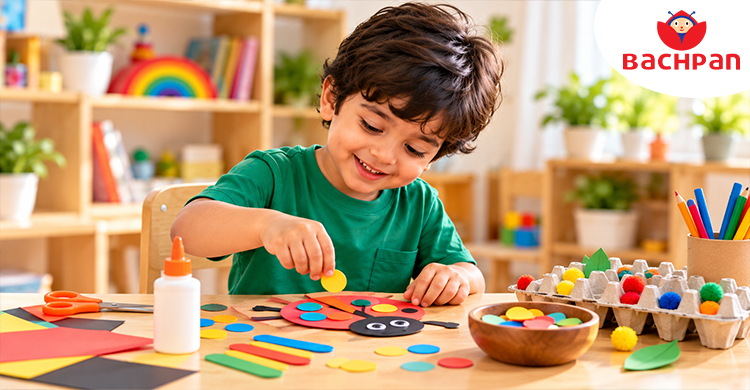
Keep it simple. Start with one sorting tray or one building activity. If your child wants to carry on, then great. Chat, take turns, and let them move around. Screen-free activities for preschoolers don’t have to be done sitting down. A shape hunt around the room can be more appealing than another activity on the table.
On days when outdoor play is not possible, try these indoor activities for kids to keep children engaged through creative play and simple learning experiences.
Combine Everyday Materials with Educational Activity Kits
Use a prepared activity as a starting point, then connect it with familiar objects. After matching shapes, search for rectangles in books or windows. After counting blocks, count steps along a path. Learning activities using household items help children revisit ideas in different settings. Educational activity kits for kids can provide materials that can be used for learning purposes in different aspects.
Encourage Curiosity Instead of Focusing on Perfect Results
Encourage children to talk about their choices. Provide easy-to-use art materials and allow for different results. Instead of judging their outcomes, ask them to talk about a particular part of the activity. If you are looking at how to make learning fun for preschoolers, the first step is to allow them to have choice, use their imagination, explore, and adapt.
How to Choose Educational Activity Kits for Preschoolers
When choosing any kits, look past the flashy packaging and lofty learning promises. The best educational activity kits for preschoolers will be best suited to your child’s interests, abilities, and safety requirements and provide hands-on opportunities.
Look for Age-Appropriate Learning Goals
Pick an activity kit with a clear objective to achieve. This could be a matching game, sorting game, a material discovery game, or a letter recognition game. Ensure you try to be friendly with your kids, as it will help them learn better. The educational activities for preschoolers should be achievable for your child but can be made more challenging.
Check the Materials and Safety Instructions
Before buying any activity-based learning kit, read the age warning, safety information, and guidance on adult supervision. Check that pieces are not broken and think about how your child will play with the learning kit. Do not assume that adult supervision will make an unsuitable product suitable for their age. Keep materials safe and take out broken parts if any.
Choose Kits That Encourage Active Participation
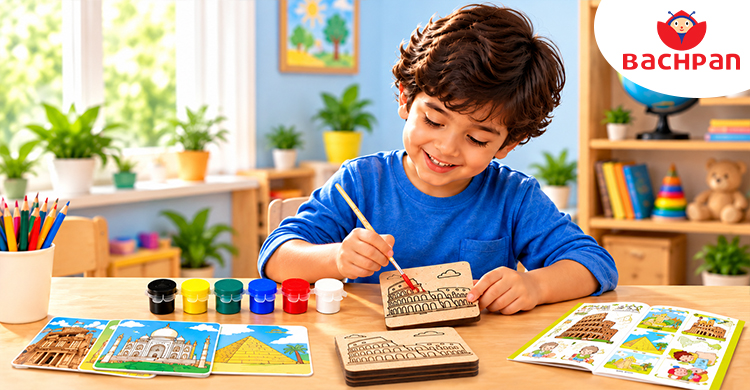
Look for activities where children will have to sort, construct, order, draw, compare, or experiment. Can they be adapted? Can the resources be used in a variety of ways? Can the adult change the level of challenge? DIY educational activities for preschoolers should give the child real choices. While it is nice to have an impressive final model, it is more important that there are opportunities to investigate how things work or change.
Explore Bachpan Box Activity Kits
Bachpan Box offers a range of structured resources. You can browse through the range of learning kits, including Smart Shapes, Math Quest, and Spell & Tell. Parents looking for hands-on learning activities for preschoolers at home can browse the available kits and check the recommended age range and materials. You can also look at the demo for Math Quest and Pixel Math Quest. The videos will help you understand how the resources work for all preschoolers. Choose resources based on what your child needs.
Hands-On Learning Activities at Home: Quick Checklist
Have this checklist ready to help you plan your simple educational activities for kids at home. Pick an activity and the right resource. Identify a simple learning objective. These indoor learning activities for kids can be easily adapted to make the learning enjoyable.
| Activity | Materials Needed | Learning Focus |
|---|---|---|
| Shape Sorting and Matching | Shape cards, blocks, or household objects | Shape recognition and matching |
| Counting and Number Games | Number cards, blocks, or counters | Number recognition and counting |
| Alphabet and Word Building | Letter cards, alphabet blocks, or spelling materials | Letter recognition and early literacy |
| Art and Craft | Paper, crayons, glue, and craft materials | Creativity and fine motor skills |
| Gardening and Plant Observation | Seeds, soil, small pots, and water | Nature awareness and observation |
| Magnet Exploration | Child-safe magnets and suitable objects | Observation, sorting, and early science |
| Building and Construction | Large blocks or construction materials | Problem-solving and spatial awareness |
| Transport Sorting | Vehicle toys or picture cards | Classification and vocabulary |
| Dinosaur Creative Play | Dinosaur figures, paper, or drawing materials | Imagination, storytelling, and observation |
| Puzzles and Geography | Age-appropriate puzzles, maps, or picture cards | Matching, spatial awareness, and problem-solving |
FAQs About Hands-On Learning Activities for Preschoolers
Hands-on activities for preschoolers include building a tower of blocks, sorting shapes, putting letters in order, and counting items. Children can engage with an adult to make links between their practical work and concepts like size, amount, position, and meaning.
Choose a game that your child can play to help them learn about matching. Maybe they could play a matching game using socks or sort big blocks into colours. They could draw pictures with crayons or build with cardboard. They could also count objects. Make sure they use safe items. These easy hands-on learning activities for preschoolers can be adapted to your child’s interests. Start with an easy challenge.
Let children follow their interests, make choices, and explore through play. For example, if your child loves vehicles, encourage them to count vehicles or build cardboard garages. Ask open-ended questions and let them repeat activities. These fun learning activities make everyday experiences more engaging.
Counting single items, comparing amounts, and adding or taking away blocks will help them see the units. With alphabetical letters, play letter matching games using name cards, alphabet jigsaw puzzles, reading together, and fun sound games. When they are ready, you can start to teach them how to make words.
Educational activity kits can be a good resource with the right materials. Know what you want to achieve, and keep the children completely involved in the activities. Blocks, paper, and regular items can all help them explore
Conclusion
Hands-on learning activities for preschoolers at home can be done with just a few good resources. Ask a fun question and get creative with your resources. Activities such as matching, counting, storytelling, art, and building will provide great opportunities for discussion and discovery. Using everyday items will make it easy to get creative. Bachpan Box kits are a great option if they fit the interests and ability of your child. Keep the activities simple, safe, and fun. The focus should not be on creating a perfect product or getting ahead with academics, but on providing meaningful ways for your child to engage with learning through play.