


10 Lines on Dussehra for Kids in English
Dussehra is one of the most popular festivals celebrated across India. It teaches children an important lesson—that truth and goodness always triumph over evil. Kids enjoy Dussehra through colourful fairs, Ramleela performances, traditional stories, and the burning of Ravana’s effigy. Learning about such festivals helps children understand Indian culture and traditions in a fun and engaging way. In this blog, children will find 10 lines on Dussehra for kids in English, covering its importance, celebrations, and values. These easy Dussehra lines for kids can also be useful for school activities, speeches, and class assignments.
10 Lines on Dussehra for Kids
1. Dussehra is a fun festival in India.
2. It is also called Vijayadashami.
3. It shows how good wins over bad.
4. Lord Rama defeated the bad king Ravana.
5. It comes right after nine days of Navratri.
6. Kids watch Ramleela shows about Lord Rama.
7. Big statues of Ravana are burnt at night.
8. There are melas with games, food, and fun.
9. Families meet and celebrate together happily.
10. Dussehra teaches us always to be good and honest.
10 Lines on Dussehra for Different Classes
Children of different age groups require distinct levels of vocabulary and detail. Here are tailored sets of 10 lines on Dussehra in English designed specifically to match various class levels for school students.
10 Lines on Dussehra for Class 1, 2, 3
These are easy 10 Lines on Dussehra for Kids in English, using short sentences and easy words.
1. Dussehra is a happy Indian festival.
2. It is also called Vijayadashami.
3. Lord Rama defeated Ravana on this day.
4. It teaches us that goodness defeats evil.
5. People wear colourful new clothes.
6. Children visit fun melas and eat sweets.
7. Big paper effigies of Ravana are set on fire.
8. We watch Ramleela plays with our family.
9. It brings love, joy, and peace.
10. Dussehra is my favourite festival of all.
10 Lines on Dussehra for Class 4, 5, 6
Explore these easy and engaging 10 Lines on Dussehra in English, written especially for kids to understand and learn the festival simply.
1. Dussehra, also known as Vijayadashami, is a joyful festival that people celebrate across India.
2. Dussehra is celebrated on the festival’s tenth day to commemorate the triumph of righteousness over evil.
3. According to the Ramayana, Lord Rama defeated the ten-headed king Ravana and rescued Goddess Sita.
4. Ravana was highly knowledgeable and powerful, but his pride and wrong actions eventually led to his defeat.
5. Lord Rama won the great battle with the help of his brother Lakshmana, Lord Hanuman, and the Vanara army.
6. Before Dussehra, people organise ‘Ramleela’ stage plays to show important events from the Ramayana.
7. In the evening, people burn tall paper effigies of Ravana, Kumbhakarna, and Meghnada in open grounds.
8. Burning these effigies reminds us that truth always wins and bad habits are destroyed in the end.
9. Families visit colourful Dussehra fairs (melas) to enjoy rides, buy toys, and share festive treats.
10. The festival teaches everyone to be honest, kind, and brave in every situation.
10 Lines on Dussehra for Higher Class Students
For older children who need a comprehensive set of 10 lines on Dussehra for school students:
1. Also called Vijayadashami, Dussehra is one of India’s important festivals. It represents the victory of dharma, or righteousness, over adharma, or wrongdoing.
2. The festival recalls Lord Rama’s defeat of the ten-headed Ravana and highlights values such as honesty, bravery, and inner strength.
3. It simultaneously marks the conclusion of the nine-night Navratri festival, celebrating Goddess Durga’s slaying of the buffalo demon Mahishasura.
4. Beyond traditional stories, Dussehra delivers a timeless philosophical lesson: ego, arrogance, and injustice will inevitably lead to destruction.
5. In Northern and Central India, the festival features Ramleela, a traditional folk-theatre reenactment of key events from the epic Ramayana.
6. The evening ritual centers around burning towering effigies of Ravana, Kumbhakarna, and Meghnada, symbolising the eradication of bad thoughts and habits from society.
7. The festival showcases India’s rich cultural diversity, from the regal royal processions of Mysore Dasara to the vibrant Durga Visarjan rituals in Eastern India.
8. Dussehra historically marks the arrival of the autumn harvest season and initiates formal preparations for Diwali, the festival of lights.
9. For senior students, the festival serves as a call for self-reflection to identify and conquer internal vices like anger, greed, and pride.
10. Ultimately, Dussehra inspires young adults to embody moral integrity, civic duty, and ethical leadership in an evolving world.
Why Do We Celebrate Dussehra?
Understanding the history and moral meaning behind festivals helps young minds appreciate our traditions. Here is why we celebrate Dussehra and why its lessons remain so meaningful for every growing child.
Lord Rama’s Victory Over Ravana
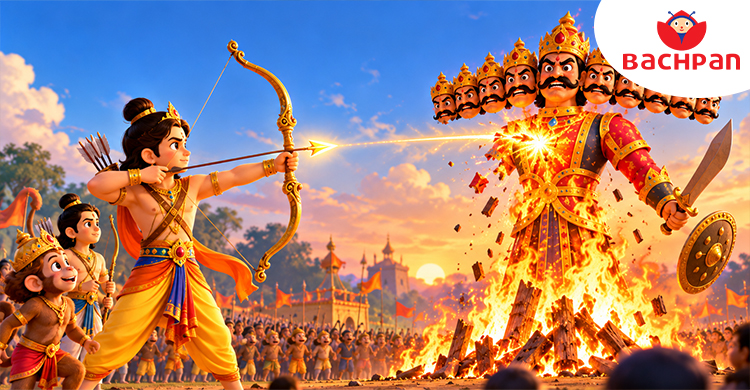
According to the Ramayana, Lord Rama fought a great battle against the ten-headed king Ravana to rescue Goddess Sita. Ravana captured Sita and took her to Lanka, leading Lord Rama to wage a battle against him. With courage, determination, and righteousness on his side, Lord Rama defeated Ravana. Rama ultimately defeated Ravana, and this event is commemorated every year during Dussehra. The celebration reminds people that truth and righteousness can prevail over wrongdoing.
Children can explore more stories from the epic through these Ramayana stories for preschoolers, which introduce important characters and values in an age-appropriate way.
The Victory of Good Over Evil
Dussehra carries a simple and meaningful message: good can overcome evil. Ravana represents negative qualities and wrongdoing, while Lord Rama represents truth, courage, and righteousness. For children, the festival is a reminder to be honest, kind, respectful, and brave in everyday life.
How Is Dussehra Celebrated?
Dussehra is celebrated in many unique ways across India. From vibrant Ramleela performances and festive melas to traditional rituals and community gatherings, the festival brings families and communities together to celebrate joy, tradition, and the victory of good over evil.
Ravana Effigy Burning
A special highlight of Dussehra for kids is the evening celebration, when open grounds fill with families gathered to watch the towering effigies of Ravana, Kumbhakarna, and Meghnada. As fiery arrows set the effigies alight, bright fireworks and smoke fill the sky, symbolising the destruction of evil and the victory of righteousness.
Ramleela Performances
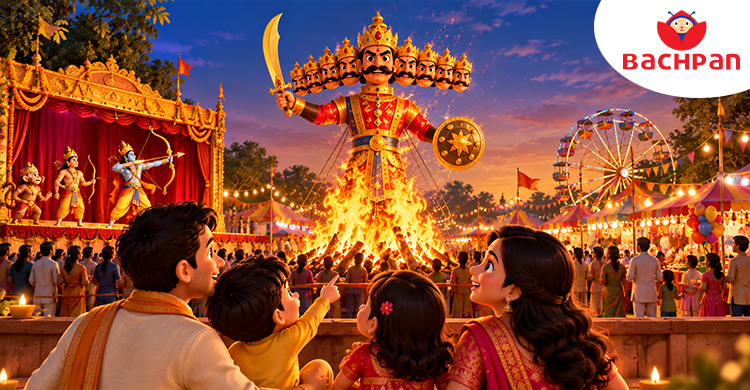
During the ten days leading up to Dussehra, local artists organise dramatic plays called Ramleela. They act out key scenes from the ancient epic Ramayana. Children love watching these lively theatrical performances, which bring the historic story of Lord Rama to life right before their eyes.
Along with watching Ramleela, children can learn about the festival through creative activities. Try these Dussehra activities for preschoolers to make the celebration more interactive.
Dussehra Melas and Family Celebrations
Melas add fun and excitement to the Dussehra festival for kids, with colourful decorations, lively stalls, traditional food, games, and entertaining activities. Families come together to enjoy these festive celebrations and take part in community activities. For children, the cheerful atmosphere makes the festival even more enjoyable while giving families a chance to spend time together and create happy memories.
Families can continue the festive learning at home with simple preschool activities parents can do at home that encourage children to learn and play together.
Short Dussehra Essay for Kids
Here is a short Dussehra essay for kids that provides a complete overview for school projects and speech competitions:
Dussehra is one of India’s well-known festivals. Also called Vijayadashami, it represents the triumph of righteousness over evil. According to the Ramayana, the festival commemorates Lord Rama’s victory over Ravana after a long and challenging battle. People celebrate the day by watching Ramleela performances and burning Ravana’s effigy. Dussehra melas are also organised in many places, where families enjoy food, games, and cultural activities. Dussehra conveys valuable lessons about honesty, bravery, compassion, and following the path of righteousness. It reminds us that we should always choose the right path and stand against wrongdoing.
Dussehra Words Kids Should Know
Expanding vocabulary makes learning fun and engaging! Here are key cultural words related to Dussehra that every young student should learn and understand while writing their Dussehra lines for kids.
| Word | Simple Meaning |
|---|---|
| Dussehra | A festival celebrating the victory of good over evil |
| Vijayadashami | Another name associated with Dussehra |
| Ramleela | A dramatic presentation of Lord Rama’s story |
| Ravana | The antagonist defeated by Lord Rama |
| Effigy | A model or figure made to represent someone |
| Ramayana | The ancient Indian epic about Lord Rama |
Stories with simple lessons can help children understand values such as honesty, courage, and kindness. Explore these short moral stories for kids for more age-appropriate stories and lessons.
Dussehra Quick Facts for Kids
Here is a handy quick-reference table designed for revision, quizzes, and classroom facts. Before writing your 10 lines on Dussehra in English, these quick facts give children a fast recap of everything they need to know.
| Question | Short Answer |
|---|---|
| What is Dussehra? | A major Hindu festival associated with the victory of good over evil. |
| Who defeated Ravana? | Lord Rama. |
| What is another name for Dussehra? | Vijayadashami. |
| What is Ramleela? | A dramatic performance based on the story of Lord Rama. |
| Why is Ravana’s effigy burned? | It symbolizes the victory of good over evil. |
Frequently Asked Questions About Dussehra
Dussehra is a festival that celebrates the victory of good over evil. It is associated with Lord Rama’s victory over Ravana.
We celebrate Dussehra to honour the triumph of truth, righteousness, and virtue over evil, falsehood, and wickedness, encouraging everyone to walk on the right path.
Lord Rama defeated Ravana with the help of his brother Lakshmana, Lord Hanuman, and the Vanara army.
Another widely used name for Dussehra is Vijayadashami, which signifies victory on the tenth day.
Dussehra teaches children the values of truthfulness, courage, kindness, and respect. It reminds them that choosing what is right and standing by good values are always important. Encouraging children to write a Dussehra essay in English can help them understand and express the significance of the festival in their own words.
Dussehra is celebrated through Ramleela performances, Ravana effigy burning, fairs, cultural programmes, and family gatherings. Celebrations may vary across different parts of India.
Conclusion
Dussehra is more than a festival filled with lights, fairs, and celebrations. It gives children a simple lesson about choosing truth and goodness over wrongdoing. Moreover, through stories of Lord Rama, Ramleela performances, and festive traditions, children can enjoyably learn about Indian culture. In addition, these 10 lines on Dussehra for kids in English can help young learners prepare for school activities, speeches, and writing tasks. Most importantly, Dussehra reminds every child that kindness, courage, honesty, and good actions can make a positive difference.