


10 Benefits of Exercise in Early Childhood for Healthy Growth
Children are naturally full of energy, and movement plays a central role in physical development in early childhood. Running, jumping, dancing, climbing, and playing help children develop physically, mentally, emotionally, and socially. The benefits of exercise in early childhood include stronger muscles, better balance, improved focus, confidence, quality sleep, and stronger social skills. Regular activity also encourages healthy habits and an active lifestyle. Exercise does not need to be structured; simple games, outdoor play, cycling, dancing, and movement activities can make staying active fun and enjoyable.
Quick Overview of the Benefits of Exercise in Early Childhood
Regular physical activity supports children’s physical, mental, emotional, and social development. This quick table highlights the key benefits parents should know about encouraging active play from an early age.
| No. | Benefit | How It Helps Children |
|---|---|---|
| 1 | 💪Stronger Muscles and Bones | Supports strength and healthy physical development |
| 2 | ⚖️Better Balance and Coordination | Improves body control and movement |
| 3 | 🌱Healthy Growth and Weight | Supports an active lifestyle and healthy development |
| 4 | 🧠Improved Focus and Concentration | Helps children listen, respond, and stay engaged |
| 5 | 😴Better Sleep | Helps children relax and maintain healthy sleep habits |
| 6 | 🌟Greater Confidence | Builds confidence through new physical skills |
| 7 | 🤝Better Social Skills | Encourages sharing, teamwork, and cooperation |
| 8 | 😊Emotional Well-Being | Gives children a positive way to manage energy and emotions |
| 9 | 🏃 Stronger Gross Motor Skills | Develops running, jumping, throwing, and other movements |
| 10 | ❤️Healthy Habits for Life | Introduces children to an active lifestyle |
Why Is Exercise Important in Early Childhood?
Understanding the importance of exercise for children in early childhood helps build a strong foundation for lifelong health and well-being. The benefits of exercise in early childhood go beyond physical fitness, supporting children’s social, emotional, and cognitive growth while improving coordination, confidence, and overall development through active play.
The Role of Physical Activity in Child Development
Physical activity in early childhood gives children opportunities to move, explore, and learn through experience. Running, jumping, climbing, and throwing support motor development, while games with others encourage communication and social skills. These everyday experiences contribute to physical, emotional, social, and cognitive development.
Physical activity is one part of a child’s broader early development. Learn more about the importance of preschool and early childhood education and how early learning supports holistic growth.
Why Young Children Need Movement Every Day
Young children learn through doing, and daily physical activity in early childhood is a natural way for them to explore their surroundings. Regular daily exercise for kids can break up long periods of sitting and give children opportunities to practise balance, coordination, and gross motor skills.
10 Benefits of Exercise in Early Childhood
The benefits of exercise in early childhood are evident in many everyday moments. From learning to balance on one foot to confidently joining a group game, active play gives children valuable opportunities to grow.
1. Builds Strong Muscles and Bones
Daily exercise for kids helps children build physical strength as they grow. Activities such as running, jumping, climbing, and balancing put muscles and bones to work, helping develop strength, stability, and coordination. The benefits of exercise for preschool children also include better body control and confidence in everyday movements. Over time, regular activity supports strong muscles and bones and lays the foundation for healthy physical development.
2. Improves Balance and Coordination
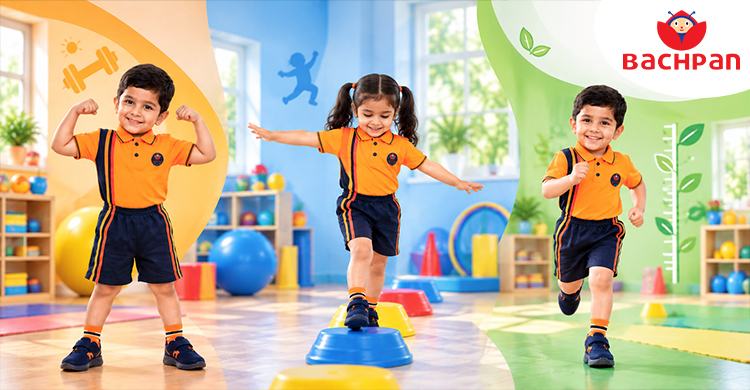
A child learning to hop, catch a ball, or walk along a line is also learning how to control their body. Such activities strengthen balance and coordination and improve body awareness. These skills become useful in everyday tasks, from climbing stairs to playing games. Providing regular exercise for young children gives them plenty of chances to practise these abilities enjoyably.
3. Supports Healthy Growth and Physical Health
An active routine helps children use their energy in healthy ways. Experiencing the benefits of physical activity for children alongside balanced nutrition and rest supports steady development and a healthy weight. The goal is not to make exercise about appearance or weight, but to help children enjoy an active lifestyle and understand that movement is a natural part of everyday life.
4. Improves Focus and Concentration
Active play gives children a refreshing break from seated activities and helps them return with renewed energy. Games that involve following instructions, remembering movements, or responding to cues encourage children to listen and pay attention. This highlights the importance of physical activity for kids, supporting both physical development and focus and concentration during everyday learning.
5. Encourages Better Sleep
Regular activity, combined with a calm bedtime routine, can support better sleep and healthy sleep habits. Quality rest allows children to recharge, process their experiences, and prepare for the next day. This highlights the strong connection between regular exercise and child development.
6. Builds Confidence and Independence
Every new physical skill can feel like a small achievement to a child. Successfully jumping over an obstacle, balancing independently, or learning to ride a cycle can give them a sense of accomplishment. These experiences build self-confidence and encourage independence.
7. Supports Social Skill Development
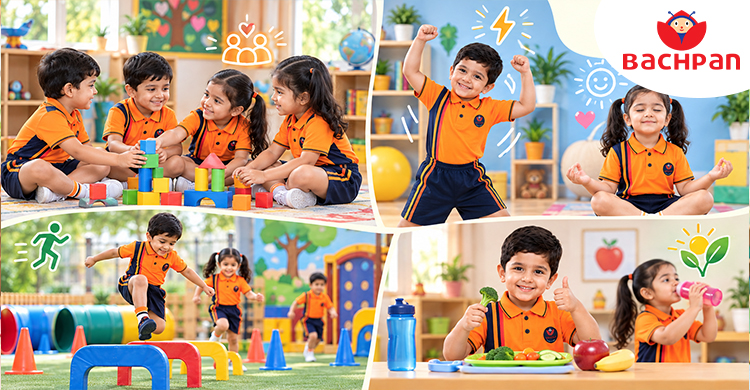
One of the key benefits of exercise for children is how naturally interactive play brings kids together. Group games teach them to take turns, share equipment, follow rules, communicate, and cooperate. Whether playing with a ball or joining a movement activity, children develop important social skills and gross motor skills while enjoying active time with friends and learning how to participate as part of a group.
8. Helps Children Manage Energy and Emotions
Young children experience plenty of energy and emotions throughout the day. Movement gives them a positive way to express and manage both. Dancing, running, jumping, and outdoor play can support emotional well-being while helping children reset. Regular physical activity for children can leave them feeling happier, calmer, engaged, and ready to learn.
9. Develops Gross Motor Skills
Gross motor skills involve using the large muscles of the arms, legs, and body for movements such as running, jumping, climbing, throwing, and kicking. Developing these abilities is an important part of early motor development. Simple gross motor activities for kids allow children to practise movement, improve body control, build strength, and become more comfortable with physical activities.
While exercise supports gross motor development, children can also strengthen hand and finger control through fine motor activities for preschoolers at home.
10. Encourages Healthy Habits for Life
When children experience movement as a fun part of everyday life, they are more likely to develop an active lifestyle as they grow. Healthy growth in children doesn’t require extensive exercise. Through play, exploration, and simple activities, children can build healthy habits for kids that support their well-being over time.
💡 Remember
For young children, exercise doesn’t have to look like a workout. Running, dancing, climbing, jumping, playing ball, cycling, and imaginative movement games all count as opportunities to stay active.
Fun Exercise Activities for Young Children
For preschoolers, child fitness activities work best when it feels like play. Children do not need complicated equipment or strict routines. Simple fun physical activities for young children can be done at home, in a park, or at school.
Walking and Running Games
Turn a simple walk into a game by asking children to walk like a giant, run like a rabbit, or move towards a particular object. Follow-the-leader and simple obstacle races are also easy options. These activities encourage physical fitness, balance, and coordination with body control, and active participation without making exercise feel like a task.
Dancing and Movement Activities
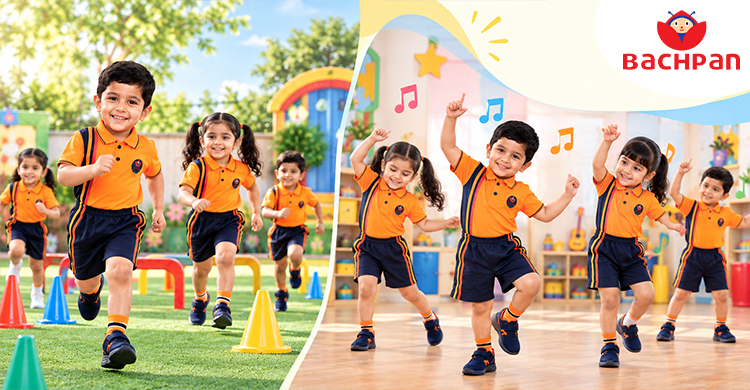
One of the most fun child fitness activities is to put on some music and let children move freely. They can clap, spin, stretch, or copy simple steps. Dancing is one of the best movement activities for preschoolers because it serves as an accessible exercise for preschoolers of all skill levels. It also combines rhythm, coordination, creativity, and emotional well-being in one playful activity.
Jumping and Hopping Games
Create simple jumping challenges using safe spaces at home or outdoors. Children can jump forward, hop from one spot to another, or pretend to jump over a river. These exercise activities for kids support leg strength, balance, and coordination. Keep the activities simple and let children enjoy repeating movements they find fun.
Ball Games
Rolling, throwing, catching, kicking, and bouncing a ball are excellent ways to introduce gross motor activities for kids. Start with simple games and use soft, age-appropriate balls. Ball play can also encourage turn-taking and cooperation, making it useful for both physical development and social learning.
Cycling and Outdoor Play
Cycling with appropriate safety support can be a fun way to get children moving. Parks, gardens, and safe outdoor spaces also offer opportunities to run, climb, explore, and play. Engaging in outdoor physical activities for kids highlights the broader benefits of exercise in early childhood, showing children that staying active is simply part of exploring the world.
Animal Walk Exercises
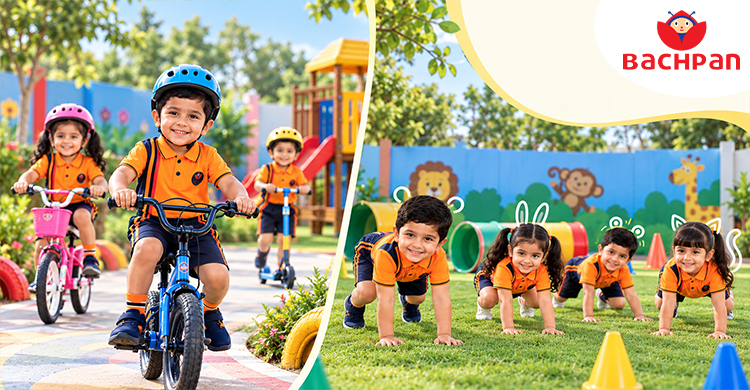
Ask children to move like different animals: hop like a frog, crawl like a bear, waddle like a duck, or stretch like a cat. These playful exercises encourage children to use different muscles while developing body awareness. They are also easy exercise activities for preschoolers because no special equipment is needed.
Simple Indoor Exercise Activities
Going outdoors every day may not always be possible, but exercise activities for kids at home can keep children active and engaged. They can freeze dance, play floor is lava, stretch, play movement games, or enjoy a simple indoor obstacle course. These physical activities for preschoolers at home are easy, playful, and can be adapted to suit their energy levels.
When outdoor play is not possible, parents can keep children moving with simple indoor activities for kids that combine play, movement, and learning.
How Much Physical Activity Do Young Children Need?
Parents often wonder: How much exercise do young children need? The answer depends on a child’s age. Importantly, physical activity for young children does not have to mean structured exercise or sports. Active play, walking, running, dancing, climbing, cycling, and other forms of movement can all contribute to a child’s daily physical activity.
Physical Activity Recommendations by Age
According to the World Health Organization (WHO), children need different amounts and types of physical activity as they grow:
Infants under 1 year: Babies should be physically active several times throughout the day, particularly through interactive floor-based play. For babies who are not yet mobile, this should include at least 30 minutes of tummy time spread throughout the day while they are awake.
Children aged 1–2 years: Toddlers should get at least 180 minutes (3 hours) of physical activity at any intensity throughout the day. This does not have to happen all at once and can include walking, exploring, dancing, climbing, and active play.
Children aged 3–4 years: Children in this age group should also get at least 180 minutes (3 hours) of physical activity spread throughout the day. Of this, at least 60 minutes should be moderate- to vigorous-intensity physical activity — activities that get children moving more energetically, such as running, jumping, dancing, cycling, or active playground games.
Children aged 5 years and above: Children and adolescents aged 5–17 years should get an average of at least 60 minutes of moderate- to vigorous-intensity physical activity per day across the week, with most of it being aerobic. Activities that strengthen muscles and bones, such as running, jumping, climbing, and certain sports, should also be included regularly.
The important thing is that movement should be age-appropriate, varied, enjoyable, and spread naturally throughout the day rather than treated like a formal adult workout.
Physical Activity for Preschoolers
For preschool-aged children, movement should primarily come through play. Exercise for preschoolers can include running, dancing, hopping, climbing, cycling, ball games, playground activities, and imaginative movement games.
Parents do not need to schedule three hours of formal “exercise.” Everyday movement and active play throughout the day count towards a child’s physical activity. Giving children opportunities to move in different ways also helps them develop a wider range of movement and gross motor skills.
Balancing Active Play and Rest
Being active is important, but so is rest. Healthy growth in children requires a balance of movement, nutritious food, adequate sleep, quiet time, and recovery.
Young children should also avoid spending long, uninterrupted periods sitting or being restrained when they could otherwise be moving and playing. Creating a routine that alternates active play with quieter activities can help children stay engaged without making physical activity feel exhausting or forced.
Making Movement Part of the Daily Routine
Reaching daily physical activity recommendations doesn’t require a complicated exercise schedule. Walking short distances, playing outdoors, dancing at home, visiting a playground, cycling, playing with a ball, or taking active breaks can all contribute.
When movement is woven naturally into everyday life, daily physical activity for children becomes less of a task and more of a normal, enjoyable part of childhood.
How Parents Can Encourage Children to Exercise Regularly
Parents do not need to be fitness experts to encourage movement. A supportive environment, a little creativity, and active participation can go a long way.
Make Exercise Fun Instead of a Chore
Children are more likely to enjoy movement when it feels like play. Turn activities into games, let children choose between two options, or add imagination to simple exercises. Fun physical activities for young children can be as simple as pretending to be animals or having a family dance session. When movement is enjoyable, children are more likely to participate willingly.
Create a Simple Daily Activity Routine
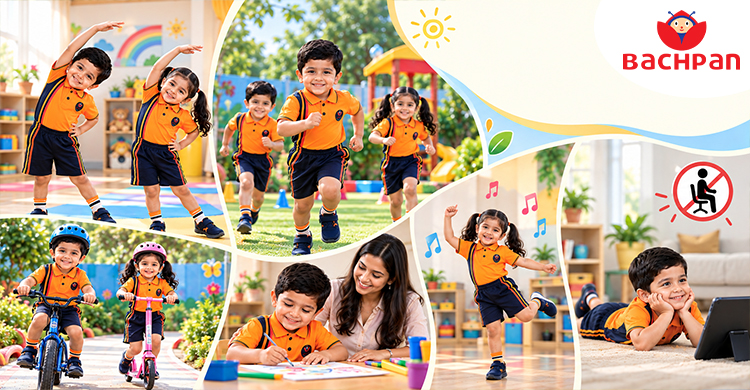
A predictable routine makes regular activity easier to maintain. If you’re wondering how to encourage children to exercise, set aside time for outdoor play, movement games, walks, or other active pursuits throughout the day. The routine does not need to be complicated; simple movement activities regularly can help children build healthy habits naturally, without pressure or stress.
Adding movement to a predictable schedule can make healthy habits easier to maintain. Parents can also explore this daily routine for playschool kids for ideas on creating a balanced day.
Participate in Activities Together
Children often learn by observing adults. Parents can join walks, dance, play catch, or organise family games. Doing exercise activities for kids together makes it feel like shared family time instead of another adult instruction. It also strengthens family relationships while encouraging children to develop an active lifestyle through positive examples.
Parents can make active play more enjoyable by joining their children in simple preschool activities parents can do at home and turning movement into shared family time.
Limit Long Periods of Sitting
Young children sit during stories, meals, drawing, and learning. The concern arises when sitting for long periods becomes routine. Understanding the importance of exercise for child development can help parents and educators encourage brief movement breaks between quieter activities. Stretching, walking, or jumping for a few minutes can make the day more active without interrupting a child’s regular schedule.
Encourage Outdoor Play When Possible
Outdoor spaces provide room for children to run, climb, explore, and play freely. Outdoor play also gives them varied movement experiences. When weather and surroundings permit, encourage children to spend time outside daily. When outdoor activity is impractical, safe indoor activities can still help children stay active and engaged.
Common Exercise Mistakes Parents Should Avoid
Encouraging exercise should be positive. A few simple changes can help ensure that physical activity remains enjoyable and appropriate for young children.
Forcing Children to Exercise
Exercise should not become a punishment or something children are forced to complete. If a child is tired or uninterested in a particular activity, offer another option. Physical activity for children aims to build a positive relationship with movement, not create pressure around performance.
Comparing Children with Others
Children develop skills at different rates. One child may run confidently while another may still be working on balance. Comparing children can harm their self-confidence and make physical activity feel stressful rather than fun. Instead, notice individual progress and celebrate effort. Healthy childhood development is about supporting each child’s journey.
Focusing Only on Competitive Activities
Not every child enjoys races, competitions, or team sports. Recognising the benefits of daily physical activity for children means understanding that movement does not always have to be competitive. Dancing, walking, imaginative games, cycling, and activities that are simply fun give children opportunities to stay active, explore their interests, and discover what they genuinely enjoy.
Ignoring Safety During Physical Activities
Children should have enough space to move safely, with age-appropriate equipment and adult supervision where needed. Check play areas for hazards and choose activities that match the child’s abilities. Safety is especially important during outdoor play, cycling, climbing, and games involving equipment.
Forgetting the Importance of Rest
More activity is not always better. Children need adequate sleep, quiet time, hydration, and breaks between activities. Watch for signs of tiredness and give children time to rest. A healthy routine combines physical fitness, active play, nutrition, and recovery.
FAQs on the Benefits of Exercise in Early Childhood
Exercise supports physical, social, emotional, and cognitive development. It builds strength, coordination, confidence, and healthy habits.
Benefits of exercise for kids include improved strength, balance, focus, sleep, motor skills, social skills, and emotional well-being.
Try walking, running, dancing, hopping, jumping, ball games, animal walks, cycling, and indoor movement games. Keep activities fun and safe.
According to WHO, children aged 1–2 years should get at least 180 minutes of physical activity spread throughout the day. Children aged 3–4 years should also get at least 180 minutes daily, including at least 60 minutes of moderate- to vigorous-intensity activity. From age 5 onwards, children should get an average of at least 60 minutes of moderate- to vigorous-intensity physical activity per day across the week. For young children, most of this activity can come naturally through active play, running, dancing, climbing, cycling, and other enjoyable movements.
Yes. Active play can give children a break from sitting and provide opportunities to practise listening, following instructions, remembering movements, and responding to cues. These experiences can support attention and concentration during everyday learning.
Make movement fun, join in, take breaks, and encourage outdoor play. Try dancing, animal walks, ball games, or simple obstacle courses at home.
Conclusion
The benefits of exercise in early childhood reach far beyond physical fitness. Movement helps children build stronger bodies, develop coordination, practise social skills, manage emotions, and grow in confidence. It also creates opportunities for curiosity, exploration, and joyful learning. When children learn early that movement can be fun, they are more likely to carry these healthy habits for kids into the years ahead. This idea of learning through engaging, age-appropriate experiences aligns with its broader focus on holistic development and learning through activity.