


10 Fundamentals of Road Safety for Children
Children are naturally curious and energetic, which often makes roads and traffic situations risky for them. Whether they are walking to school, travelling with parents, or playing outdoors, understanding road safety for children has become more important than ever. Teaching children safe road behaviour from an early age helps them become alert, responsible, and confident individuals. Parents and schools together play a major role in raising awareness of traffic rules, safety signs, and responsible behaviour on the road to ensure every child stays safe and protected every day. Teaching road safety from an early age is one of the many positive habits that help children become responsible and aware individuals. Parents can also explore these good habits for kids to encourage safe and responsible behaviour in everyday life.
What Is Road Safety for Children?
Road Safety for Children teaches them the correct and safe ways to behave on roads, around vehicles, and while travelling. It includes understanding traffic signs, crossing roads carefully, wearing helmets and seat belts, and following important safety habits while walking or travelling.
Children need simple and practical guidance to understand how roads function and why safety rules matter. When kids learn these habits early, they are more likely to become careful and responsible road users in the future.
Why is Road Safety Awareness for Kids Important?
In today’s busy world, traffic congestion and increasing vehicles make roads more dangerous for children. Developing road safety awareness for kids helps them understand potential dangers and teaches them how to respond safely in different situations. Awareness builds confidence, responsibility, and better judgment, which helps them think logically.
Common Road Risks Children Face Today
Children often face road dangers such as speeding vehicles, distracted drivers, crowded streets, and unsafe crossing habits. Many young children also get distracted while walking or playing outdoors. Teaching children road safety rules helps reduce confusion and prepares them to stay alert in traffic situations.
Why does Teaching Traffic Rules to Kids Matters?
Teaching children road discipline is not just about rules; it is about protecting lives and encouraging responsibility. When children understand traffic behaviour early, they become safer pedestrians and more aware individuals in their daily surroundings. Here’s why it’s important –
Builds Safe Habits from an Early Age
Teaching traffic rules to kids during preschool years helps children develop lifelong safety habits. Repeated practice of crossing roads properly, observing signals, and walking safely creates discipline and awareness. These habits become a natural part of their everyday behaviour and condition their actions as they grow older.
Reduces Road Accidents Involving Children
Many road accidents involving children happen because they are unaware of traffic movement or road dangers. Following safety rules on road for students helps children avoid unsafe behaviour like running suddenly onto roads, bumping into each other, or ignoring traffic signals while crossing busy streets.
Improves Observation and Decision-Making Skills
Road safety education improves children’s observation skills and teaches them to make careful decisions. Understanding vehicle movement, traffic lights, and pedestrian rules helps children stay attentive. It also strengthens their ability to respond calmly and safely in unfamiliar traffic situations.
10 Fundamentals of Road Safety for Children
Teaching basic road safety habits can make a huge difference in protecting children. These simple yet effective practices help children become responsible pedestrians and aware travellers from an early age.
1. Always Walk on the Footpath
Children should always use the footpath while walking near roads. Footpaths are designed to keep pedestrians safe from moving vehicles. Parents and teachers must encourage children to avoid walking in the middle of roads and remain alert while using pedestrian pathways. Following such habits is an important part of road safety for children and helps young learners become more responsible pedestrians.
Safe outdoor behaviour is just as important as maintaining safety inside school. Parents can use this preschool safety checklist for parents and kids’ safety to help children stay protected in different environments.
2. Use the Zebra Crossing
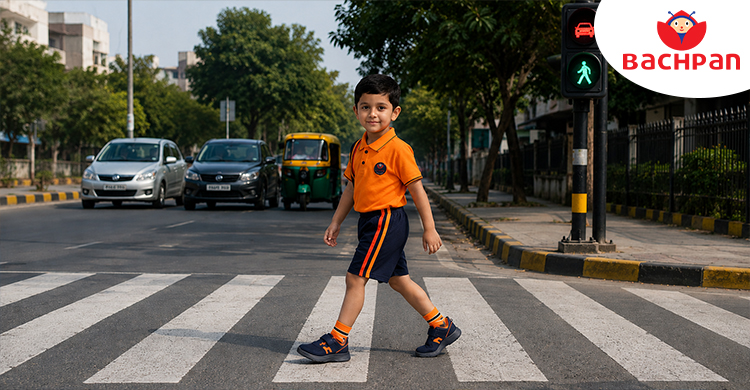
Children should cross roads only at zebra crossings whenever possible. Zebra crossings help drivers identify pedestrian movement and slow down vehicles. Teaching children to use designated crossings builds discipline and ensures safer movement in crowded traffic areas and school zones. Parents should demonstrate the correct way to wait patiently before crossing.
3. Stop, Look, and Listen Before Crossing
Children must check for moving vehicles and wait patiently until the road is completely safe before stepping forward to cross. They should avoid rushing even when roads appear empty at first glance. Practising this rule regularly helps them become more attentive and aware of their surroundings.
4. Follow Traffic Signals and Signs
Understanding traffic signals for kids is essential for safety. First, children should learn the meanings of red, yellow, and green lights along with common road signs. As a result, recognizing these signals helps children follow traffic instructions correctly and avoid dangerous situations on roads. Additionally, parents and teachers can make learning more interactive through charts, games, and outdoor observation activities. Learning to respect traffic rules also teaches children the importance of honesty, discipline, and responsibility. Parents can reinforce these lessons through short moral stories for kids that inspire good behaviour.
5. Never Run Across the Road
Running suddenly across roads can lead to serious accidents. Children must be taught to stay calm and cross carefully instead of rushing. Adults should explain that drivers may not always react quickly, especially in crowded or high-speed traffic areas. Encouraging slow and careful movement near roads helps reduce panic and unsafe behaviour.
6. Wear Helmets and Seat Belts
Children travelling on bikes should always wear helmets, while seat belts must be used inside cars. These safety measures protect children during sudden stops or accidents. Parents should make helmet and seat belt usage a compulsory habit during every journey. These practices are an essential part of road safety for children and safe travelling behaviour.
Wearing helmets and seat belts is one of the simplest ways to reduce the risk of serious injuries. The World Health Organization (WHO) also highlights these protective measures as essential road safety practices for children and families.
7. Do Not Play Near the Road
Roads are not safe places for games or outdoor activities. Therefore, children should avoid playing near traffic areas, parking spaces, or driveways. In addition, Balls, toys, or sudden movements near roads can become extremely dangerous. By doing so, teaching children safe boundaries helps prevent accidents and encourages more responsible outdoor behaviour. Along with staying away from busy roads, children should also understand how different body parts for kids work together to help them walk, run, see, hear, and react safely in traffic situations.
8. Stay Alert and Avoid Distractions
Children should avoid distractions like mobile phones, loud conversations, or toys while walking near roads. Staying attentive helps them notice traffic movement, signals, and surrounding dangers. Alertness is an important part of developing strong road safety awareness and responsible habits. This is one of the most important traffic rules for kids in modern-day environments. Developing safe habits goes hand in hand with maintaining a healthy lifestyle. Encouraging balanced eating habits also helps children stay active, focused, and alert throughout the day. Explore these easy healthy recipes kids can cook at home for nutritious meal ideas.
9. Hold an Adult’s Hand While Crossing
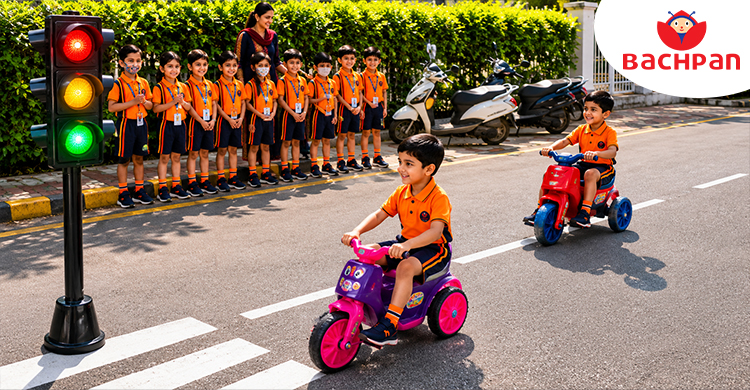
Adult supervision provides guidance and protection in busy traffic areas. Holding hands keeps children from running suddenly or becoming distracted near moving vehicles. It also gives parents better control and reassurance during road crossings. Following this habit strengthens the understanding of important road safety rules for preschool children.
10. Be Visible at Night and in Bad Weather
Children should wear bright or reflective clothing during nighttime or rainy weather conditions. Visibility becomes low during such situations, making it difficult for drivers to notice pedestrians. Bright colours and reflective accessories help children stay visible and safer on roads. Teaching visibility safety helps children understand the importance of staying noticeable in difficult weather conditions.
Simple Ways to Teach Road Safety to Kids
Children learn best through fun, repetition, and practical experiences. Parents and teachers can use the following creative methods to make road safety lessons easy, engaging, and memorable for young learners.
Role Play and Real-Life Practice
Role-play activities allow children to practise safe road behaviour in interactive ways. Parents and teachers can create mock traffic situations where children learn crossing techniques, signal recognition, and pedestrian behaviour. Real-life practice strengthens understanding and helps children apply lessons confidently outdoors.
Road Safety Rhymes, Stories, and Games
Songs, rhymes, storytelling, and games make road safety awareness for kids enjoyable and easier to remember. Creative learning methods capture children’s attention and encourage participation. Educational stories and playful activities help simplify complex traffic rules for preschool and primary school children.
Visual Learning Through Charts and Videos
Visual learning tools such as traffic charts, animated videos, and flashcards help children understand road signs more effectively. Bright visuals improve memory retention and make learning interactive. Videos also demonstrate real-life traffic situations, helping children recognise safe and unsafe road behaviour.
Road Safety Activities for Preschool and School Children
Interactive activities help children understand road safety concepts better than theoretical lessons alone. Engaging classroom experiences encourage participation, creativity, and practical understanding of everyday traffic situations.
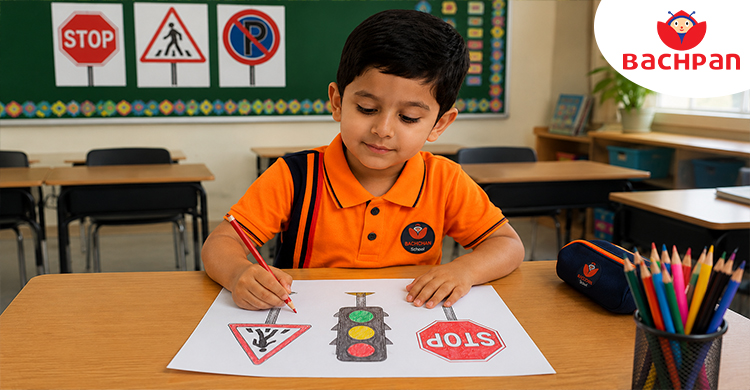
Drawing Traffic Signs and Signals
Drawing and colouring activities help children recognise road signs and understand their meanings. Teachers can encourage students to create posters featuring traffic signals for kids and pedestrian symbols. Such activities improve visual memory and make road safety education more enjoyable and interactive.
Mock Road Crossing Activity
Schools can organise mock road setups where children practise crossing roads safely using zebra crossings and traffic signals. These hands-on activities build confidence and improve practical understanding of road behaviour, helping children remember important safety habits more effectively.
Road Safety Week Celebrations at School
Celebrating Road Safety Week through rallies, speeches, competitions, and awareness campaigns encourages active participation among children. These events spread awareness about child road safety rules while promoting responsible road behaviour within schools, families, and local communities in engaging and memorable ways.
How Bachpan Preschool Promotes Road Safety Awareness?
At Bachpan Preschool, safety education is integrated into daily learning experiences. Through innovative teaching methods and engaging activities, children develop awareness about safe behaviour both inside and outside the classroom environment.
Child-Friendly Learning Through Concept Rooms
Bachpan Preschool uses interactive concept rooms where children learn practical life skills through hands-on experiences. Road safety themes, traffic sign demonstrations, and role-play activities help children understand road safety for children in fun, engaging, and age-appropriate ways that encourage active participation.
Activity-Based Safety Lessons
Activity-based learning makes safety education more effective for young minds. Bachpan Preschool includes storytelling, games, drawing activities, and practical demonstrations to teach road safety rules for kids. These creative approaches help children remember important safety lessons naturally and confidently.
Parental Involvement and Safety Campaigns
Bachpan Preschool believes parents play a vital role in reinforcing road safety habits at home. Through awareness campaigns, workshops, and interactive activities, parents are encouraged to practise and discuss road safety regularly, creating stronger learning consistency between school and home environments.
Conclusion: Building Safe and Responsible Road Users
Teaching children road safety is one of the most important responsibilities shared by parents, schools, and society. Strong awareness about traffic behaviour and safety practices helps children become responsible individuals from an early age. By regularly teaching traffic rules for kids, encouraging practical learning, and reinforcing positive habits, we can create safer communities for everyone. At Bachpan Preschool, road safety education goes beyond classrooms by helping children understand responsibility, discipline, and awareness in fun, meaningful, and engaging ways.