



Great National Leaders of India Who Shaped the Nation
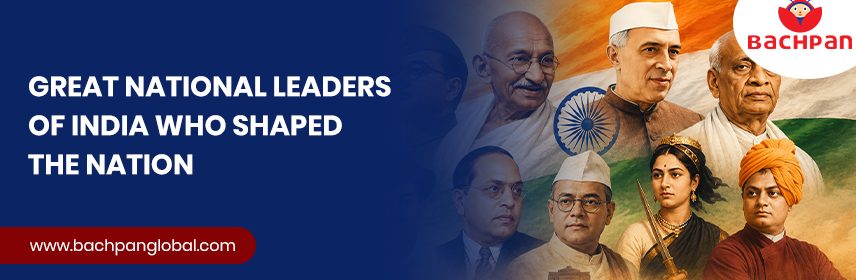
India’s journey to freedom and progress was shaped by remarkable individuals whose courage, vision, and dedication continue to inspire generations. From courageous revolutionaries to wise reformers, their efforts laid the foundation for the India we know today. Understanding our history helps young minds appreciate the freedom and values we enjoy today. In this, we explore the great national leaders of India, their immense sacrifices, and the timeless lessons they offer to young learners, parents, and educators across our country.
Quick List of Great National Leaders of India
Looking for a quick reference? This list of national leaders of India with names gives children a quick overview of famous personalities, their contributions, and why they are remembered. Use it for quick learning, school projects, and exam revision.
List of National Leaders of India with Their Contributions
| No. | National Leader | Known For | Key Contribution |
|---|---|---|---|
| 1 | Mahatma Gandhi | Father of the Nation | Led India’s freedom movement through non-violence |
| 2 | Jawaharlal Nehru | First Prime Minister | Promoted education and modern India |
| 3 | Subhas Chandra Bose | Freedom Fighter | Founded the Indian National Army |
| 4 | Dr. B. R. Ambedkar | Constitution Architect | Drafted the Constitution of India |
| 5 | Sardar Vallabhbhai Patel | Iron Man of India | Unified princely states |
| 6 | Bhagat Singh | Revolutionary | Inspired the freedom movement |
| 7 | Rani Lakshmibai | Queen of Jhansi | Heroine of the Revolt of 1857 |
| 8 | Sarojini Naidu | Nightingale of India | Freedom fighter and poet |
| 9 | Lal Bahadur Shastri | Prime Minister | Gave the slogan “Jai Jawan Jai Kisan” |
| 10 | Dr. A. P. J. Abdul Kalam | Missile Man of India | Inspired youth through science and education |
| 11 | Bal Gangadhar Tilak | Freedom Fighter | “Swaraj is my birthright” |
| 12 | Chandra Shekhar Azad | Revolutionary | Courageous freedom fighter |
| 13 | Mangal Pandey | Freedom Fighter | Sparked the Revolt of 1857 |
| 14 | Lala Lajpat Rai | Punjab Kesari | Leader of the freedom struggle |
| 15 | Gopal Krishna Gokhale | Social Reformer | Mentor to Mahatma Gandhi |
| 16 | Annie Besant | Home Rule Leader | Supported India’s self-rule movement |
| 17 | Bipin Chandra Pal | Freedom Fighter | Member of the Lal-Bal-Pal trio |
| 18 | Rabindranath Tagore | Nobel Laureate | Wrote India’s National Anthem |
| 19 | Vinoba Bhave | Social Reformer | Started the Bhoodan Movement |
| 20 | Kasturba Gandhi | Freedom Activist | Supported the independence movement |
| 21 | Begum Hazrat Mahal | Freedom Fighter | Leader in the Revolt of 1857 |
| 22 | Dadabhai Naoroji | Grand Old Man of India | Early nationalist leader |
| 23 | C. Rajagopalachari | Statesman | First Indian Governor-General |
| 24 | Ashfaqulla Khan | Revolutionary | Freedom fighter and patriot |
| 25 | Sukhdev Thapar | Revolutionary | Companion of Bhagat Singh |
Who Are the National Leaders of India?
India’s democracy was built through the courage, wisdom, and dedication of many remarkable leaders. Exploring the list of national leaders of India helps us understand the remarkable Indian freedom fighters and national leaders whose dedication and sacrifices laid the foundation of our nation.
What Makes Someone a National Leader?
Being a national leader isn’t just about holding a position of power; it’s about putting the country first. True leaders unite millions through integrity, selflessness, and courage. When we look at famous Indian leaders and their contributions, we see individuals who dedicated their lives to driving positive change for everyone.
Why Should Children Learn About National Leaders?
Sharing these stories with the younger generation teaches them essential values like empathy, perseverance, and civic duty. When children learn about national leaders of India, they gain grounded role models who inspire them to dream big, stand up for justice, and actively contribute to society.
Learning about India’s great leaders becomes even more meaningful when children participate in national celebrations that honour their contributions. Parents and teachers can also explore these Republic Day activities for kindergarten kids to make patriotic learning more engaging.
Qualities of Great National Leaders
The most impactful figures share remarkable traits: clear vision, humility, and unwavering courage under pressure. Moreover, they stay true to their principles even in the face of immense adversity. Ultimately, studying the great leaders of India shows us that true leadership comes from selfless service to the community.
25 Great National Leaders of India Who Shaped the Nation
India’s rich history is built on the courage, vision, and sacrifice of extraordinary individuals. Furthermore, exploring this list helps young minds discover the inspiring personalities who fought for freedom and helped build modern India. Additionally, below you’ll find national leaders of India with pictures and short biographies that make learning simple for children.
1. Mahatma Gandhi
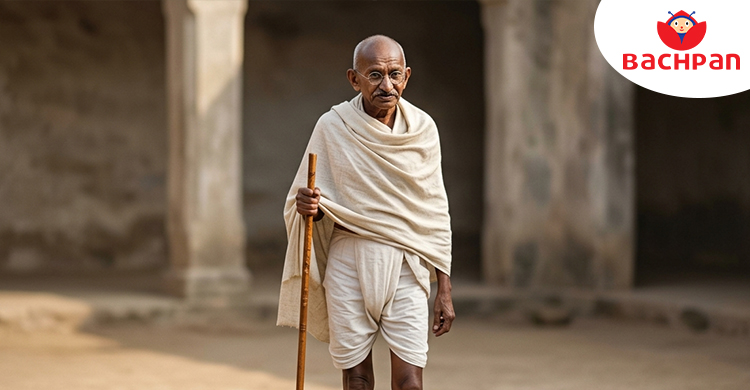
Birth and Background: Born on October 2, 1869, in Porbandar, Gujarat, Mohandas Karamchand Gandhi trained as a lawyer in England before leading India’s independence movement.
Major Contribution: He inspired millions by showing that peaceful protests and truth could bring positive change. With the philosophy of Satyagraha (non-violent resistance), he led historic mass movements like the Salt March and the Quit India Movement.
Why They Are Remembered: People around the world know him as the “Father of the Nation” because he proved that peace and truth could overcome powerful colonial rule, making him one of the most famous national leaders of India.
One Interesting Fact: The Nobel Committee nominated him for the Nobel Peace Prize five times, but it never awarded him the prize.
Value Children Can Learn: Truthfulness, non-violence, and peaceful resolution to everyday problems.
Mahatma Gandhi’s values of truth, discipline, and kindness continue to inspire children even today. Parents can encourage these qualities by helping kids develop good habits that shape responsible behaviour from an early age.
2. Jawaharlal Nehru
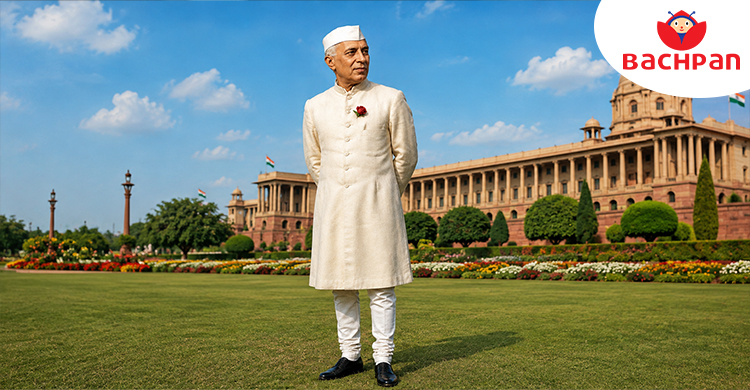
Birth and Background: Born on November 14, 1889, in Allahabad, Uttar Pradesh, Nehru studied law at Cambridge before returning to India to join the freedom movement.
Major Contribution: As independent India’s first Prime Minister, he established key modern educational institutions, scientific laboratories, and steel plants.
Why They Are Remembered: People affectionately called him “Chacha Nehru” because his vision laid the groundwork for modern, democratic India, establishing him as one of the top national leaders of India.
One Interesting Fact: India celebrates his birthday, November 14, as Children’s Day because of his immense love for children.
Value Children Can Learn: Curiosity, dedication to learning, and a forward-thinking mindset.
3. Subhas Chandra Bose
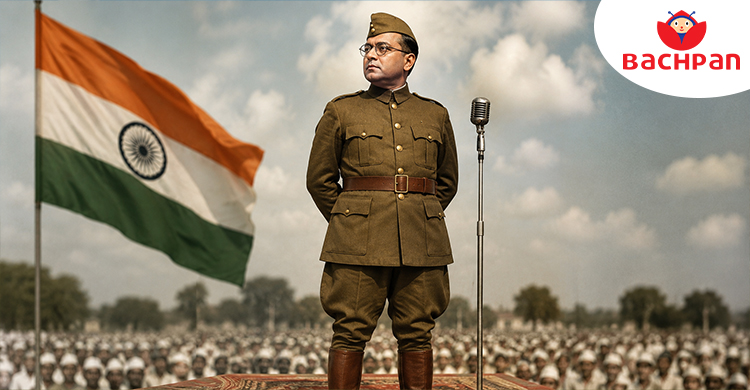
Birth and Background: Born on January 23, 1897, in Cuttack, Odisha, Netaji passed the prestigious Indian Civil Service exam but resigned to fight for India’s freedom.
Major Contribution: He formed and led the Azad Hind Fauj (Indian National Army) to wage an armed struggle against British colonial power.
Why They Are Remembered: As a result of his fiery patriotism and iconic slogan “Jai Hind!”, he united citizens in their fight for complete sovereignty.
One Interesting Fact: He famously escaped house arrest in Kolkata by disguising himself as a Pathan religious preacher.
Value Children Can Learn: Fearless courage, leadership, and unwavering devotion to duty.
4. Dr. B. R. Ambedkar
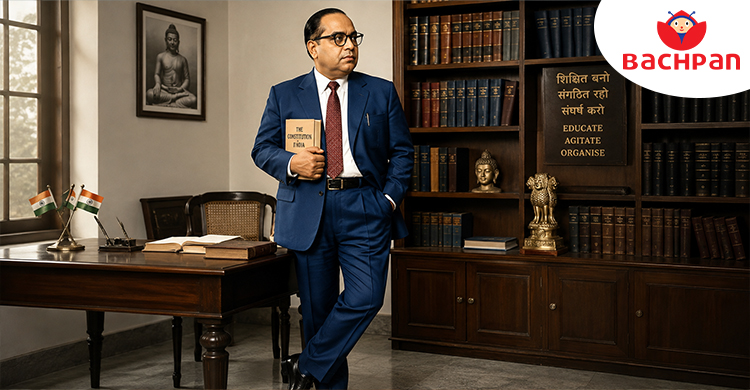
Birth and Background: Born on April 14, 1891, in Mhow, Madhya Pradesh, Bhimrao Ambedkar overcame harsh social discrimination to earn doctorates from Columbia University and the London School of Economics.
Major Contribution: He served as the Chairman of the Drafting Committee for the Constitution of India and championed social equality.
Why They Are Remembered: Celebrated as the “Father of the Indian Constitution,” he remains an enduring icon among great leaders of India.
One Interesting Fact: He knew more than nine languages and maintained a personal library of over 50,000 books.
Value Children Can Learn: The transformative power of education, fairness, and standing up against social injustice.
5. Sardar Vallabhbhai Patel
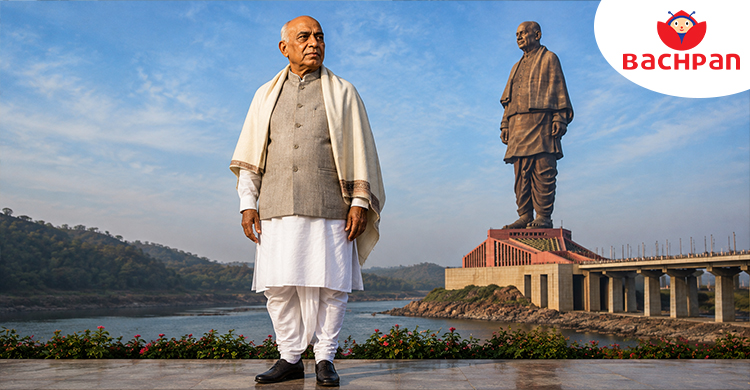
Birth and Background: Born on October 31, 1875, in Nadiad, Gujarat, Patel worked as a successful barrister before joining Mahatma Gandhi’s movement.
Major Contribution: As independent India’s first Home Minister, he unified over 560 princely states into a single republic, cementing his status among famous Indian leaders.
Why They Are Remembered: Known as the “Iron Man of India,” his decisive political leadership ensured national unity.
One Interesting Fact: The Statue of Unity in Gujarat, built in his honor, is the tallest statue in the world.
Value Children Can Learn: Strong determination, teamwork, and the importance of unity.
6. Bhagat Singh
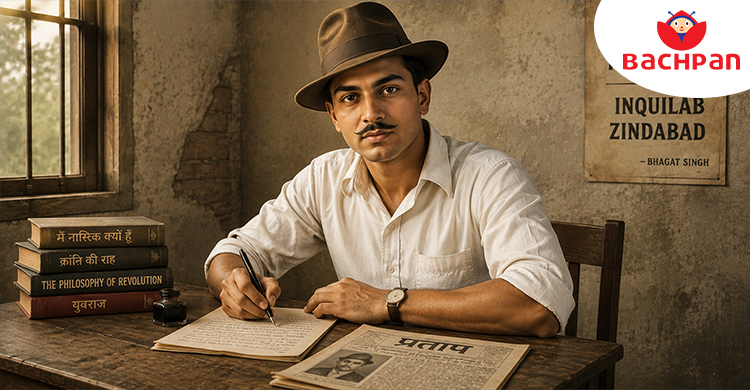
Birth and Background: Born on September 28, 1907, in Banga, Punjab (now in Pakistan), Bhagat Singh grew up in a family committed to national liberation.
Major Contribution: He challenged British rule through bold revolutionary acts and patriotic writing, popularizing the phrase “Inquilab Zindabad.”
Why They Are Remembered: Honored as Shaheed Bhagat Singh, his martyrdom at age 23 inspired countless young people across the country.
One Interesting Fact: He was a passionate reader who consumed hundreds of political and philosophical books while imprisoned.
Value Children Can Learn: Selfless sacrifice, deep conviction, and passion for justice.
7. Rani Lakshmibai
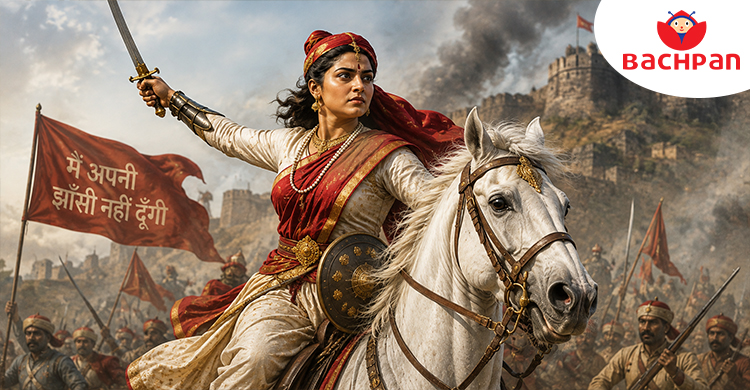
Birth and Background: Born on November 19, 1828, in Varanasi, Lakshmibai was trained from childhood in martial arts, sword fighting, and horseback riding.
Major Contribution: She led her troops with legendary bravery during the Indian Rebellion of 1857 to protect her kingdom of Jhansi.
Why They Are Remembered: She stands as an enduring symbol of female heroism among Indian freedom fighters.
One Interesting Fact: She fought British soldiers on the battlefield while securing her infant son safely on her back.
Value Children Can Learn: Bravery, resilience, and standing firm in the face of adversity.
Patriotic songs are a wonderful way to help children remember the sacrifices and achievements of India’s freedom fighters. Explore these best patriotic songs for kids for Independence Day celebrations to make learning more interactive.
8. Sarojini Naidu
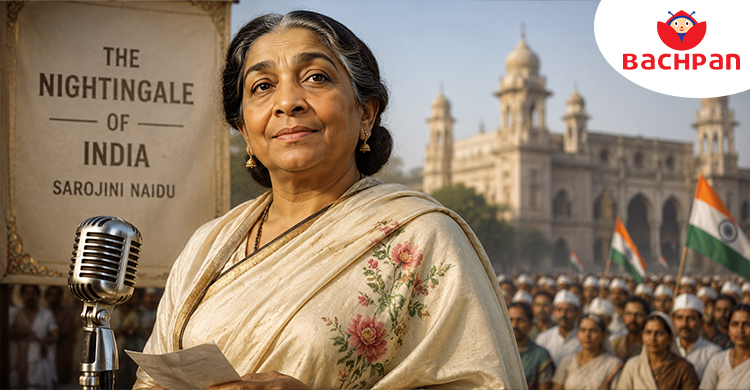
Birth and Background: Born on February 13, 1879, in Hyderabad, Sarojini was a brilliant student who started writing poetry at a young age.
Major Contribution: She actively organised protests during the Civil Disobedience Movement and became the first Indian woman President of the Indian National Congress.
Why They Are Remembered: People know her as the “Nightingale of India” for balancing artistic genius with impactful political leadership.
One Interesting Fact: She was the first woman to serve as a state Governor in independent India.
Value Children Can Learn: Creative expression, eloquence, and strong social commitment.
9. Lal Bahadur Shastri
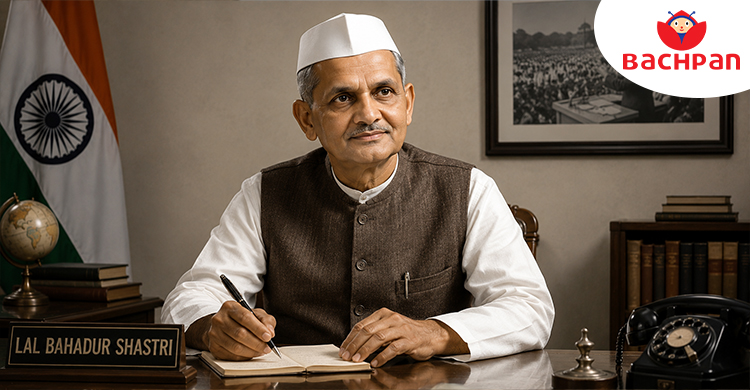
Birth and Background: Born on October 2, 1904, in Mughalsarai, Uttar Pradesh, Shastri grew up in a modest family and joined the national movement as a teenager.
Major Contribution: As India’s second Prime Minister, he guided the nation through the 1965 war and supported agricultural expansion.
Why They Are Remembered: He gave the country the iconic slogan “Jai Jawan, Jai Kisan” to highlight the backbone of the nation.
One Interesting Fact: He once resigned as Railway Minister, taking personal moral responsibility for a train collision.
Value Children Can Learn: Personal integrity, humility, and deep respect for hard work.
10. Dr A. P. J. Abdul Kalam
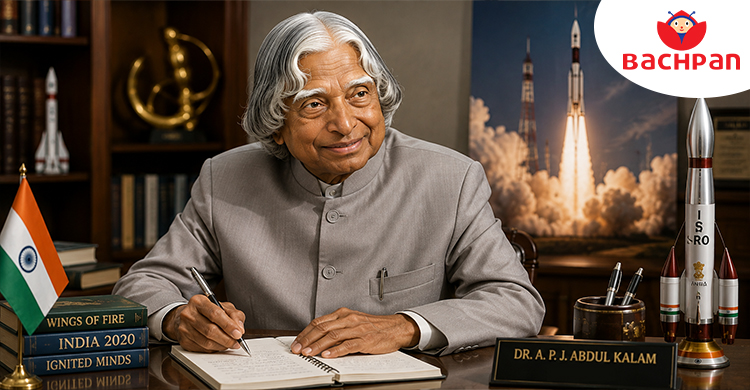
Birth and Background: Born on October 15, 1931, in Rameswaram, Tamil Nadu, Kalam sold newspapers as a boy to help cover his schooling costs.
Major Contribution: He spearheaded India’s defense missile technology and space research before serving as India’s 11th President.
Why They Are Remembered: Revered as the “Missile Man of India”. His inspiring journey makes him one of the great national leaders of India for kids to learn about.
One Interesting Fact: He loved teaching and was interacting with students when he collapsed doing what he loved most.
Value Children Can Learn: Humility, persistent effort, and pursuing big dreams regardless of starting circumstances.
Dr A.P.J. Abdul Kalam always encouraged children to stay curious and keep learning. Parents can nurture this love for learning through these best learning activities for preschoolers at home.
11. Bal Gangadhar Tilak
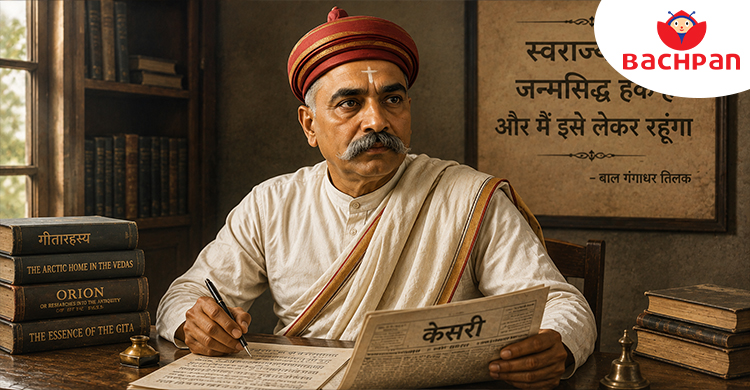
Birth and Background: Born on July 23, 1856, in Ratnagiri, Maharashtra, Tilak was a scholar, mathematician, and lawyer.
Major Contribution: He was among the earliest advocates for complete self-rule (Swaraj) and transformed local festivals into public patriotic gatherings.
Why They Are Remembered: Honored with the title “Lokmanya” (believed by the people), he famously declared, “Swaraj is my birthright, and I shall have it!”
One Interesting Fact: He founded two major newspapers, Kesari and Mahratta, to educate the public.
Value Children Can Learn: Pride in one’s cultural heritage and firm self-respect.
12. Chandra Shekhar Azad
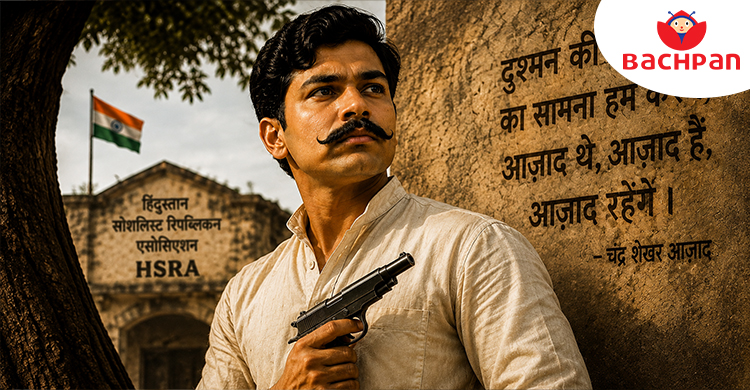
Birth and Background: Born on July 23, 1906, in Bhavra, Madhya Pradesh, Azad joined the freedom movement when he was only 15 years old.
Major Contribution: He reorganised revolutionary groups under the Hindustan Socialist Republican Association to carry on armed struggle.
Why They Are Remembered: He vowed that British forces would never capture him alive, keeping that promise until his final moment.
One Interesting Fact: When arrested as a teenager, he told the magistrate his name was “Azad” (Free).
Value Children Can Learn: Courage, independent thinking, and loyalty to companions.
13. Mangal Pandey
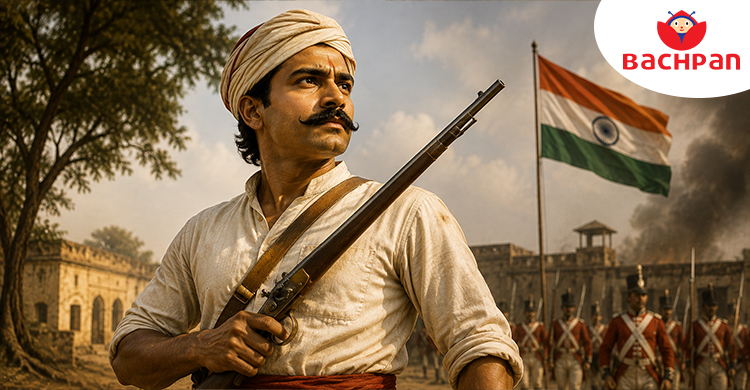
Birth and Background: Born on July 19, 1827, in Nagwa, Uttar Pradesh, he joined the East India Company army as a young sepoy.
Major Contribution: His open revolt against unfair army orders at Barrackpore in 1857 ignited the First War of Indian Independence.
Why They Are Remembered: He is recognized as the spark that ignited India’s early mass struggle against foreign rule.
One Interesting Fact: His courageous stand inspired many regiments across India to rise in revolt.
Value Children Can Learn: The courage to speak up against wrongdoing even when standing alone.
14. Lala Lajpat Rai
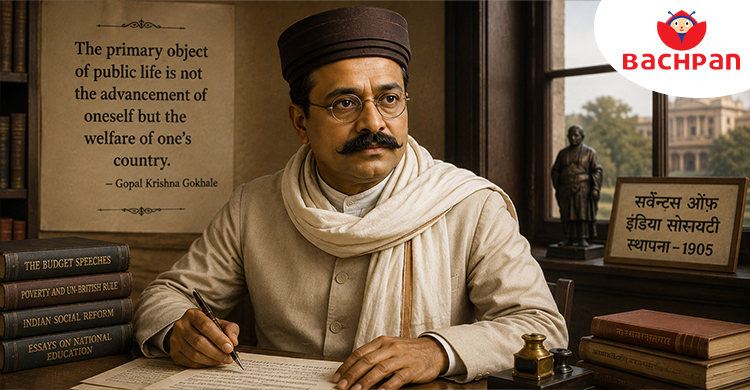
Birth and Background: Born on January 28, 1865, in Dhudike, Punjab, he became an accomplished lawyer, author, and social leader.
Major Contribution: As part of the famous “Lal Bal Pal” team, he rallied public protests against the colonial Simon Commission in 1928.
Why They Are Remembered: Known as “Punjab Kesari” (Lion of Punjab), his tragic injury during a peaceful protest deeply moved the nation.
One Interesting Fact: He helped establish Punjab National Bank, promoting Indian-owned financial institutions.
Value Children Can Learn: Resilient leadership and supporting self-reliance in local communities.
15. Gopal Krishna Gokhale
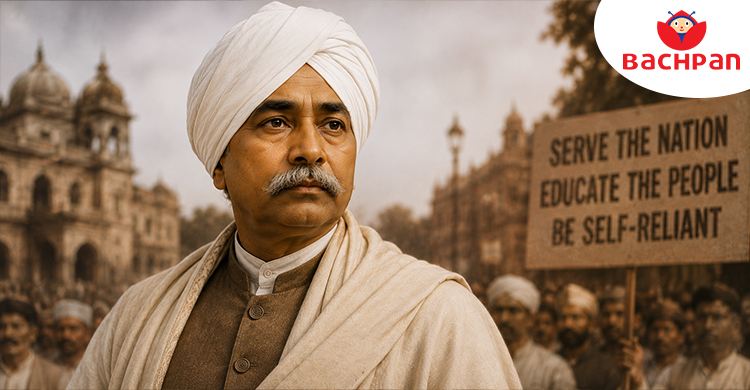
Birth and Background: Born on May 9, 1866, in Kotluk, Maharashtra, Gokhale was a professor of economics and political activist.
Major Contribution: He founded the Servants of India Society to promote education, social reform, and constitutional political methods.
Why They Are Remembered: He was respected as Mahatma Gandhi’s political mentor, valued for his balanced and ethical approach.
One Interesting Fact: He visited South Africa to study working conditions for Indian immigrants firsthand.
Value Children Can Learn: Kindness, disciplined study, and constructive community work.
16. Annie Besant
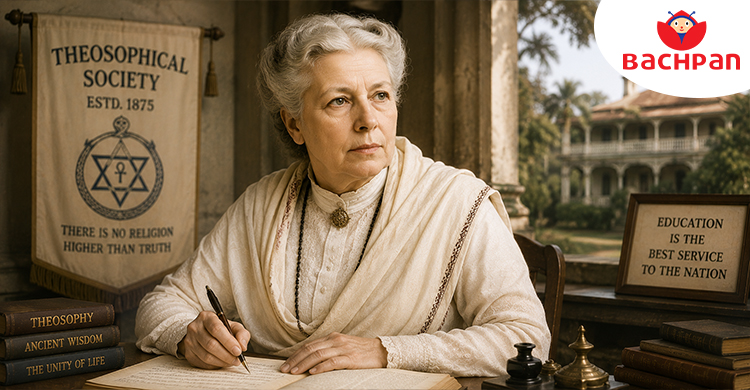
Birth and Background: Born on October 1, 1847, in London, England, she moved to India in 1893 and embraced it as her home country.
Major Contribution: She co-founded the All India Home Rule League in 1916 to campaign for Indian self-government.
Why They Are Remembered: She became the first female President of the Indian National Congress, dedicating decades to Indian education and upliftment.
One Interesting Fact: She established the Central Hindu College in Varanasi, which grew into the famous Banaras Hindu University.
Value Children Can Learn: Universal empathy and serving humanity regardless of background or nationality.
17. Bipin Chandra Pal
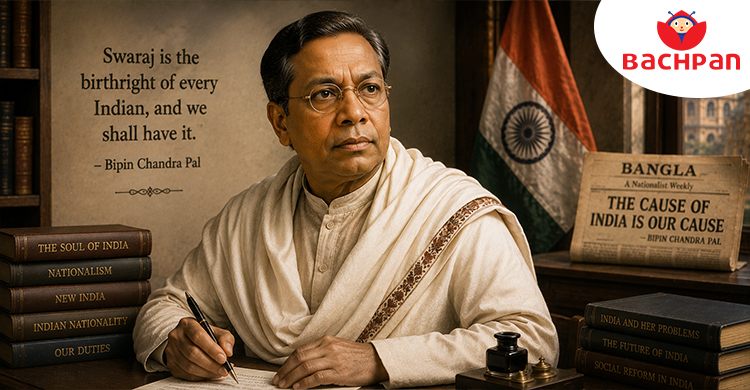
Birth and Background: Born on November 7, 1858, in Habiganj (now in Bangladesh), Pal was an energetic writer, speaker, and reformer.
Major Contribution: Alongside Tilak and Rai, he advocated Swadeshi (using domestic goods) to achieve economic independence.
Why They Are Remembered: Hailed as the “Father of Revolutionary Thoughts” in India, he motivated people through powerful speeches.
One Interesting Fact: He launched several progressive publications, including the journal Bande Mataram.
Value Children Can Learn: Believing in national self-sufficiency and expressing thoughts clearly.
18. Rabindranath Tagore
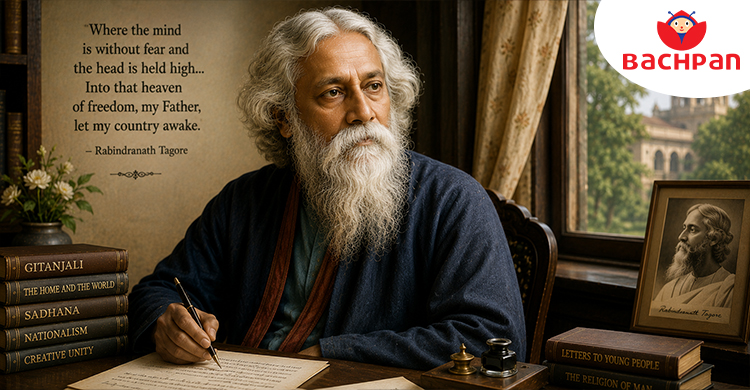
Birth and Background: Born on May 7, 1861, in Kolkata, West Bengal, Tagore was a celebrated poet, painter, and philosopher.
Major Contribution: He enriched world literature and composed the national anthems for both India (Jana Gana Mana) and Bangladesh.
Why They Are Remembered: As the first Asian Nobel laureate, he showcased India’s rich cultural tradition on the international stage.
One Interesting Fact: He surrendered his British knighthood in 1919 to protest against colonial violence at Jallianwala Bagh.
Value Children Can Learn: Love for art, creative expression, and global unity.
19. Vinoba Bhave
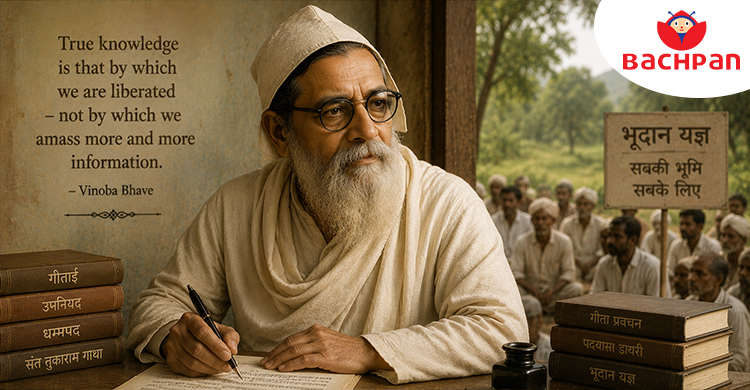
Birth and Background: Born on September 11, 1895, in Gagode, Maharashtra, Bhave dedicated his life to spiritual and social work.
Major Contribution: He launched the Bhoodan (Land Gift) Movement, walking across India to persuade landowners to share farmland with landless families.
Why They Are Remembered: Revered as Gandhi’s spiritual successor, his work represents selfless devotion to community welfare.
One Interesting Fact: He walked over 40,000 miles during his movement to assist poor rural families.
Value Children Can Learn: Generosity, simple living, and practical concern for others.
20. Kasturba Gandhi
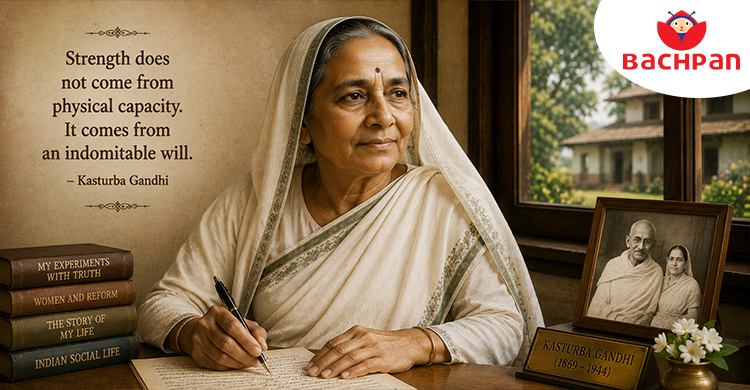
Birth and Background: Born on April 11, 1869, in Porbandar, Gujarat, Kasturba married Mohandas Gandhi in 1883 and supported him throughout his journey.
Major Contribution: She organised women’s civil rights demonstrations in South Africa and across India, and she led protests whenever Gandhiji was imprisoned.
Why They Are Remembered: Known affectionately as “Ba” (Mother), she was a firm pillar in the social movement among national heroes of India.
One Interesting Fact: She taught basic hygiene, reading, and writing to women in remote rural villages.
Value Children Can Learn: Quiet endurance, moral strength, and working for community welfare.
21. Begum Hazrat Mahal
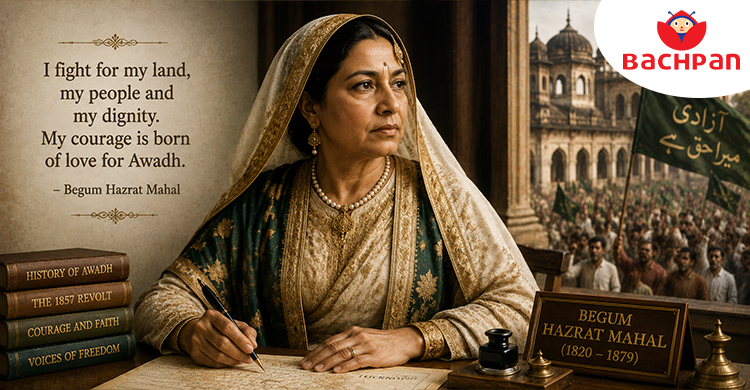
Birth and Background: Born in 1820 in Faizabad, Uttar Pradesh, she became the ruler of Awadh after British forces exiled her husband.
Major Contribution: She organised armed resistance during the 1857 Revolt to defend her people and protect her young son’s throne.
Why They Are Remembered: She remains one of the earliest female political leaders to openly defy colonial rule in northern India.
One Interesting Fact: She successfully reclaimed control of Lucknow for a period during the 1857 uprising.
Value Children Can Learn: Courage during difficult crises and leading people responsibly.
22. Dadabhai Naoroji
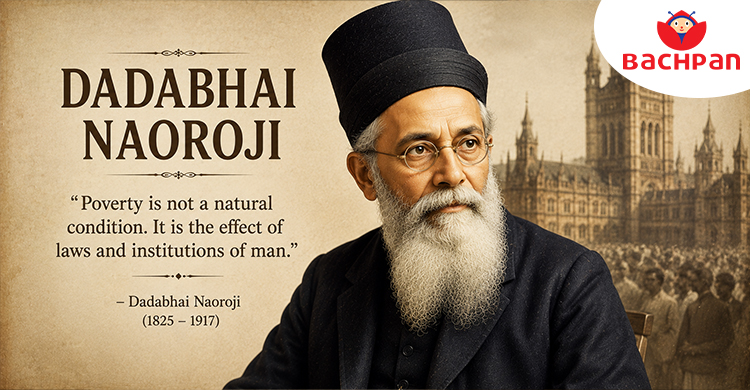
Birth and Background: Born on September 4, 1825, in Mumbai, Maharashtra, Naoroji was an educator, trader, and early national leader.
Major Contribution: He co-founded the Indian National Congress and researched colonial economic policies to explain how local wealth was drawn away.
Why They Are Remembered: Revered as the “Grand Old Man of India,” he laid the intellectual groundwork for national governance.
One Interesting Fact: He was the first Indian elected to serve as a Member of Parliament in the British House of Commons.
Value Children Can Learn: Thorough research, logical thinking, and perseverance in seeking fairness.
23. C. Rajagopalachari
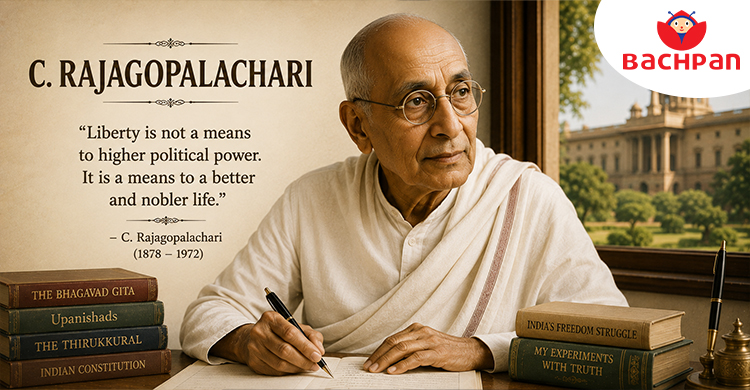
Birth and Background: Born on December 10, 1878, in Thorapalli, Tamil Nadu, “Rajaji” was a talented lawyer, writer, and statesman.
Major Contribution: He organised salt marches in southern India, served as Chief Minister of Madras, and became India’s last Governor-General.
Why They Are Remembered: Celebrated for his sharp political mind, he was among the first recipients of the Bharat Ratna award.
One Interesting Fact: He wrote widely popular retellings of classic epics like the Ramayana and Mahabharata for young readers.
Value Children Can Learn: Wise decision-making, clear thinking, and love for literature.
24. Ashfaqulla Khan
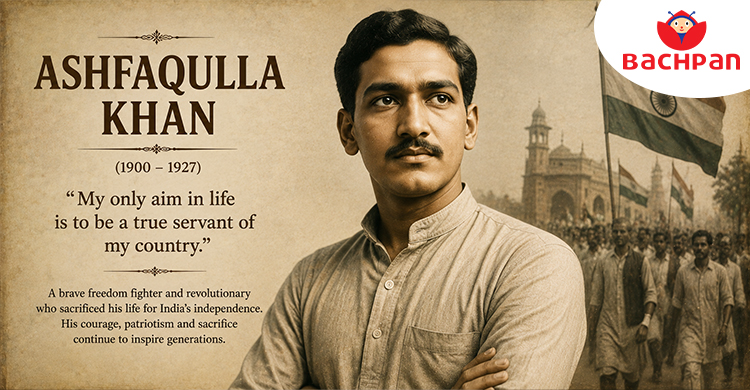
Birth and Background: Born on October 22, 1900, in Shahjahanpur, Uttar Pradesh, Khan was a talented poet and revolutionary patriot.
Major Contribution: He worked closely with Ram Prasad Bismil in the Hindustan Republican Association to fund freedom activities.
Why They Are Remembered: His deep sacrifice remains an enduring symbol of unity among Indian freedom fighters.
One Interesting Fact: He wrote moving patriotic poems in Urdu under the pen name “Hasrat.”
Value Children Can Learn: Genuine friendship, sacrifice, and harmony across diverse communities.
25. Sukhdev Thapar
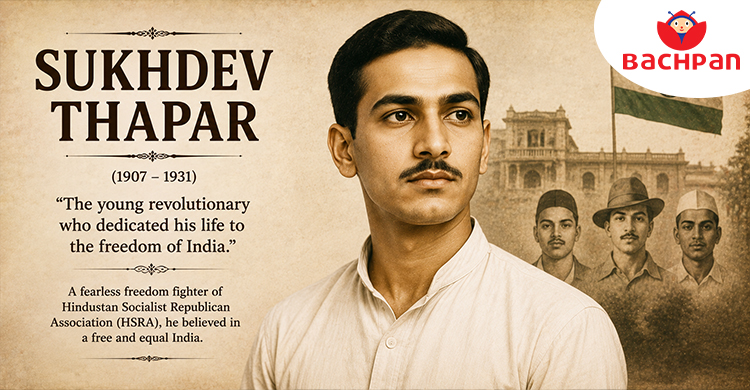
Birth and Background: Born on May 15, 1907, in Ludhiana, Punjab, Sukhdev organised student assemblies to raise political awareness early in life.
Major Contribution: He served as a key planner for the Hindustan Socialist Republican Association alongside Bhagat Singh.
Why They Are Remembered: He stood shoulder-to-shoulder with Bhagat Singh and Rajguru, giving his life for the nation on March 23, 1931.
One Interesting Fact: He created youth study groups in Lahore to encourage students to read historical and political literature.
Value Children Can Learn: Loyalty to friends, organised planning, and commitment to shared goals.
Timeline of India’s Great National Leaders
Understanding the chronological order of these famous national leaders of India helps us appreciate how the freedom movement evolved. Here is a historical timeline tracing their lives and major milestones.
| Period | National Leaders | Major Contribution |
|---|---|---|
| 1857 Revolt | Rani Lakshmibai, Mangal Pandey, Begum Hazrat Mahal | First War of Independence |
| Early Freedom Movement | Dadabhai Naoroji, Gopal Krishna Gokhale | Political awareness and reforms |
| Freedom Struggle | Mahatma Gandhi, Subhas Chandra Bose, Bhagat Singh, Chandra Shekhar Azad, Lala Lajpat Rai, Bal Gangadhar Tilak, Bipin Chandra Pal, Sarojini Naidu, Ashfaqulla Khan, Sukhdev Thapar, Kasturba Gandhi | India’s independence movement |
| Nation Building | Jawaharlal Nehru, Dr B. R. Ambedkar, Sardar Vallabhbhai Patel, Lal Bahadur Shastri, C. Rajagopalachari | Building modern India |
| Modern India | Jawaharlal Nehru, Dr B. R. Ambedkar, Sardar Vallabhbhai Patel, Lal Bahadur Shastri, C. Rajagopalachari | Education, science, literature, and social reform |
Values Children Can Learn from India’s Great National Leaders
Beyond historical facts, studying famous Indian leaders and their contributions offers priceless character-building lessons. Here are core values parents and teachers can highlight during daily conversations and storytimes.
Honesty and Truth
Mahatma Gandhi showed us that truth (Satya) is the highest power. Teaching children to speak truthfully builds trust, personal integrity, and inner peace. When kids learn to admit mistakes honestly, they develop emotional maturity, resilience, and strong moral character that guides them throughout their adult lives.
Courage and Bravery
Figures like Rani Lakshmibai and Bhagat Singh demonstrate that courage is not the absence of fear, but the determination to do what is right. Encouraging children to face difficult tasks and overcome challenges fosters confidence, problem-solving skills, and self-belief during early childhood development.
Leadership and Responsibility
Leaders like Sardar Vallabhbhai Patel and Jawaharlal Nehru showed that true leadership requires taking responsibility for the collective good. Likewise, giving students opportunities to take responsibility for simple tasks like assisting classmates builds personal responsibility, accountability, empathy, and early decision-making skills.
Equality and Justice
Dr B. R. Ambedkar fought tirelessly so that every individual receives equal respect regardless of background. Similarly, teaching children to treat everyone with dignity fosters empathy, kindness, and fairness. As a result, it prepares young minds to build inclusive, supportive, and compassionate communities in school and beyond.
Patriotism and Service to the Nation
Leaders like Dr A. P. J. Abdul Kalam showed that serving the country begins with helping those around us. Therefore, parents can encourage their little ones’ patriotism by caring for nature, keeping public places clean, respecting national symbols, and contributing positively to their local neighbourhoods.
Fun Ways to Teach Children About National Leaders
Learning history doesn’t have to be boring. Here are five engaging, interactive methods to share great leaders of India and their contributions with young learners.
Read Short Biographies Together
Choose colourful, illustrated storybooks featuring great national leaders of India for kids. Additionally, reading brief biographies of national leaders of India together at bedtime or on quiet afternoons keeps children engaged. Moreover, interactive reading encourages kids to ask thoughtful questions, visualise historical moments, and develop a natural passion for reading.
Storytelling and Role Play
Another effective approach is to transform historical events into captivating stories or fun role-play sessions at home. Let children dress up and enact famous lines such as Tilak’s “Swaraj is my birthright.” In this way, role-playing helps children internalize important leadership values, improves public speaking skills, and creates unforgettable, joyful learning experiences with family members.
Storytelling is one of the most effective ways to introduce children to inspiring personalities and historical events. Parents can also read these best short moral stories for kids to teach important life lessons through engaging stories.
Quiz and Flashcard Games
Create interactive flashcards featuring national leaders of India with photos on one side and clues on the other. Play quick trivia games during family game nights or car rides. This gamified approach enhances memory retention, sharpens quick thinking, and makes history feel like an exciting puzzle.
Drawing and Colouring Activities
Provide children with colouring sheets or sketchbooks depicting national monuments, flags, and leader portraits. Combining art with historical storytelling allows children to express creativity while reinforcing visual memory. Displaying their artwork on refrigerator doors or classroom walls boosts self-esteem and pride in learning.
Visit Museums and Historical Monuments
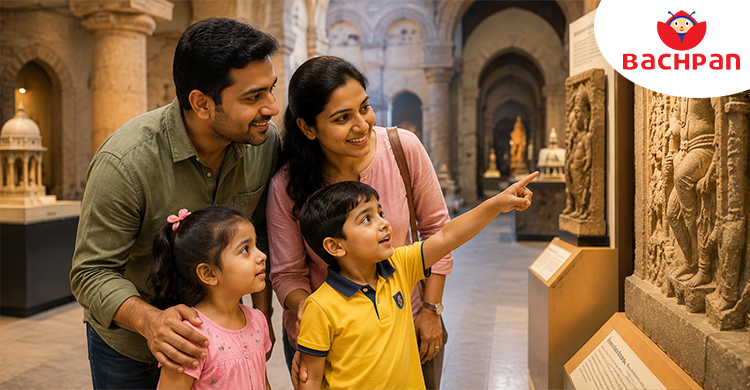
Finally, take children on educational weekend trips to local museums, historical forts, or memorials. There, seeing historical artefacts firsthand bridges the gap between textbooks and reality. Learning about the names of Indian leaders and their contributions turns abstract historical concepts into memorable real-world experiences that spark lifelong curiosity and deep respect for history.
National Leaders in School Activities
Schools bring history to life through interactive events and creative celebrations. Now, let us see how exploring national leaders of India for students enriches daily school experiences and inspires growth.
Independence Day Celebrations
On August 15th, schools celebrate with flag hoisting, patriotic songs, and cultural performances. Participating in Independence Day activities helps children understand the value of freedom, honors the sacrifices of our ancestors, and builds a vibrant spirit of community togetherness among young students.
Republic Day Programmes
Republic Day celebrations highlight the adoption of our Constitution and the diversity of India. It is a special occasion to honour Indian national leaders. Moreover, through patriotic group dances, parades, and speeches, students learn about democratic values, civic duties, and the foundational role played by leaders like Dr B. R. Ambedkar in shaping modern India.
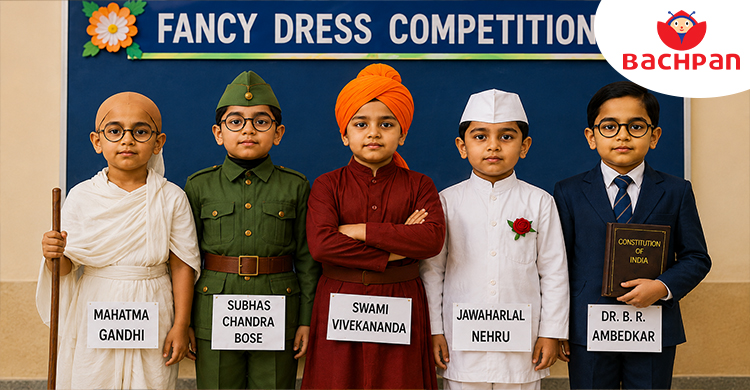
Fancy Dress Competitions
Fancy dress events let children dress up as their favourite national heroes of India. Reciting famous slogans while wearing traditional leader attire helps children build confidence, overcome stage fright, and form deep emotional connections with the iconic historical personalities they represent.
School Projects and Speeches
Creating charts and giving short presentations about Indian national leaders and their achievements builds crucial research and communication skills. Additionally, these engaging school projects boost teamwork, build confidence, and refine public speaking abilities. Furthermore, structuring historical facts into clear, compelling stories teaches children how to express their ideas effectively and confidently.
Common Mistakes Children Make While Learning About National Leaders
Learning about Indian national leaders can be exciting, but children often misunderstand important facts. With the right guidance, parents and teachers can help them build a clearer understanding and appreciate their inspiring contributions.
Confusing Freedom Fighters with National Leaders
Kids often assume every hero fought in battles or led marches. It helps to gently clarify that while all Indian freedom fighters and national leaders shared deep patriotism, leadership takes many forms—including visionaries, scientists, and educators who wrote our laws, built universities, and shaped society behind the scenes.
Mixing Up Historical Events
With so many eras to cover, children frequently blend major milestones—like confusing the Revolt of 1857 with the 1942 Quit India Movement. Using colourful visual timelines and storyboards helps kids organise historical events chronologically, making complex time periods easy to understand, connect, and remember for years to come.
Memorising Facts Without Understanding Their Contributions
Children sometimes focus strictly on memorizing dates and the names of Indian leaders just to score well on school exams. However, asking open-ended questions—like why Gandhi chose non-violence— encourages kids to understand the deeper purpose behind historical actions, turning dry memorization into genuine curiosity and rich critical thinking.
Forgetting the Values They Represent
When history turns into a list of facts, kids often overlook the character-building lessons behind the stories. Relating these qualities to everyday situations helps children understand that these lessons are not just part of history but meaningful values they can practise in their own lives.
FAQs on National Leaders of India
India’s greatest leaders include Mahatma Gandhi, Jawaharlal Nehru, Subhas Chandra Bose, Dr B. R. Ambedkar, Sardar Vallabhbhai Patel, Rani Lakshmibai, and Dr A. P. J. Abdul Kalam, among many other visionary patriots who built our nation.
Learning about national leaders inspires children with core moral values like courage, honesty, equality, and patriotism. Their life stories provide strong role models that help young learners build character, resilience, and civic responsibility.
People affectionately know Mahatma Gandhi as the “Father of the Nation” because he led India’s independence movement through the principles of Satyagraha and Ahimsa.
Dr. B. R. Ambedkar chaired the Drafting Committee and became the chief architect of the Constitution of India.
Dr A. P. J. Abdul Kalam, former President of India and renowned scientist, earned the title “Missile Man of India” through his pioneering work in rocket science and space research.
Conclusion – Inspiring Children Through India’s Great Leaders
The stories of the great national leaders of India are much more than chapters in a school textbook. They are life lessons in courage, kindness, and strong character. When we share these inspiring journeys with kids through bedtime stories, fun games, and creative activities, we help them build values that last a lifetime. Early childhood is the best time to nurture curiosity, national pride, and honesty. By sharing these timeless lessons today, we can inspire our children to grow into the caring, confident, and responsible leaders of tomorrow.