


20 Easy Shape Names for Kids with Pictures & Examples
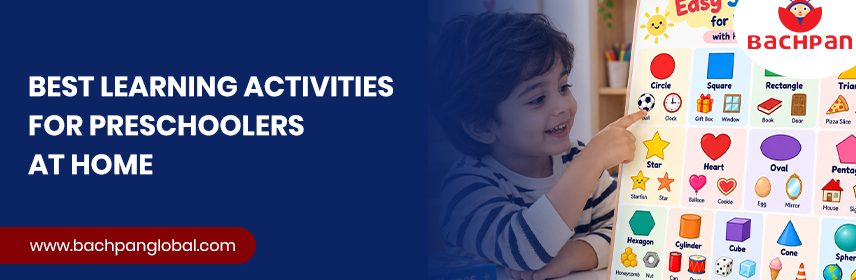
Take a look around, and you’ll notice shapes everywhere! A clock is round, a window is square, and a slice of pizza looks like a triangle. Learning shape names helps children recognise these everyday objects while making sense of the world around them. As children explore different shapes, they also build observation, thinking, and problem-solving skills. With simple examples and fun activities, learning shape names for kids becomes an exciting part of their early learning journey.
Shapes Chart for Kids
Before learning each shape in detail, explore this easy shapes chart for kids. It helps children quickly recognise different shapes, remember their names, and identify everyday objects with similar shapes.
| Shape | Sides/Edges | Everyday Example |
|---|---|---|
| Circle | No straight sides | Clock |
| Square | 4 equal sides | Window |
| Rectangle | 4 sides | Door |
| Triangle | 3 sides | Pizza Slice |
| Oval | No straight sides | Egg |
| Diamond (Rhombus) | 4 equal sides | Kite |
| Star | 5 points | Star Decoration |
| Heart | Curved shape | Greeting Card |
| Pentagon | 5 sides | Home Plate |
| Hexagon | 6 sides | Honeycomb |
| Heptagon | 7 sides | Coin Design |
| Octagon | 8 sides | Stop Sign |
| Nonagon | 9 sides | Decorative Tile |
| Decagon | 10 sides | Game Token |
| Crescent | 2 curved edges | Moon |
| Semicircle | 1 straight side and 1 curved edge | Rainbow Arch |
| Trapezium | 4 sides | Lamp Shade |
| Parallelogram | 4 sides | Slanted Window |
| Cone | 1 circular base and 1 curved surface | Ice Cream Cone |
| Cube | 6 square faces | Dice |
What Are Shapes?
Shapes are the simple forms we see all around us. Circles, squares, triangles, and rectangles help children recognise, describe, and understand the world through everyday objects.
Let’s explore the meaning of shapes, why they are important, and when children should start learning them.
What Is a Shape?
A shape is simply the form or outline of an object. Everything we see has a shape, from books and toys to fruits and buildings. Learning shape names helps children describe what they see, compare objects, and recognise different geometric shapes for kids in their everyday surroundings.
Why Is Learning Shapes Important for Kids?
Learning shape names for kids is about much more than recognising circles or squares. It strengthens observation, memory, and problem-solving skills while preparing children for maths, writing, and drawing. As children begin spotting shapes examples around them, learning becomes practical, enjoyable, and easier to remember.
Parents can make shape learning even more engaging with simple games and hands-on tasks. Explore these best learning activities for preschoolers at home for more playful ways to support early learning.
When Should Children Learn Shape Names?
Children usually start recognising easy shape names between the ages of two and four. Through toys, storybooks, puzzles, and everyday conversations, they gradually become familiar with different shapes with names. Introducing basic shape names for nursery students through playful activities keeps learning simple, fun, and stress-free.
Play-based learning during the early years gives children opportunities to develop these foundational skills naturally. Learn more about the importance of preschool and early childhood education and how early learning supports children’s development.
Types of Shapes for Kids
Not all shapes are the same. Some are flat, while others are solid. Understanding both helps children identify objects around them and makes learning shapes even more interesting for kids.
2D Shapes
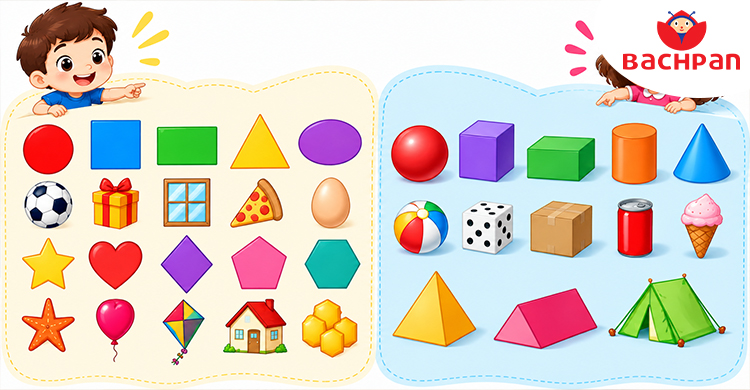
2D shapes for kids are flat shapes with only length and width. They do not have thickness and can easily be drawn on paper. Common examples include the circle shape, square shape, triangle shape, rectangle shape, oval shape, heart shape, and star shape. These are often the first shape names for kids that they learn easily.
Children can practise identifying these shapes through drawing, sorting, matching, and other playful tasks. Explore these types of preschool activities for kids by category for more age-appropriate learning ideas.
3D Shapes
Unlike flat shapes, 3D shapes have length, width, and height. They occupy space and can be held in your hands. A dice is a cube, while an ice cream cone is a cone. Learning these geometric shapes for kids helps them to connect classroom concepts with real-life objects.
20 Shape Names for Kids with Pictures
Now comes the fun part! Let’s explore shapes names for kids with pictures one by one. Along with each shape, children will discover simple explanations and shapes examples they see every day.
Circle
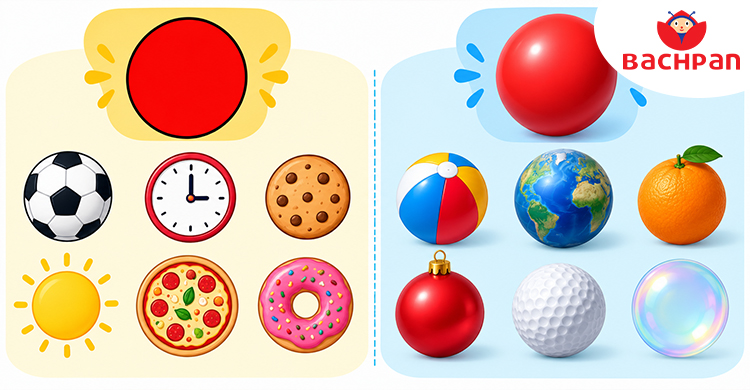
Round and rolling, the circle shape is one of the first forms children notice. It has no corners or straight edges, which makes it easy to recognise. A wall clock, coin, dinner plate, pizza, or spinning car wheel can turn an ordinary moment into a quick shape-learning activity for kids. These familiar objects help little ones learn shape names easily without making learning feel like a lesson.
Square
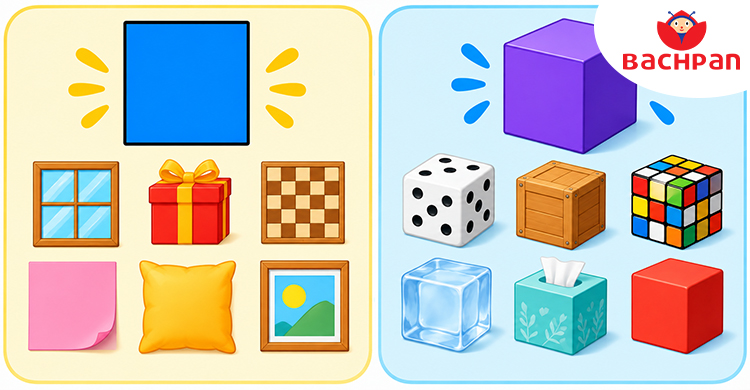
Four sides, four corners, all equal. That’s the square shape in a nutshell. It’s one of the easy shape names for preschoolers to identify, especially when children start noticing it around the house. Floor tiles, couch cushions, chessboards, and sticky notes are simple examples. Ask your child to find a square nearby, and suddenly basic shapes for kids become part of an everyday little treasure hunt.
Rectangle
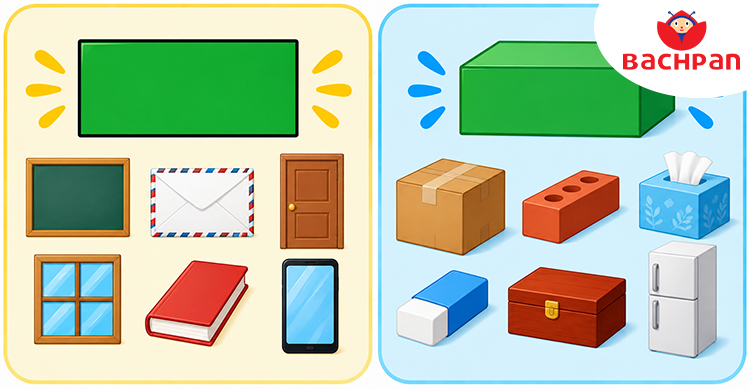
A book, a door, a phone—what do they have in common? These are all rectangle shape: featuring four sides and four corners, with the opposite sides matching in length. Because rectangles are everywhere, they’re among the most familiar 2D shapes for kids. Pointing them out during daily routines gives children plenty of natural shape examples to remember.
Think of a rectangle as a square stretched out wide.
Triangle
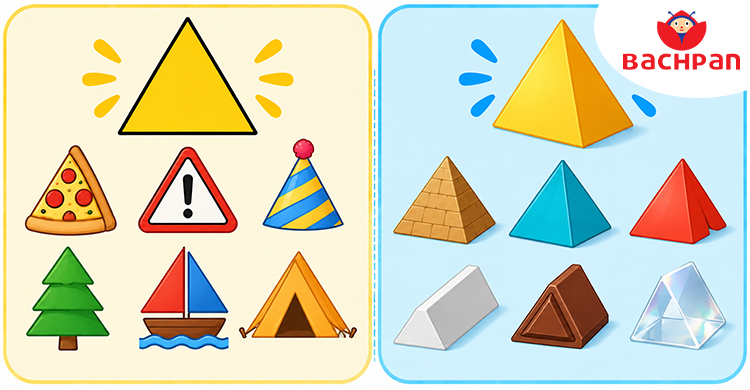
Three sides, three corners, and one unmistakable point make up the triangle shape. It’s a familiar part of the basic shape names for nursery students and is easy to discover during play and everyday activities. A slice of sandwich, a tortilla chip, a birthday hat, or even a road sign can become a quick lesson. Encourage children to look around and see how many triangles they can find.
Oval
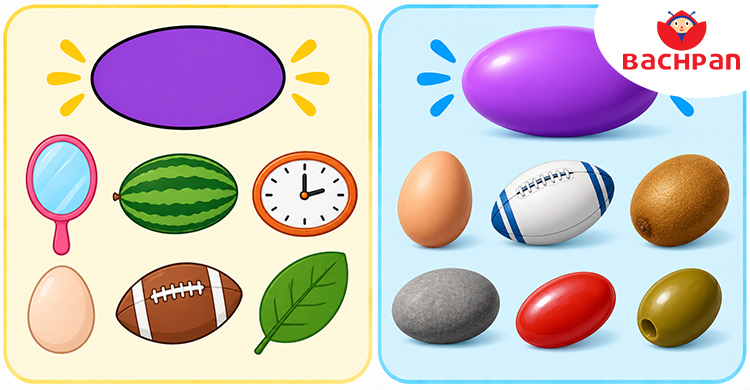
Not quite a circle, but close—the oval shape is longer and gently curved. Children can understand the difference more easily when they see it in objects they already know. An egg, balloon, bathroom mirror, or rugby ball gives them a clear comparison. Bringing these examples into shapes learning for kids makes it easier to understand how one curved shape can look different from another.
Diamond (Rhombus)
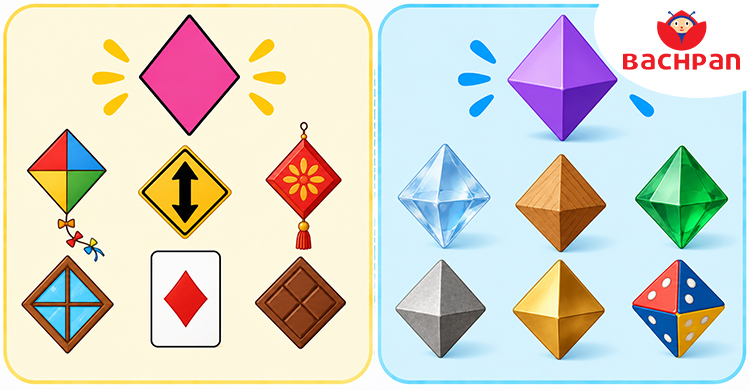
Soaring high in the sky, a diamond shape (also called a rhombus) features four equal sides tilted sideways to create a sparkling silhouette. Adding it to a visual shapes chart for kids makes learning feel like a game; it can be found in places children may already know — kites, playing cards, warning signs, and floor designs. These visual connections make unfamiliar shape names much easier to recall.
Star
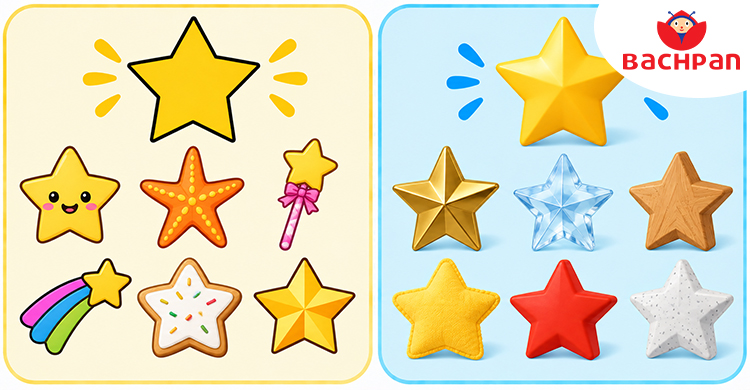
Twinkle, twinkle! The whimsical star shape usually boasts five pointed tips and brings instant magic to early learning. Stars work particularly well in shape names for kids with pictures, as their outline is so distinctive. Use star stickers, drawing sheets, greeting cards, or craft projects to introduce the shape. These are simple, fun ways to teach shapes to kids while keeping creativity at the centre.
Heart
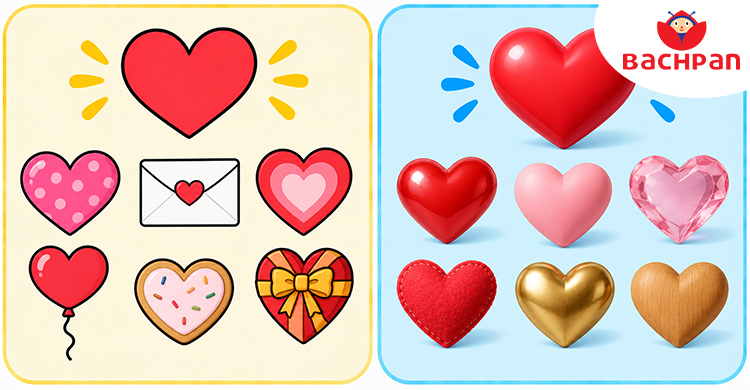
A shape children often draw before they even realise they’re learning geometry is the heart shape. Its two rounded curves and pointed bottom make it easy to recognise. Beyond drawings, heart cutouts can be used for colouring, crafts, and other shape activities for preschool children. Connecting shapes with names to ideas like love, family, and kindness gives children something meaningful to associate with the shape.
Drawing, colouring, cutting, and making shapes with craft materials can also strengthen children’s hand control. Try these fine motor activities for preschoolers at home for more hands-on activities that support coordination.”
Pentagon
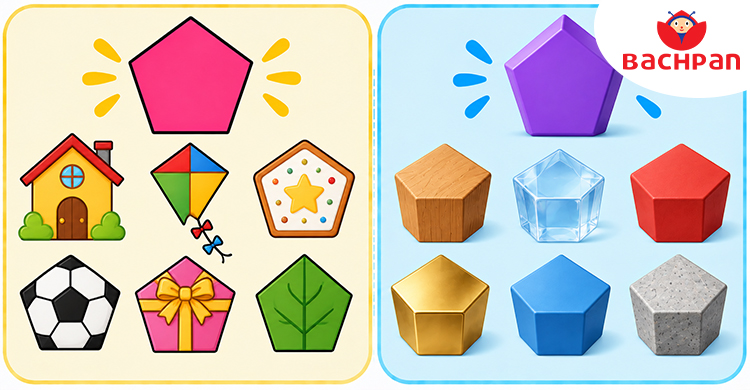
Here’s a shape that makes counting a little more interesting. A pentagon shape has five straight sides and five corners, giving it a distinctive outline. Children may recognise it from football patterns, blocks, or craft designs without knowing its name. Introducing it through these familiar objects can make geometric shapes for kids less complicated and help them remember new shape names through what they can actually see.
Hexagon
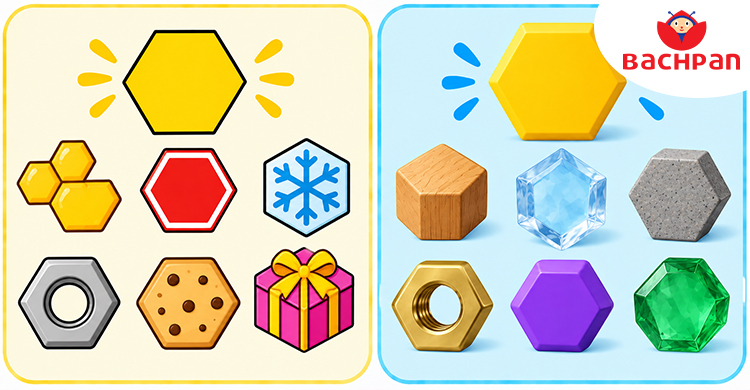
Nature has its own geometry lesson, and the honeycomb is a perfect example. Each cell forms a hexagon shape, with six sides and six corners. Once children know what to look for, they can also find hexagons in tiles, metal nuts, and board games. These examples take basic shapes for kids beyond the usual circle and square, while showing how shapes learning for kids can happen both indoors and outdoors.
Heptagon
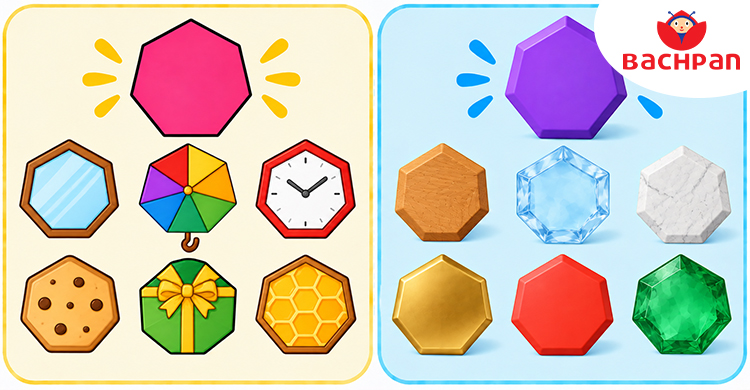
Step up the counting fun with a heptagon shape. With seven straight sides and seven corners, this unique polygon is an exciting addition to geometric shapes for kids. It might look a bit tricky at first, but counting each side together builds great math confidence. You can spot heptagons on special coins, badges, box lids, and fancy tile patterns during your daily shapes learning for kids.
Octagon
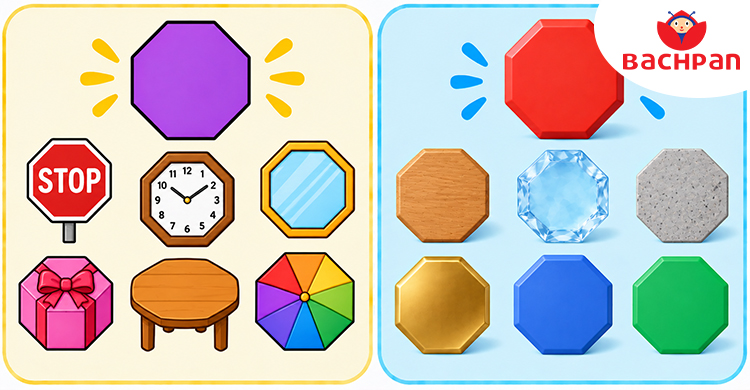
Stop right there and admire the eight-sided octagon shape. Featuring eight equal sides and eight corners, it’s one of the most recognizable shapes names for kids with pictures. The classic red “STOP” sign on the road is the best everyday example to show your toddler. You can also spot octagons in umbrellas, wall clocks, and spider webs while exploring shapes for kids outdoors.
Nonagon
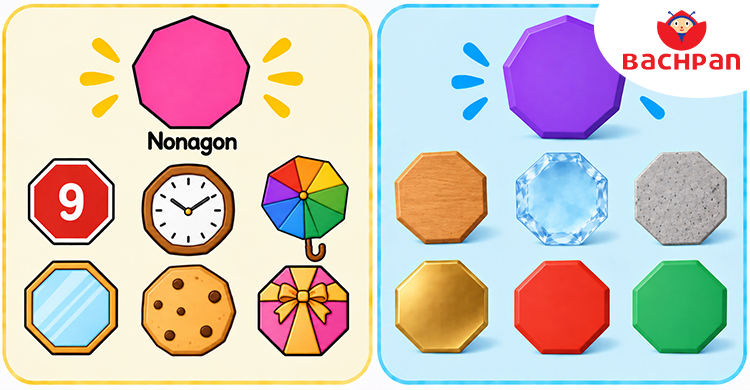
Ready for a nine-sided adventure? A nonagon shape has nine straight sides and nine corners, making it a fantastic challenge for curious young minds. Adding it to a visual shapes chart for kids encourages advanced counting skills. You’ll often see nonagons in decorative star patterns, floor tiles, and unique architectural designs, helping children discover how complex shape names fit together in nature and art.
Decagon
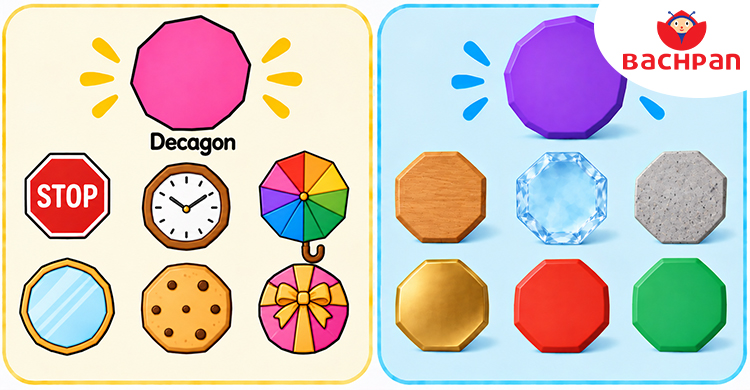
Double up on ten with the mighty decagon shape. Boasting ten straight sides and ten corners, this multi-sided star performer makes expanding basic shape names for nursery students even more exciting. Count its pointy corners together as a fun math exercise and look for decagons in coaster designs, collectable coins, and intricate medal badges while practicing learn shape names easily at home.
Crescent
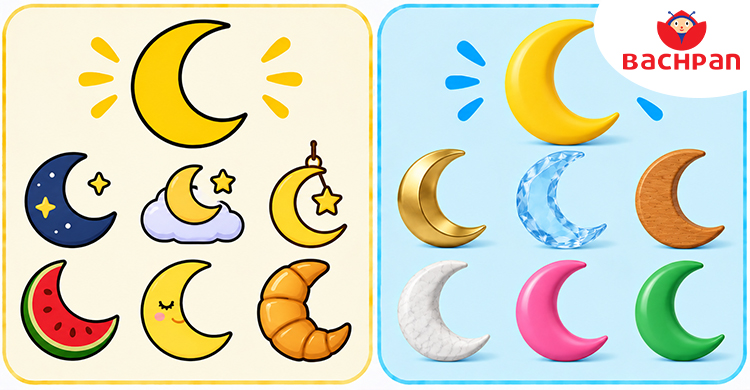
A moon on a clear night gives children one of the easiest ways to picture a crescent shape. Its curved, open form also appears in everyday objects such as bananas, croissants, and curved fingernails. Bring the shape into bedtime stories, colouring pages, or craft activities for simple fun ways to teach shapes to kids. Sometimes, a familiar object is all children need to make a new shape stick.
Semicircle
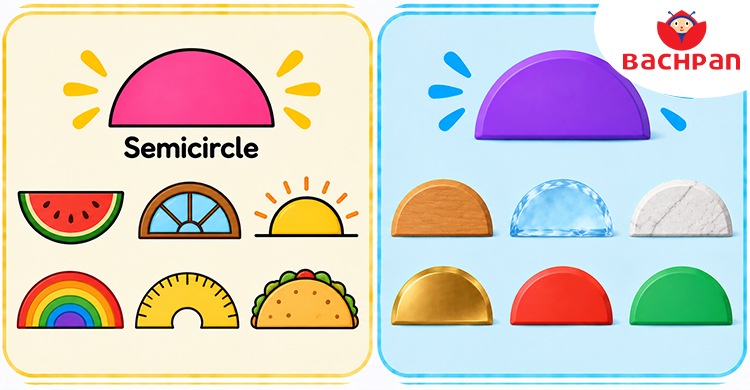
Cut a circle right down the middle, and you get a semicircle shape. With one straight edge and one sweeping curve, it’s a friendly half-moon form that’s easy for toddlers to draw. Among favourite 2D shapes for kids, children quickly recognise it in juicy watermelon slices, colourful rainbows, handheld fans, and cozy igloos during interactive shape activities for preschool children.
Trapezium
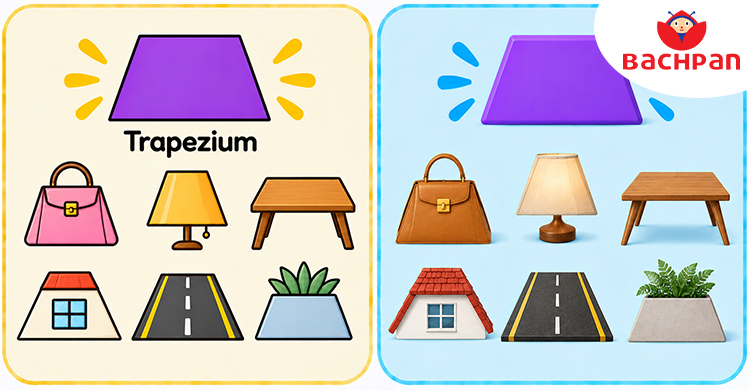
Meet the trapezium shape, a four-sided figure with two flat parallel sides and two slanting edges that look like a table or a cozy handbag! It’s a wonderful addition to any list of shapes with names for growing preschoolers. Spotting trapeziums in lampshades, flowerpots, pop-up tents, and popcorn tubs makes learning geometry feel like a treasure hunt around the house.
Parallelogram
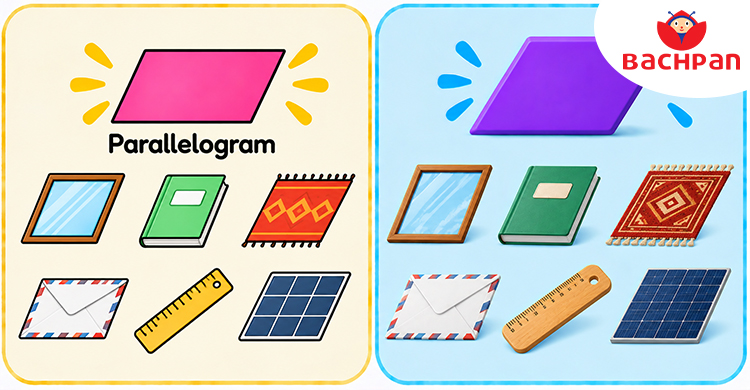
Give a rectangle a gentle push, and it leans into a parallelogram shape. It has four sides, with opposite sides parallel to each other. Children can discover this shape in kites, slanting erasers, solar panels, and tile patterns. Comparing it with a rectangle is a simple way to introduce easy shape names for preschoolers and help them notice small differences between similar shapes.
Cone (3D Shape)
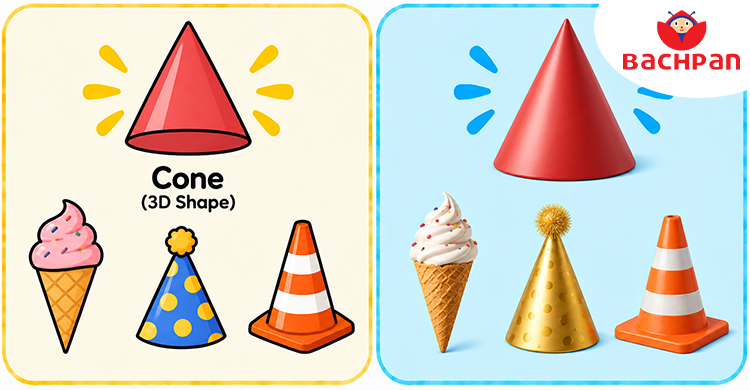
Now let’s move from flat shapes to something children can actually hold. A cone shape has a circular base that narrows to a single point, making it a familiar 3D shape for kids. Party hats, ice cream cones, traffic cones, and funnels all demonstrate the same form. Letting children touch and turn these objects while naming the shape makes shapes examples much more concrete and memorable.
Cube (3D Shape)
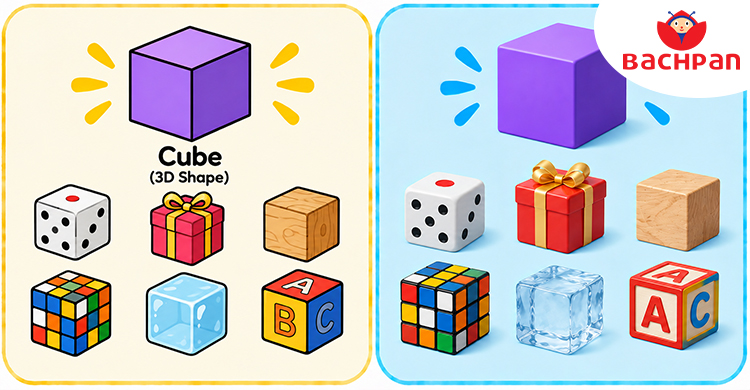
Grab a dice, an ice cube, or a building block — you’re already holding a cube shape. Unlike flat figures, a cube has six equal square faces and takes up space, making it a great first step into 3D geometry. Rubik’s cubes and cardboard boxes offer more familiar examples. Using objects children can stack, roll, and hold makes shape names for kids much easier to understand.
Everyday Objects That Match Different Shapes
Children learn shapes best when they connect them with things they see every day. Looking for familiar objects makes learning fun, practical, and much easier to remember.
Shapes Found at Home
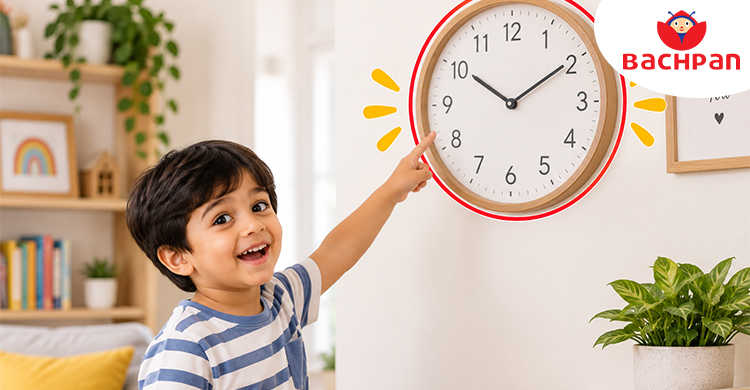
Home is full of objects that help children recognise different shapes. A clock is a circle shape, a window is a square shape, a door is a rectangle shape, and a bowl can be an oval shape. Spotting these familiar objects helps children learn shape names easily while building observation skills.
Shapes Found in Nature
Nature is another wonderful classroom for learning shapes. The sun looks like a circle shape, leaves can be oval, mountains often resemble a triangle shape, and stars brighten the night sky. Exploring nature helps children discover real-life shape examples while making learning exciting and memorable.
Shapes Found at School
Schools are filled with everyday examples of shapes. Whiteboards and books are rectangles, wall clocks are circles, classroom windows may be square, and rulers often have a rectangular shape. Recognising these basic shapes for kids during daily activities helps children remember shape names for kids more confidently.
Shapes Found in Toys and Games
Building blocks, puzzles, stacking toys, and board games introduce children to different geometric shapes for kids in a playful way. A dice is a cube; shape sorters include circles, squares, and triangles, while pattern blocks feature hexagons and diamonds. These hands-on activities make learning enjoyable.
Fun Activities to Teach Shape Names to Kids
The best way to teach shapes is through play. These simple and engaging activities help children recognise, remember, and enjoy learning different shape names for kids without feeling like they’re studying.
Shape Hunt Around the House
Turn learning into a fun treasure hunt by asking children to find objects of different shapes around the house. They can look for a round plate, a square cushion, or a rectangular book. This is one of the fun ways to teach shapes to kids while improving observation skills.
Parents can extend this kind of playful learning with simple activities that children can enjoy together at home. Explore these preschool activities parents can do at home for more ideas.
Shape Sorting Game
Collect everyday objects or colourful cut-outs and ask children to group them according to their shapes. Sorting circles, squares, triangles, and rectangles helps them compare similarities and differences. This simple game supports shape activities for preschool children while strengthening thinking and classification skills.
Shape Drawing Activity
Encourage children to draw different shapes and turn them into creative pictures. A circle can become the sun, a triangle can become a mountain, and a square can become a house. Drawing makes shapes learning for kids more creative while improving fine motor and imagination skills.
Flashcard Learning
Use colourful flashcards with shapes names for kids with pictures, to introduce one shape at a time. Show the card, say the name aloud, and ask children to identify matching objects around them. This activity improves memory, vocabulary, and shape recognition in a fun way.
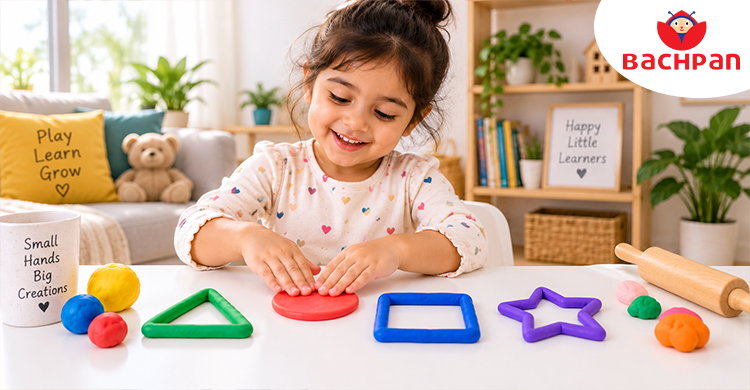
Clay Shape Making
Let children use clay or playdough to make circles, squares, triangles, and other shapes. Rolling, pressing, and shaping the clay strengthens hand muscles while helping them understand different forms. This is one of the most enjoyable shape activities for preschool children that combines learning with creativity.
Common Mistakes Children Make While Learning Shapes
As children begin learning shapes, it’s natural for them to make a few mistakes. With gentle guidance and regular practice, these small confusions gradually disappear.
Confusing Squares and Rectangles
Many children think every four-sided shape is a square. Help them notice that a square shape has four equal sides, while a rectangle shape has only opposite sides equal. Comparing both shapes side by side makes the difference easier to understand.
Mixing Up Circles and Ovals
Since both shapes are curved, children often confuse them. Explain that a circle shape is perfectly round, while an oval shape is stretched slightly longer. Showing everyday objects like a coin and an egg helps children recognise the difference more clearly.
Forgetting the Number of Sides
Remembering how many sides each shape has can be challenging at first. Encourage children to count the sides aloud while tracing or drawing each shape. Repeating this activity regularly makes it easier to remember different shape names and their unique features.
Confusing 2D and 3D Shapes
Children may think a cube and a square are the same because they look similar. Explain that 2D shapes for kids can be easy to understand with real-life examples, as 2D shapes are flat, while 3D shapes have depth and can be held. Using real objects like blocks and balls helps children understand the difference quickly.
FAQs on Shape Names for Kids
The most common basic shapes for kids include the circle, square, rectangle, triangle, oval, star, heart, pentagon, and hexagon. These are usually introduced during preschool and nursery years.
Most children begin recognising shape names for kids between the ages of two and four. Regular exposure through play, books, and daily activities helps them learn naturally.
The easiest way is through games, drawing, puzzles, flashcards, storytelling, and everyday objects. These fun ways to teach shapes to kids keep children engaged while making learning enjoyable.
Shapes help children develop observation, visual recognition, early maths skills, problem-solving abilities, and creativity. They also prepare children for writing, geometry, and logical thinking in later years.
Children can find shapes everywhere. A clock is a circle, a door is a rectangle, a kite is a diamond, a slice of pizza is a triangle, and a honeycomb is a hexagon. These familiar shapes examples make learning easier.
2D shapes for kids are flat and have only length and width, while 3D shapes have length, width, and height. A square is a 2D shape, whereas a cube is a 3D shape.
Conclusion – Helping Children Learn Shapes Through Fun
Learning shape names for kids is an important step in every child’s early education. From recognising everyday objects to exploring creative activities, children develop observation, thinking, and problem-solving skills while having fun. With regular practice, interactive games, and real-life shapes examples, learning becomes simple and enjoyable. Encourage your child to spot different shapes for kids at home, at school, and outdoors, turning everyday moments into exciting opportunities to learn and grow.