


Body Parts for Kids: Simple Ways to Teach Preschoolers
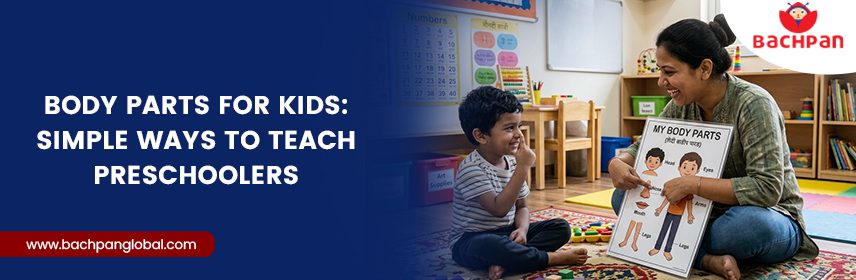
Ever caught your little one pointing at their nose and calling it an ear? Don’t worry—you’re not alone! Teaching body parts for kids can be a fun, giggle-filled adventure when you turn it into playtime. Picture your little one asking, “Where’s my tummy?” then cracking up when they spot it!
With simple, interactive ways, you can help your munchkin learn body parts while dancing, singing, and making silly faces together.
Why Learning Body Parts Is Important for Kids
We have all been there—your toddler is crying, but they can’t tell you where it hurts. Body parts learning for kids plays an important role here, helping your child say things like, “My knee hurts!” instead of just pointing and sobbing.
Isn’t that a relief?
It also builds body awareness, boosts confidence, and supports early science and safety skills in a fun way!
Basic Body Parts for Kids to Learn First
There are some basic body parts for kids that little ones should learn first—simple, fun, and sometimes surprising. Let’s explore them together!
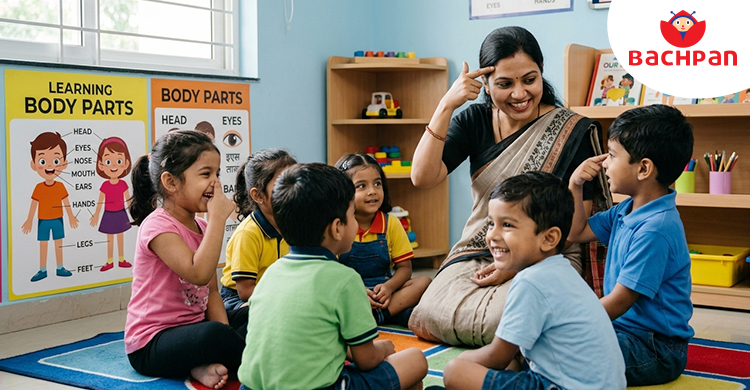
The first body parts names for kids to learn are the head, eyes, ears, nose, and other basic body parts.
| Body Part group | Superpowers of Your Body Parts! |
Head, Eyes, Ears, Nose & Mouth – The Super Senses! | – Head: Holds your brain – your thinking and remembering centre 🧠 – Eyes: Help you see the world 👀 – Ears: Let you hear sounds and music 🎵 – Nose: Smell flowers, food, and fresh air 🌸 – Mouth: Talk, eat, taste yummy food, and make funny faces 😋 |
Hands, Arms, Legs & Feet – The Movers & Doers! | – Hands & Arms: Grab, hold, draw, and play 🖐️ – Legs & Feet: Walk, run, jump, and dance |
| Fingers, Toes & Tiny Parts – The Little Helpers! | – Fingers: Hold toys, write, and count 🖐️ – Toes: Balance and help you stand and walk 🦶 – Tiny body parts: Help you touch, point, and move with precision! |
External Body Parts for Kids with Simple Functions
Let’s take a closer look at body parts for preschoolers and their simple functions—some are easy to spot, while others might surprise your little explorer!
External Human Body Parts for Kids
By exploring the external human body parts for kids, your little one can see and touch them. Show them the head, ears, and eyes, or point to arms, hands, and legs. You can play “touch your nose” or “wiggle your fingers” games. These are simple and fun ways to help them learn!
Sense Organs and Their Functions for Kids
Let’s dive into the amazing world of senses! Discover how sense organs for kids help little explorers see, hear, smell, taste, and touch everything around them.
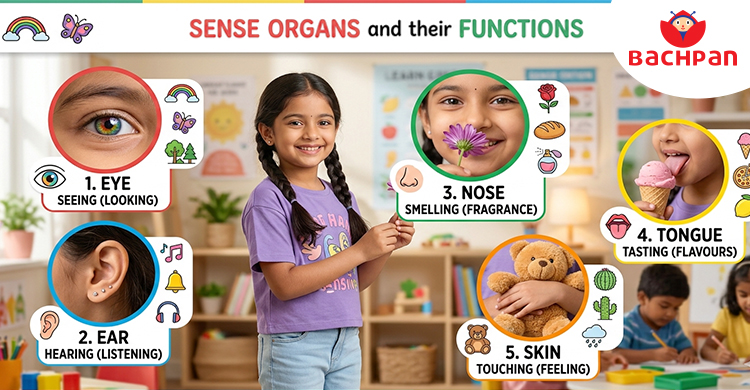
| Sense Organ | What It Does | Fun Learning Idea |
| 👀 Eyes | Help you see colours, shapes, and everything around you | Ask, “What colours do you see?” or play “I Spy” with objects 🌈 |
| 👂 Ears | Help you hear sounds | Ask, “What’s that sound?” or play sound guessing games 🎶 |
| 👃Nose | Help you smell flowers, food, and scents | Ask, “How does this smell?” and explore different scents together🌸 |
| 👅 Tongue | Help you taste yummy or sour foods | Try tasting games with sweet, sour, salty, or spicy foods 🍭🍋 |
| ✋ Skin | Let you touch and feel textures | Explore textures – soft, rough, smooth – through play & objects.🧸 |
Want to make learning the five senses super fun and unforgettable? Check out these Effective and fun ways for preschoolers to explore their five senses.
Internal Body Parts for Kids
Now, let’s peek inside! Body parts for kids aren’t just on the outside—some hidden parts work quietly, doing amazing jobs your little explorer will love to discover.
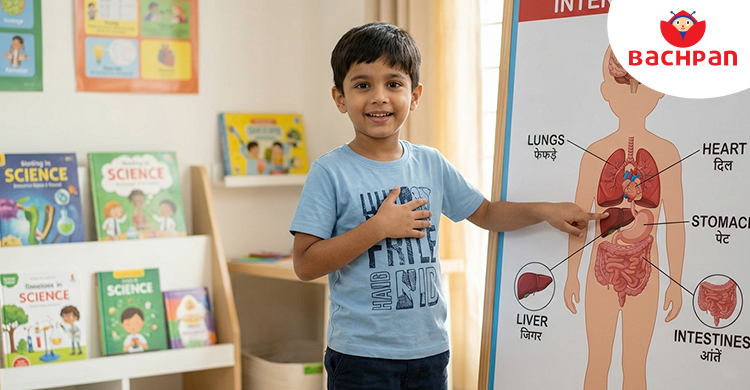
Heart, Lungs, and Stomach for Kids
Let’s explore the heart, lungs, and stomach—important internal parts your child can start learning about.
| Body Parts | Function |
| ❤️ Heart | Pumps blood around the body to keep us alive and strong 🥁 |
| 🌬️ Lungs | Help us breathe in oxygen and breathe out carbon dioxide |
| 🍽️Stomach | Breaks down food and gives your body energy to play and grow ⚡ |
How to Explain Internal Body Parts to Preschoolers
Explaining internal body parts to preschoolers can be fun and simple. For example, you can pretend a balloon is the lungs—blow it up and let your child watch it expand and shrink while “breathing.” Or tap your chest to show the heartbeat and make a rumbling sound for the stomach.
These playful examples help your little one understand what’s happening inside their body!
Fun Activities to Teach Body Parts for Kids
Get ready for some giggles and wiggles! Body parts activities for kids turn learning into play, with games and surprises that little explorers will love to discover.
Body Parts Games for Kids
Learning body parts can be a blast with these fun games!
- Simon Says: Call a body part, and your little one does it only if you say “Simon says!” Fun, silly, and full of giggles!
- Freeze Game: Play music and ask your child to freeze while touching a body part when the music stops
- Mirror Me: Move a body part, and your child mirrors you. Add silly faces or wiggly ears, then switch roles!
These games improve listening skills, quick thinking, and body awareness.
Body Parts Songs and Rhymes for Preschoolers
Music makes learning easy and memorable!
- Sing “Head, Shoulders, Knees, and Toes” and increase the speed each time for extra fun
- Try “If You’re Happy and You Know It” by adding body actions like “touch your nose” or “stomp your feet”
- Create your own silly song using your child’s name and body parts
Songs help children learn through rhythm, repetition, and movement
Body Parts Drawing and Colouring Activities
Let your child explore creativity while learning!
- Draw and Label: Help your child draw a simple body and name each part
- Complete the Picture: Draw a face and ask them to add missing parts like eyes or ears
- Colour and Identify: Use worksheets to colour and name body parts
These activities build creativity, memory, and recognition skills.
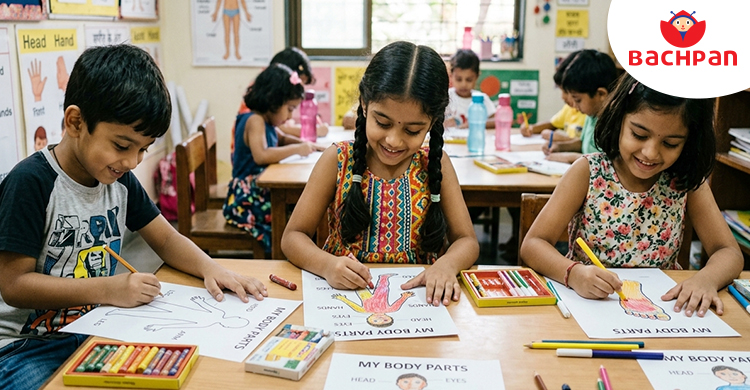
Creative Body Parts Activities for Preschool and Kindergarten Kids
Get ready for hands-on fun! Body parts activities for kids—from silly movements to creative games—spark curiosity and excitement, with surprises your little explorers will love discovering.
Body Parts Craft Activities for Kids
Crafts make learning body parts super fun!
- Paper Plate Faces – Stick eyes, nose, and mouth on a paper plate to create a funny face.
- My Body Outline Craft – Trace your little one’s body on paper and decorate it with clothes, hair, and colours
- Stick Puppet Family – Make characters with sticks, label their body parts, and have a playful puppet show
Messy, giggly, and creative—these crafts make learning body parts super fun!
Body Parts Chart and Flashcards for Kids
A body parts chart for kids is a simple and fun way to help little ones learn. You can point to each part, ask them to name it, or play matching games with flashcards. Bright colours and pictures make learning interactive, memorable, and full of giggles!
Tips for Teaching Body Parts for Kids at Home and School
Whether at home or school, there are clever ways to teach body parts for kids—simple tips and fun ideas that make little learners curious and excited to explore.
Simple Ways Parents Can Teach Body Parts at Home
You can make learning fun at home with simple activities!
Teach your little one the body parts names for kids by pointing to each part, singing songs, playing “touch your nose,” or making silly faces. These playful moments help them learn while giggling and moving around!
How Preschool Teachers Teach Body Parts Effectively
Preschool teachers have clever ways to make learning fun!
Using songs, games, and hands-on activities, they teach the parts of the body to kindergartners. For example, in “Body Part Bingo,” children match cards to their own body while laughing, pointing, and moving. It turns every lesson into an exciting, giggle-filled adventure!
At Bachpan Play School, we use activity-based learning methods such as songs, role-play, and sensory games to help children understand body parts in a fun and engaging way.
Educational Benefits of Learning Body Parts for Kids
Learning about body parts for preschoolers is more than just pointing and naming—it’s a whole adventure!
For example, it helps your little one talk about themselves—like saying, “Look at my wiggly fingers!” While they laugh and explore, it also improves movement, coordination, and early science abilities.
Plus, recognising their body parts helps them feel confident and curious, ready to ask questions and discover even more every day!
Conclusion: Making Body Parts Learning Fun for Kids
We hope that by now you have plenty of fun ways to make learning about body parts for kids a joyful experience!
Whether it’s singing songs, playing games, doing crafts, or just pointing and laughing together, these little activities help your child explore, remember, and feel confident. When learning feels like play, curiosity grows naturally—and every day becomes a chance for giggles, discovery, and excitement!
Curious to keep the fun going? Don’t miss our guide on 20 Best Fine Motor Activities for Preschoolers at Home—your little one will thank you for it!
FAQs: Body Parts for Kids
Children usually start learning basic body parts between 1 to 2 years of age. At this stage, they can identify simple parts like eyes, nose, and hands. By the age of 3 to 5 years, kids can name more body parts and understand their basic functions through play and daily activities.
The best way to teach body parts to toddlers is through play-based learning. You can use songs like “Head, Shoulders, Knees, and Toes,” play games like “Simon Says,” or simply point to body parts during daily routines. Making learning interactive helps children remember faster and enjoy the process.
Preschoolers should first learn basic body parts, such as:
Head
Eyes
Ears
Nose
Mouth
Hands
Legs
Feet
Once they are comfortable, you can gradually introduce smaller parts like fingers and toes, and simple internal organs like the heart and lungs.
Learning body parts helps children communicate better, especially when they feel pain or discomfort. It also improves body awareness, vocabulary, and confidence, and supports early learning in science and health. Additionally, it plays an important role in teaching personal safety and self-awareness.
You can explain internal body parts using simple examples and visuals. For instance, describe the heart as something that “beats like a drum,” lungs as “balloons that help us breathe,” and the stomach as something that “breaks down food.” Using actions and stories makes it easier for kids to understand.