



Body Organs for Kids: Easy & Fun Way to Learn Internal Organs
“Welcome to the amazing world of body organs for kids,” said the stomach with a funny little grumble-grumble! “Ready to meet the body’s secret superheroes?” giggled the brain.
Learning about internal organs becomes fun when we uncover the tiny wonders working quietly inside us every day. From helping us grow and move to keeping us active and healthy, these amazing body parts never stop working!
Why Learning Body Organs Is Important for Kids
Learning about human body organs for kids is like taking a fun journey inside our own body!
As children learn what organs do, they begin to understand how the body grows, stays active, and works every day. It also builds curiosity, encourages healthy habits, and helps kids appreciate the amazing systems inside them.
What Are Body Organs? Simple Explanation for Kids
Body organs for kids are special parts of our body that quietly do important jobs every day. But what exactly are they? Let’s find out!
Meaning of Body Organs for Kids
Body organs are important parts inside us, and each one has a different role to play. Some help us move, some help us breathe, while others help turn food into energy. Together, they quietly support the body every day, helping us grow, learn, and stay active.
Internal Body Organs for Kids Explained Simply
Internal body organs for kids are like a secret team working inside the body, even when we sleep!
The brain works like a clever boss, the lungs are like balloons to breathe in and out, the heart is like a little engine that pumps blood, and the stomach is like a food blender that turns food into energy.
Before learning about internal organs, children can build a strong foundation by understanding the external body parts for kids and their functions.
List of Important Body Organs for Kids to Learn
Get ready to discover some amazing secrets hidden inside your body! From the brain to the heart, these body organs’ names for kids will introduce tiny superheroes with surprisingly big jobs.
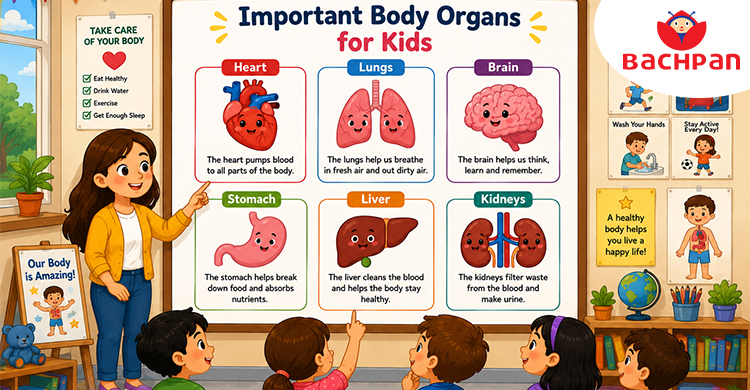
Heart – A Vital Body Organ for Kids
The heart is a little pump, and it goes on working day and night without getting tired! Think of a water pump pumping water through pipes; your heart does the same thing! It sends blood all around your body, helping you run, jump, play, and stay full of energy.
Lungs – Breathing Organs in Our Body
The internal organs of the body for kids become exciting to learn when we discover how the lungs work like soft balloons inside our chest. Every time we breathe in, the lungs take in fresh oxygen, and when we breathe out, they send waste air away to keep us healthy.
Brain – The Control Centre of the Body
The brain is like the captain of a ship, giving instructions to all parts of the body. Want to wave at a friend, solve a puzzle, or remember your favourite song? Your brain quickly sends messages, helping you think, move, learn, and make decisions every day.
Stomach – Digestive Body Organ for Kids
The stomach works like a tiny food mixer inside the body. After we eat, it helps break food into smaller pieces so the body can use it for energy and growth. Thanks to the stomach, the yummy food we eat helps us play and stay active!
A healthy digestive system depends on nutritious eating habits, which is why parents should be aware of the harmful effects of junk food on children’s health.
Liver and Kidneys – Cleaning Organs of the Body
The liver and kidneys are like the body’s cleaning superheroes! Imagine a cleaning team keeping your room neat. Similarly, these organs help clean your body from the inside. The liver sorts useful and harmful things, while the kidneys clean the blood and remove waste to keep you healthy.
Body Organs and Their Functions for Kids
Have you ever wondered why different body organs have different jobs? Body organs and functions for kids help uncover how each part plays an important role in helping the body work every day.
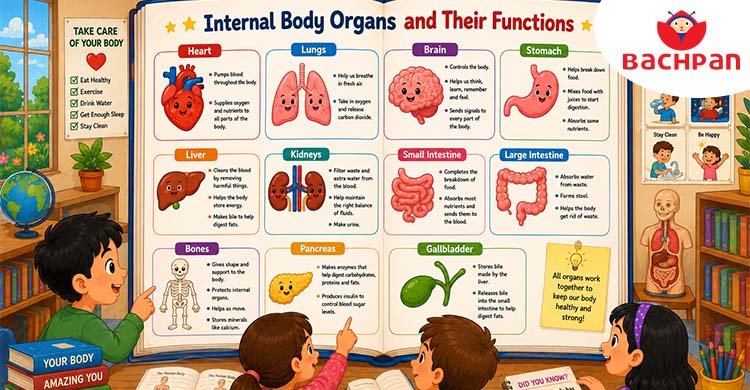
Internal Body Organs and Their Functions
| Internal Organ | What It Does – Superpowers Inside Your Body |
|---|---|
| Heart | Pumps blood throughout the body and keeps us active and strong |
| Lungs | Help us breathe in oxygen and breathe out carbon dioxide |
| Brain | Controls thinking, memory, learning, movement, and emotions |
| Stomach | Breaks down food and gives energy to the body |
| Liver | Cleans harmful substances and helps digestion |
| Kidneys | Remove waste and extra water from the body through urine |
| Small Intestine | Absorbs nutrients from food into the body |
| Large Intestine | Removes solid waste from the body |
| Bones | Support body structure and protect internal organs |
| Pancreas | Helps digest food and control sugar in the body |
| Gallbladder | Stores digestive juice to help break down fats in food |
How Body Organs Work Together
When you breathe in, your lungs take oxygen into your body. The heart then pumps this oxygen through the blood to all parts of the body.
The food you eat goes to your stomach, where it is broken down into energy. Then your brain sends signals to different body parts so you can move, think, and do activities properly every day.
Foods rich in fiber play an important role in supporting digestion and overall health. Explore some of the best high fiber rich foods for kids in India to include in your child’s diet.
Fun Activities to Teach Body Organs for Kids
Simple activities make learning fun and easy to remember. Body organs activities for kids help children discover how different body parts work together in quiet and surprising ways that will be explored further ahead.
Body Organs Games and Matching Activities
Matching and positioning games make learning about body organs an interesting experience for kids. Children identify organs and connect them to the correct names or positions.
For example, your little one may place “lungs” in the chest area or match “heart” with its name, making learning quick and easy to remember.
Learning about the human body becomes more engaging when combined with hands-on experiences. Try these types of preschool activities for kids by category to make learning fun.
Body Organs Songs and Rhymes for Preschoolers
Body organs for kids become joyful when songs and rhymes turn simple body facts into fun rhythm and repetition.
For example, a rhyme like “Brain helps me think all day, Stomach turns my food to play” can help children remember how the brain and stomach work.
Body Organs Drawing, Charts and Worksheets
You can ask your little one to draw the body outline and label organs like the heart, lungs, and stomach. Worksheets with fill-in-the-blanks or matching exercises make practice fun.
Charts placed in classrooms or at home help children visually connect organs with their positions and functions easily.
Easy Ways to Teach Body Organs for Preschool and Kindergarten
Simple stories and playful learning make teaching fun for kids. Human body organs for kids open a mysterious world inside us, where each part has a special job that will be explored step by step.
Teaching Body Organs for Kids at Home
At home, you can teach body organs by talking during daily routines. For example, while eating, you can say the stomach helps digest food, or while breathing, explain how lungs work.
Asking simple questions like “What is your brain doing now?” keeps learning interactive and easy.
How Teachers Teach Body Organs in Preschool
In preschool, teachers use simple explanations and group activities to teach organs. For example, they may ask children to point to their chest when learning about the heart or act out breathing for the lungs.
This interactive style helps children understand organs quickly through movement, repetition, and engagement.
Difference Between Body Parts and Body Organs for Kids
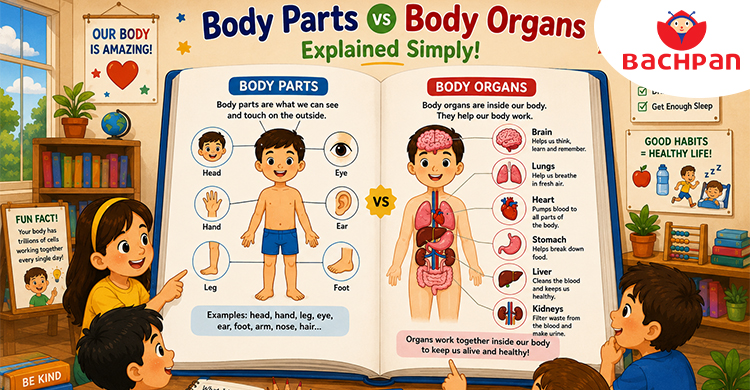
It is important to know the difference between body parts and body organs for kids. Body ‘parts’ are visible, while body ‘organs’ work inside the body. Let’s explore this section to find out more!
Body Parts vs Body Organs Explained Simply
Here is a simple comparison to help understand how body parts are different from body organs:
| Body Parts | Body Organs |
|---|---|
| Visible outside the body | Located inside the body |
| Help us do actions like walking, writing, and seeing | Perform important life functions to keep us alive |
| Examples: hands, legs, eyes, nose | Examples: heart, lungs, stomach, brain |
| Can be seen and touched easily | Cannot be seen from the outside |
| Help in movement and sensing the world | Help in breathing, digestion, circulation, and thinking |
Health Tips to Keep Body Organs Healthy
Let’s discover how taking care of our bodies helps every part stay strong and active. From the outside to the inside, our amazing body works together in surprising ways that will be explored further ahead.
Healthy Habits for Strong Body Organs
Body organs for kids love healthy habits! Think of it as a way to make your body’s little workers happy and strong every day.
Eating healthy foods, playing and moving around, sleeping on time and drinking enough water help your body to stay active, healthy and full of energy.
Teaching Kids to Care for Their Body Organs
You can make learning fun by talking to your little one about their body during everyday moments.
While you are running, ask, “What part of your body helps you move?” or while you are eating, say, “Your stomach must be busy now!” Small chats help children care about their bodies naturally.
Conclusion
Human body organs for kids can be exciting to learn when lessons are simple, fun, and full of curiosity. By now, you may have discovered how different body parts and organs work together every day.
From breathing and thinking to eating and growing, every organ plays an important role. We hope this journey made learning about the body easier, more interesting, and fun for little learners.
Want to explore the body even more? Don’t miss “Body Parts for Kids: Simple Ways to Teach Preschoolers” to discover fun and easy ways to help children learn about the body from head to toe!