



Baby Teething Symptoms: 7 Signs & Easy Relief Tips

Have you ever wondered why your happy baby suddenly gets really cranky and starts chewing on everything? Baby teething symptoms can appear suddenly without warning and may include constant drooling, restless or sleepless nights, sore gums, and frequent small tantrums. One day, your baby is laughing and playing, and the next, they are biting toys, fingers, and maybe even your shoulder.
The good news is… teething is a normal part of life. This messy time is much easier to deal with through a few simple tips and lots of hugs.
What is Baby Teething?
Baby teething is the natural stage when a baby’s first tooth slowly starts to come through, bringing small changes like discomfort, fussiness, and new chewing habits that signal this early but important growth phase.
What Happens When a Baby’s First Tooth Appears
When a baby’s first tooth comes in, you might notice that they drool more, chew on their fingers or toys, and have mood swings.
It is normal for your baby to have swollen gums and be a little cranky when they are teething. This is because they are getting used to this new and slightly painful stage of growth.
Why Babies Feel Discomfort During Teething
The tooth pushes through the baby’s sensitive gums, which causes pain and pressure. Baby teething symptoms like fussiness, trouble sleeping, and constant chewing start to show up at this time.
Your baby is not being difficult; they are just trying to cope with a brand-new sensation they don’t understand yet.
When Do Babies Get Their First Tooth? (Teething Timeline)
When do babies start teething? It’s a quiet, mysterious time when tiny first teeth start to show up. This is the first sign of natural growth and change.
Typical Age When Baby Gets First Tooth
Most babies get their first tooth at 6 to 10 months, but don’t be surprised if your baby is a little early or late. You may see extra drooling or sore gums before anything actually appears. It’s a slow, natural start to teething.
Order of Baby Teeth Appearance
Usually, your baby’s teeth don’t come in randomly. You should expect to see the lower front teeth appear first, then the upper front teeth. Next, the other side teeth and molars will emerge.
This is quite common, although each child may have their own unique way.

Is It Normal for Teething to Be Early or Late?
Yes, it’s totally normal. Some babies start teething earlier; others take longer, and both are fine. You don’t need to stress about the timing.
Every child grows differently, and the teething timeline for a baby simply reminds you that this whole process follows its own natural, flexible pace.
Early developmental stages are important for every child—read more in our Importance of Early Childhood Development blog.
Baby Teething Symptoms: 7 Signs Every Parent Should Know
Wondering if your baby is teething? These 7 Baby Teething Symptoms can help you spot the little clues before those little teeth show up.
1. Swollen and Sensitive Gums
One of the most common signs of teething in babies is swollen or sensitive gums. You may notice your baby rubbing their gums, being fussy while feeding, or reacting when something touches their mouth.
During the process of the new tooth emerging, a baby’s gums can look slightly red, puffy, or swollen as the tooth starts to break through.
2. Excessive Drooling
If you are constantly finding bibs soaking up all day, then teething could be the cause. The mouth produces more saliva, and babies tend to drool more during this period. The constant wetness and rubbing can also cause little rashes around the chin or cheeks.
3. Fussiness and Crying
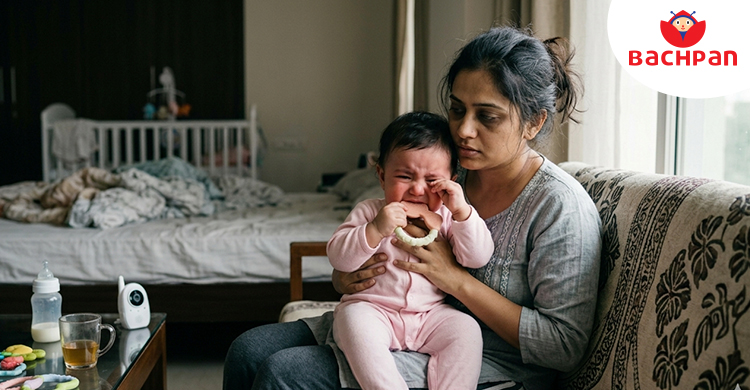
Teething can make babies more irritable than normal. They might cry more often, become clingy, or get upset easily because they can’t express their discomfort. Some babies are fussy all day long, especially when the tooth is close to breaking through the gums.
4. Chewing on Objects
During teething, babies love to chew on toys, fingers, blankets, or just about anything they can get their hands on. The pressure from biting helps soothe sore gums and provides temporary relief.
If your baby suddenly becomes a small chewing machine, teething may be quietly underway.
During this phase, maintaining healthy routines becomes essential—explore more in our Good Habits for Kids guide.
5. Sleep Disturbances
Baby teething symptoms often become more noticeable at night, when your baby may wake up often or struggle to nap peacefully during the day. Gum discomfort can make it harder for them to relax and sleep comfortably.
You might notice your baby becoming restless, tossing around, or waking up crying unexpectedly.
6. Loss of Appetite
Some babies eat less during teething due to pain in their gums, which makes it uncomfortable for them to suck and chew on their food. Feeding time may suddenly become frustrating, even if your baby was eating well before.
This temporary loss of appetite is quite common and usually improves once the discomfort starts settling down.
7. Slight Rise in Temperature (Not High Fever)
Although teething can result in an increased body temperature, there is a low chance that your baby will develop a high fever due to teething.
Your baby may feel a little warmer than normal and appear tired or uncomfortable. It will usually resolve itself once the tooth begins to come through.
Parents can also manage daily baby care better with tips from our New Parent Guide blog.
How to Soothe Baby Teething Pain (Easy Relief Tips)
Teething pain relief for babies offers gentle comfort and care, using simple soothing techniques that gradually reduce discomfort and help your little one return to a calm and peaceful state.
Gentle Gum Massage
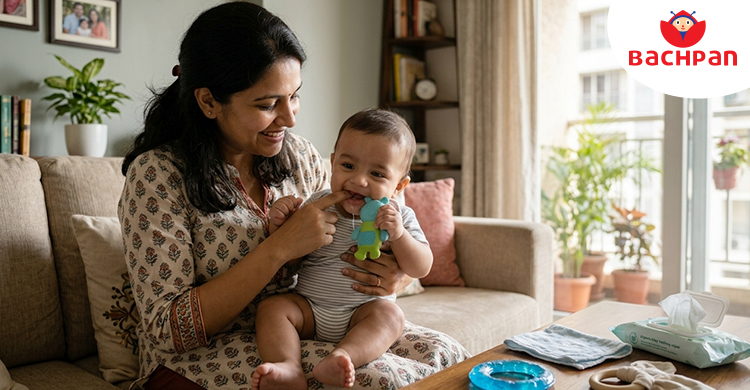
Baby teething remedies are often simple and comforting, and gum massage is the simplest remedy to relieve your baby from pain. You can gently massage the gums using a clean finger, which will reduce irritation and provide some relief during the teething process.
Use Safe Teething Toys
Teething toys are safe for your baby, and they help them deal with the pain. The pressure of chewing on these toys will provide relief to your baby’s sore gums. Make sure that teething toys are clean and free from harmful substances.
Cold Teethers for Instant Relief
Cold teething rings have an almost magical effect when dealing with difficult teething episodes. This is because the cooling effect provides instant relief from irritated gums, offering quick relief from any pain. Just chill the teether in the fridge (not freezer) and let your baby chew it safely.
Natural Remedies to Calm Your Baby
Some natural ways that can assist you with calming down your baby include chilled washcloths, solid rubber teethers, and even frozen soft fruits placed in a mesh feeder.
In addition, sometimes just holding your baby close or offering calm play can also ease discomfort and make them feel more secure.
Tips for Parents to Handle the Teething Phase Smoothly
Baby’s first tooth brings both joy and challenges, and these simple tips help parents handle the teething phase smoothly with calm, care, and patience.
Keeping Baby Comfortable and Calm
Baby teething remedies have a significant effect on your little one’s well-being when they feel uneasy. Simple comfort methods like gentle holding, soft soothing, and keeping the baby relaxed help ease stress. It is essential to ensure a calm environment for the baby.
Creating a Routine During Teething
A consistent schedule during teething will help him become more relaxed and at ease. The consistency of sleeping, eating, and playing routines will provide your baby with a feeling of comfort and assurance. This will even minimise the irritability of your baby.
Be Patient During Mood Changes
Teething can make your baby’s mood change quickly, from happy to cranky in moments. This is completely normal, so patience is key. Instead of getting worried, try to stay calm and understanding.
Your soothing presence helps your baby feel supported even during their most uncomfortable moments.
Understand Your Baby’s Needs
Your baby may be unable to communicate their discomfort during the process of teething. Observations such as crying, gnawing, or fidgetiness can help you take appropriate measures. Understanding the baby’s needs makes it easier for you to provide relief to them.
Parents can better understand their child’s needs through tips shared in our How to be a Good Parent blog.
Baby’s First Tooth Care Tips for Parents
Baby’s first tooth brings a special new phase, and these simple care tips help parents gently look after their baby’s early dental journey in a calm, caring way.
When to Start Brushing Baby’s Teeth
Signs of teething in babies often appear before the first tooth comes in, and once that tiny tooth appears, brushing should begin.
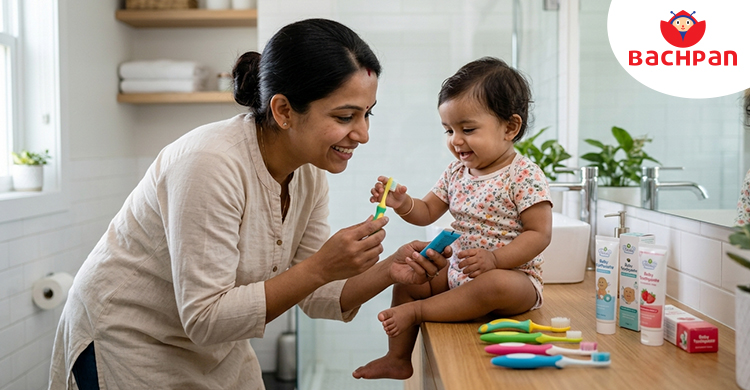
You can do this by gently cleaning your baby’s teeth twice daily with a soft baby toothbrush along with a small amount of fluoride toothpaste.
Choosing the Right Toothbrush and Toothpaste
Baby teething remedies often focus on soothing sore gums, but caring for new teeth is just as important. Select a toothbrush with soft bristles and a small head, so it fits comfortably in your baby’s mouth.
Dentists generally suggest a rice-sized amount of fluoride toothpaste when brushing for infants and toddlers.
Importance of Early Oral Hygiene
Good oral hygiene should begin early because healthy baby teeth support eating, speech, and proper jaw development. Daily cleaning of teeth and gums also lowers the chances of cavities and infections later.
These small daily practices gradually help children understand that brushing their teeth is an essential part of a healthy routine.
Baby’s First Dentist Appointment – Importance and Timing
Many parents ask when to take their child to the dentist for the first time. The majority of dentists advise a visit within six months of the first tooth erupting, or when the baby is one year old.
Early visits help identify concerns, guide parents on proper care, and make children comfortable with dental check-ups.
What to Avoid During Baby Teething
While exploring teething pain relief for babies, remember that some remedies may irritate sensitive gums or create hidden risks. Knowing what to avoid can make teething safer for your little one.
Unsafe Teething Products
Not all teething products sold for babies are 100% safe. Items containing small detachable parts, excessive liquid filling, or harmful materials may cause choking or health risks. Some teething gels might not be recommended for babies.
This is a sensitive stage of development, and it’s important to choose baby-safe, age-appropriate products carefully.
Foods to Avoid During Teething
During teething, babies often chew on anything they can hold, but some foods may increase the risk of discomfort or choking. Steer clear of hard foods, overly sugary snacks, and sticky stuff.
For some babies, extremely cold food can be irritating rather than soothing to sensitive gums during teething.

Overuse of Medication
Many parents will want to relieve teething pain quickly when it becomes severe, but using too much medication is not always safe. Overusing painkillers or numbing gels without consulting a doctor can cause adverse effects.
Gentle soothing techniques and balanced care are usually recommended before resorting to medicines too often.
Along with avoiding harmful teething practices, maintaining proper oral hygiene is equally important—check out our blog on How to Take Care of Your Kids’ Oral and Dental Health.
When to See a Doctor for Teething Issues
Some baby teething symptoms may seem normal, but a few signs can point to something more. If the pain or irritation seems severe or continues for an extended time, seeking medical advice can provide proper guidance and peace of mind.
Signs That Are Not Normal
While most teething symptoms are mild, some signs should not be ignored. Fever, intense irritability, and refusal to feed could be more than just symptoms of teething.
If something feels odd or if the symptoms linger, it’s important to look deeper and seek proper medical guidance for your baby’s well-being.
Teething vs Fever or Illness
Teething is often blamed for many changes, but not every symptom is related. Minor gum irritation and excessive drooling are typical teething experiences, while high fever, diarrhea, or ongoing lethargy usually suggest illness.
Understanding this difference helps parents respond correctly and ensures the baby gets timely care when needed.
Conclusion: Helping Your Baby Through the Teething Phase
Now that you have read this far, we hope you have a better understanding of the kind of experience you can expect when your baby is going through the teething process. The teething timeline for a baby varies, but by being patient, careful, and supportive, it will go by smoothly.
And if you find yourself asking other similar questions about parenting, you might also want to explore how to dress babies for sleep according to room temperature.
FAQs About Baby Teething Symptoms
Q1. What are the first signs of baby teething?
A1. Common early signs include drooling, swollen gums, irritability, and a tendency to chew on fingers or objects.
Q2. When does a baby’s first tooth usually appear?
A2. Most babies get their first tooth around 6 months of age, though it can vary between 4 and 12 months.
Q3. How long do teething symptoms last?
A3. Teething symptoms usually last a few days before and after a tooth breaks through the gum.
Q4. Can teething cause fever in babies?
A4. Teething may cause a slight temperature rise, but a high fever is usually not due to teething and should be checked.
Q5. What is the fastest way to soothe a teething baby?
A5. Gently massaging gums or giving a clean, cool teething ring is one of the quickest safe ways to soothe discomfort.