



Tummy Time for Babies: Benefits, Tips & Activities

Tummy time is something that needs no special gear. Yet it helps your baby grow stronger every single day. Babies generally sleep on their backs, as it is the safest position. But this also means they need tummy time while awake. This blog covers the benefits of tummy time, the right timing, fun tummy time activities for babies, and safety tips. Let us begin.
What Is Tummy Time for Babies?
It is not about sleep; it is about play. It helps build strength and supports healthy development. Learning how to do tummy time is simple, and this blog shows you how. This everyday practice, also known as tummy time for infants, gives babies a chance to move freely. Even short sessions of tummy time for babies count. Every minute helps them grow stronger.
Benefits of Tummy Time for Babies
Parents often ask, what are the benefits of tummy time for babies? There are quite a few benefits of tummy time. It supports almost every early skill. Let us take a closer look at each benefit in turn.
Helps Strengthen Neck and Shoulder Muscles
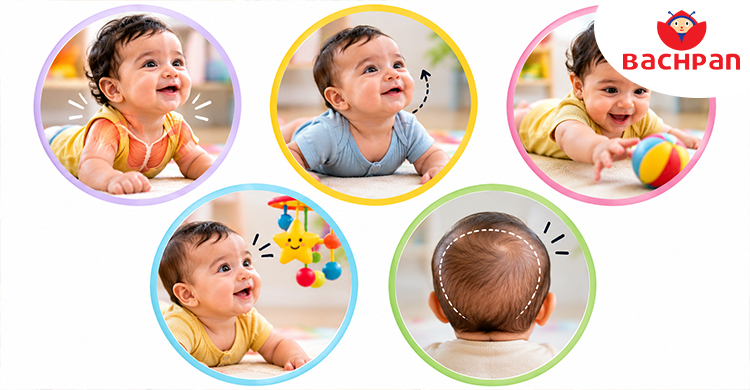
When your baby lies on their tummy, they must lift their head against gravity. It builds neck strength, shoulder strength, and overall upper-body strength. These simple movements are useful tummy time exercises for babies. They help your baby push up, sit, and later stand. Soon, you will see your baby lifting their head higher and staying up longer.
Supports Head Control
Head control is the first big skill babies learn. Tummy time for infants gives them daily practice. Soon, they can keep their head steady while you carry them or hold them in your lap. Short sessions are enough to see steady progress over time. Many parents notice the change within a few weeks.
Encourages Motor Skill Development
Tummy time for baby development gives babies daily practice with movement. Regular tummy time for babies helps them lift, push, and reach as they train their arms, back, and core. These moves prepare them for rolling over, crawling, and walking. So, think of tummy time as a helpful habit, not a magic fix.
Provides Opportunities for Visual Exploration
Tummy time changes what your baby sees. From the floor, they view toys, faces, and patterns from a new angle. This builds visual tracking and sensory exploration. They also feel the texture of the mat or blanket under their hands. Try different tummy time positions to offer new views and encourage exploration. Every new view and touch helps their brain grow.
Parents can introduce more age-appropriate experiences to engage their baby’s senses through these sensory activities for babies, including simple ideas involving sounds, textures, and visual exploration.
Helps Reduce the Risk of Flat Spots on the Head
Babies spend many hours on their backs. Too much time in one position can cause flat spots on the back of the head. Tummy time takes pressure off that area. It may also lower the risk of tight neck muscles, called torticollis. Along with regular changes of position through the day, it helps keep the head shape round.
When Should You Start Tummy Time?
So, when should you start tummy time? Early is best. You can begin as soon as you bring your baby home. This blog covers tummy time for babies by age, from the first days to six months and beyond. Remember, every baby moves at their own pace.
Tummy Time for Newborns (0–1 Month)
For tummy time for newborns, talk softly and keep your face close. Newborns often fuss at first, so stay patient. To learn how to start tummy time for newborn babies, begin with a brief, comfortable session in which you will lie back and place the baby on your chest, tummy down. That’s it.
Tummy Time for Babies (1–3 Months)
Tummy time for a 1-month-old baby is still short, so add a minute or two as they cope. As they grow, tummy time for a 2-month-old baby should gradually increase to 15 to 30 minutes a day in total. You can split this into many small turns across the day. Tummy time for a 3-month-old baby often includes reaching for toys.

Tummy Time for Babies (3–6 Months)
Your baby is stronger now. Aim for at least 30 minutes a day, split into short turns. This encourages pushing up, pivoting, and rolling over. These baby milestones also prepare your little one for crawling. Between three and six months, you may see big changes each week. Always stay close and keep it fun and playful.
Tummy Time for Babies (6 Months and Above)
Tummy time for a 6-month-old baby looks different. Many babies start to roll, sit, or crawl. Do not stop, though. Keep supervised play going as part of daily floor play. Let your baby reach, pivot, and scoot on their tummy. Pick an awake time when they feel happy and alert. Follow your baby’s lead and enjoy it.
How Much Tummy Time Does a Baby Need?
The World Health Organization (WHO) advises at least 30 minutes a day for babies who are not yet mobile. For tummy time for babies, start small and build up slowly. If you are asking, “How much tummy time does a baby need?”, use this table as a simple guide for tummy time for infants.
| Baby’s Age | Suggested Tummy Time |
|---|---|
| Newborn | Start with 1–2 minutes per session, a few times a day |
| 1 Month | Gradually increase the number and length of sessions |
| 2 Months | Build towards a total of around 15–30 minutes daily |
| 3–4 Months | Aim for at least 30 minutes daily, divided into sessions |
| 5–6 Months | Continue regular supervised tummy time during awake periods |
| 6 Months and Above | Continue supervised tummy play as part of varied floor activities |
10 Fun Tummy Time Activities for Babies
Need easy tummy time exercises for babies at home? These ten ideas will provide you with baby development activities. These are some of the best tummy time activities for infants. If you wonder how to make tummy time fun for babies, start here.
1. Tummy Time on Your Chest
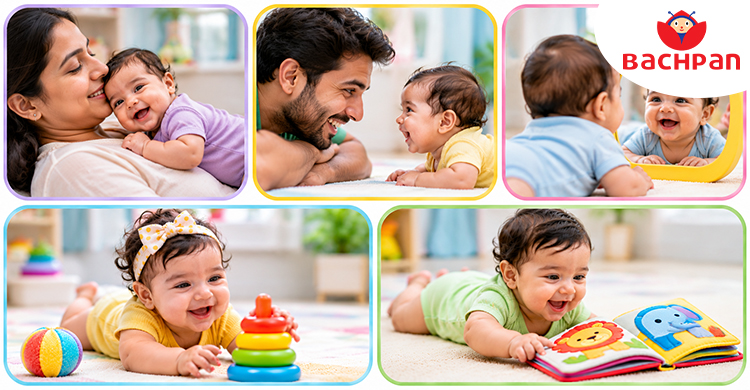
Lie back on a couch or bed and place your baby on your chest. Their face should be turned toward you. Your breathing and heartbeat feel very calming to them. It is perfect for tummy time for newborns who dislike the floor. Stay awake and keep a hand on your baby. It is also a lovely bonding moment for you both.
Parents can make these everyday moments more meaningful by exploring other ways to bond with your child through shared play, communication, and quality time.
2. Face-to-Face Tummy Time
Lie down on the floor, facing your baby. Keep your face close to theirs. Smile, talk, and make eye contact. This builds head control and bonding together. Try singing their name or making funny faces. Babies love it. Start with one or two minutes, then take a short rest.
3. Mirror Exploration
They will love the face looking back. Babies are drawn to faces, even their own. Looking up at the mirror builds neck strength and visual tracking. Slide the mirror slowly from side to side to keep their eyes moving. You can also tilt it a little to change the view. Keep your baby in sight at all times, and stay close.
4. Tummy Time with Colourful Toys
Bright toys grab a baby’s attention. Place a few colourful toys within sight on the mat. Later, they will reach for them. Move a toy slowly to the left and right. This supports visual tracking and early reaching skills. Choose toys that are large and safe to mouth. Change them often to keep your baby curious. Avoid toys with small loose parts.
5. Tummy Time with a Soft Book
Open a soft cloth book or a high-contrast board book on the floor. Reading during tummy time also builds early language. It is a simple way to mix floor play with sensory exploration. Use a calm voice and turn the pages slowly. Make animal sounds to add some extra fun. Stop when your baby tires.
6. Singing and Talking During Tummy Time
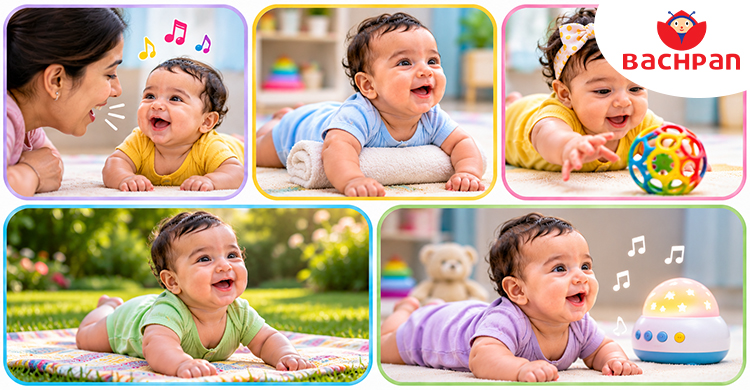
Your voice is your baby’s favourite sound. Sit or lie beside them. Sing a rhyme, hum a tune, or just chat about your day. This builds neck strength and supports early language. It also makes tummy time fun for babies. Do not worry about your singing skills. Your baby only wants to hear you. Soft lullabies work well too.
Parents can also make singing sessions more enjoyable with these nursery rhymes for kids, which introduce rhythm, simple words, and listening practice.
7. Tummy Time with a Rolled Towel
Roll a small towel and place it under your baby’s chest and armpits. Their arms rest in front of it. This gives light support and makes lifting the head easier. It suits babies who tire quickly. Stay close and take the towel away as they grow stronger. Use a thin and firm roll. Start with very short turns.
8. Reach for the Toy
Place your baby’s favourite toy just out of their reach. Your baby will stretch their arm to grab it. Some will even shift their weight or pivot. This builds shoulder muscles and balance. It also helps with rolling over. Praise every try, even if they do not reach it. Then move the toy a little closer so they feel proud.
9. Tummy Time Outdoors
Spread a clean blanket on the grass or a shaded patio. Fresh air, new sounds, and soft breezes give your baby much to explore. Check that the ground is clean and free of insects. Avoid hot sun and hot surfaces. Stay beside your baby the whole time. Outdoor tummy time is a nice change from the usual room.
10. Tummy Time with Gentle Sounds
Use a soft rattle, a bell, or gentle music. Shake it at one side of your baby. They will turn their head toward the sound. This helps with sensory exploration and neck movement. Remember, loud noise can upset a baby and end the session quickly. Switch sides after a few turns so both sides of the neck get equal practice.
Essential Safety Tips for Tummy Time
Is tummy time safe for newborns? Yes, when you follow a few simple rules. These tummy time tips for new parents keep every session calm and safe. Safe tummy time for babies depends on close supervision and a firm, clear surface.
Always Supervise Your Baby
Never leave your baby alone during tummy time, even for a moment. Stay on the floor with them. Keep your eyes on them at all times. Put away your phone. Supervised play keeps your baby safe and lets you spot early signs of tiredness or discomfort. Safety always comes first. No chore is more urgent than this.
Choose a Firm and Flat Surface
Use a firm, flat surface. A clean floor with a play mat or blanket works best. Avoid sofas, beds, and soft cushions. A baby can roll or slip off a raised surface. Keep the area free of small objects. A quick check of the space before each session takes only seconds. Wash the play mat or blanket often.
Choose the Right Time
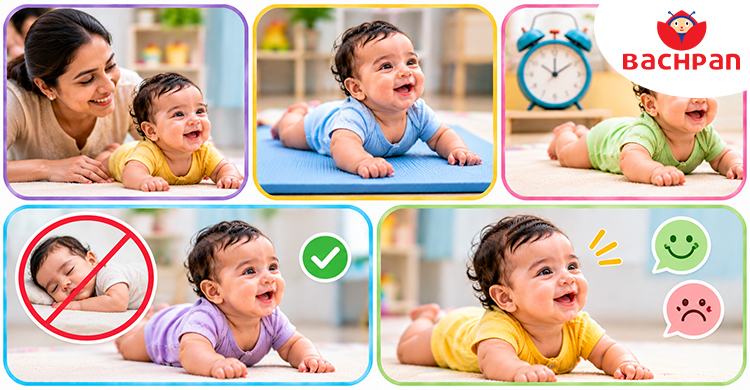
Pick a moment when your baby is awake, calm, and alert. Right after a diaper change or a nap is a good choice. Avoid tummy time right after a feed. A full tummy can lead to spit-up and fussiness. Many parents link tummy time to a daily routine, like the diaper change, so it never gets missed. Aim for happy moments.
Keep Tummy Time Separate from Sleep
Tummy time is for play only. For safe sleep, always place your baby on their back. If your baby falls asleep during tummy time, gently turn them onto their back right away. Never let them nap on their tummy. “BACK to sleep, TUMMY to play” is the rule to remember.
Follow Your Baby’s Cues
Watch your baby’s face and body. Yawning, hard crying, or a red face means it is time to stop. Pick them up and comfort them. Try again a little later. Never force a long session on your baby. Short, happy turns are better than one long, stressful one. Your baby will let you know when they have had enough.
What If Your Baby Does Not Like Tummy Time?
Many babies reject it at first. That is normal. The position is new and tiring. If you are wondering how to help a baby enjoy tummy time, start on your chest. Keep sessions short. Use toys, songs, and a mirror. Try after a diaper change. Stay calm and consistent. If you are unsure what to do if a baby does not like tummy time, be patient and celebrate small wins.
FAQs About Tummy Time for Babies
Start as soon as you bring your baby home, if they are healthy and full-term. The AAP supports starting in the first days. Begin on your chest for a minute or two. If your baby was born early or has a medical condition, ask your doctor first.
Start with 1 to 2 minutes per session. Some experts suggest 3 to 5 minutes. Both are fine. Go by your baby’s mood. Add a little time as they grow stronger. By about two months, aim for a total of 15 to 30 minutes a day.
Aim for 2 to 3 sessions a day at first. As your baby grows, add more short turns. The WHO suggests at least 30 minutes in total each day for babies who are not yet mobile. Spread it across the day while your baby is awake.
Yes. Exploring different tummy time positions, like on the chest, counts. It is a gentle way to begin, especially for newborns. Keep your baby awake and stay alert. Move to the floor as they get stronger. The floor gives more room to push up and move.
Pick them up and comfort them. Try a different position, such as on your chest or across your lap. Use a toy, a mirror, or a song. Keep sessions short. Try again later when your baby is calm. Never force it.
Conclusion: Make Tummy Time a Fun Part of Your Baby’s Day
Tummy time for babies is a small habit with big rewards. It builds neck strength, head control, and motor skills. It also prepares your baby for rolling over and crawling. Watch your baby’s cues and build up slowly. Mix up the baby developmental activities and positions so tummy time stays fun. Remember, there is no perfect routine. Keep going, even on tough days. With patience and love, tummy time for babies will soon become a happy part of your baby’s day. Enjoy every push, giggle, and wobble together.