



Healthy Food for Kids: 20 Foods for Growing Children
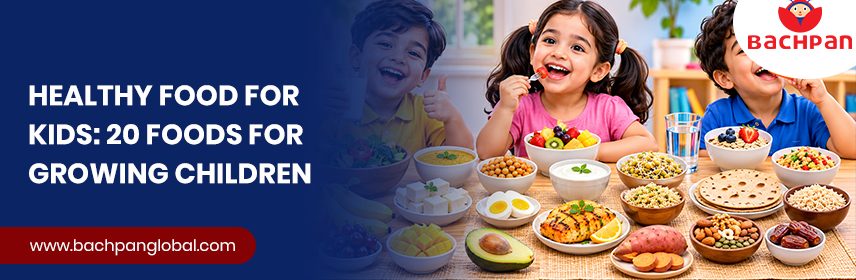
Good nutrition plays an important role in a child’s growth, learning, and everyday activities. To get the energy, protein, vitamins, and minerals their bodies need, they must eat a variety of foods. Choosing healthy food for kids should not have to be complex. This blog covers some choices that can help build a healthy diet for kids. Making healthy food for kids a part of day-to-day meals helps them get a variety of nutrients without making food options complicated. Let’s explore 20 nutritious options in depth.
Why Is Healthy Food Important for Kids?
Including healthy foods for children in everyday meals supports their overall well-being. An effective approach to healthy food for kids’ growth also helps children develop a positive relationship with healthy food. Choosing healthy food for growing kids means including different food groups that support their changing nutritional needs.
Supports Physical Growth and Development
As children grow, they require protein, calcium, iron, and other vital nutrients. These nutrients support bone development, muscle growth, and the normal functioning of the body. Eggs, milk, pulses, fruits, and vegetables contain multiple nutrients. Including foods for child growth and development in everyday meals helps children receive a variety of nutrients during their growing years.
Provides Energy for Daily Activities
Running, playing, studying, and learning require energy. Carbohydrates provide this energy, while healthy fats and protein help in other distinct body functions. Whole grains, fruits, nuts, and other nutritious foods can help children stay active throughout the day. Regular, balanced meals also help them maintain a consistent eating routine.
Supports Immunity and Overall Health
A child’s diet ought to contain vitamins, minerals, protein, and fibre. Vitamin C, vitamin A, iron, and other nutrients support different functions in the body. Eating different food groups also helps receive foods rich in vitamins and minerals for children, instead of depending on only a few foods.
20 Healthy Foods for Kids and Their Benefits
There is no single food that can provide every nutrient a child needs. The best strategy is to bring different food groups into everyday meals. These 20 healthy foods for kids for growth and development include some of the best foods for kids.
1. Fruits: Natural Sources of Vitamins and Fibre
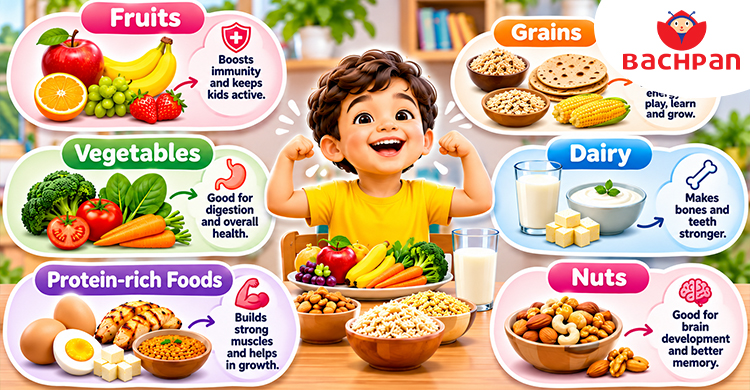
Fruits are an important part of a balanced diet for children. They are among the most accessible healthy fruits for kids, providing vitamins, minerals, water, and dietary fibre. Seasonal fruits also add natural colour, flavour, and variety to meals. Serve them fresh, cut into age-appropriate pieces, or add them to breakfast and snacks.
Parents can also include fruits in nutritious drinks and snacks by trying these healthy smoothie recipes for kids, which combine fruits with ingredients such as milk, yoghurt, and oats.
| No. | Food | Key Nutrients | Benefits for Kids |
|---|---|---|---|
| 1 | Apple | Fibre, vitamin C | Supports digestion and adds fibre to the diet. |
| 2 | Banana | Potassium, vitamin B6, carbohydrates | Provides energy and contributes to normal muscle function. |
| 3 | Orange | Vitamin C, fibre | Supports normal immune function and helps the body absorb iron from plant foods. |
| 4 | Papaya | Vitamins A and C, fibre | Adds vitamins and fibre to a child’s diet. |
| 5 | Guava | Vitamin C, fibre | Provides vitamin C and supports digestive health. |
2. Vegetables: Essential for a Balanced Diet
Vegetables provide vitamins, minerals, antioxidants, and fibre. Including healthy vegetables for kids, especially green leafy vegetables, adds important nutrients to children’s meals. You can add vegetables to dal, parathas, soups, pulao, and sandwiches. Offering different colours and textures also makes meals more interesting. Here are five healthy vegetables for kids and their benefits.
| No. | Food | Key Nutrients | Benefits for Kids |
|---|---|---|---|
| 6 | Spinach | Iron, folate, vitamin K | Provides nutrients needed for normal growth and development. |
| 7 | Carrot | Beta-carotene, fibre | Provides vitamin A precursors that support normal vision. |
| 8 | Broccoli | Vitamin C, vitamin K, fibre | Adds vitamins and fibre to everyday meals. |
| 9 | Sweet Potato | Beta-carotene, carbohydrates, fibre | Provides energy and nutrients that support normal vision. |
| 10 | Peas | Plant protein, fibre, folate | Contribute plant-based protein and fibre. |
3. Protein-Rich Foods: For Growth and Muscle Development
Protein helps the body build and repair tissues. It is an important part of a child’s daily diet. Foods such as eggs, lentils, paneer, fish, and chicken provide protein along with other nutrients. These protein-rich foods for growing kids are crucial and nutritious foods every child should eat as part of a balanced diet. They can be included in breakfast, lunch, or dinner, depending on the family’s food preferences.
| No. | Food | Key Nutrients | Benefits for Kids |
|---|---|---|---|
| 11 | Eggs | Protein, vitamin B12, choline | Provide protein for growth and nutrients for normal brain function. |
| 12 | Lentils (Dal) | Plant protein, iron, fibre | Provide plant-based protein and iron. |
| 13 | Paneer | Protein, calcium | Contributes to normal bone and muscle development. |
| 14 | Fish | Protein, omega-3 fats, vitamin D (varies by type) | Provides protein; oily fish can supply omega-3 fats. |
| 15 | Chicken | Protein, vitamin B6, vitamin B12 | Provides protein for growth and tissue repair. |
4. Grains, Dairy and Nuts: Everyday Sources of Energy and Nutrients
Grains provide carbohydrates that fuel children’s daily activities. Dairy products provide calcium and protein, while nuts offer healthy fats and other nutrients. Collectively, these foods are useful in healthy meals for children and make daily meals more balanced. Choose whole grains regularly and serve nuts in safe, age-appropriate forms. Here are five useful options.
To explore more foods that provide dietary fibre, parents can refer to this guide to high-fibre foods for kids, which includes whole grains, fruits, pulses, and vegetables.
| No. | Food | Key Nutrients | Benefits for Kids |
|---|---|---|---|
| 16 | Oats | Fibre, complex carbohydrates, iron | Provides energy and fibre. |
| 17 | Whole Wheat | Carbohydrates, fibre, B vitamins | Provides energy and supports digestive health. |
| 18 | Milk | Calcium, protein, vitamin B12 | Contributes to bone and teeth development. |
| 19 | Almonds | Healthy fats, vitamin E, protein | Provide energy and nutrients; serve in a safe, age-appropriate form. |
| 20 | Walnuts | Healthy fats, omega-3 ALA, fibre | Provide plant-based omega-3 fats and fibre. |
A note for parents: Whole nuts can be a choking hazard for children under five. Offer finely ground or appropriately prepared nuts instead. Always consider a child’s age, chewing ability, and allergy history before introducing new foods.
Healthy Food Chart for Kids
A healthy food chart for kids helps parents plan meals using multiple food groups. It also makes it easier to notice whether a child’s diet includes enough variety. This simple healthy food chart for kids can serve as a starting point for planning balanced meals. Adjust food options and portions according to the child’s age, appetite, activity level, and dietary needs.
| Food Group | Food Examples | What They Provide |
|---|---|---|
| Fruits | Apple, banana, orange, papaya | Vitamins and fibre |
| Vegetables | Spinach, carrot, broccoli, peas | Vitamins, minerals and fibre |
| Protein Foods | Eggs, dal, paneer, fish, chicken | Protein and other essential nutrients |
| Grains | Oats, whole wheat, rice | Energy and fibre |
| Dairy and Alternatives | Milk, curd, fortified alternatives | Calcium and protein |
A balanced meal should include foods from multiple groups. For instance, kids can have roti, dal, vegetables, curd, and a seasonal fruit. The exact portions can depend on their personal needs. Remember that this chart is just a guide, not a strict meal prescription.
How to Encourage Kids to Eat Healthy Food
Some may avoid vegetables, while others may prefer only a few familiar dishes. Learning how to encourage kids to eat healthy food requires patience and consistency. Here are some practical ways to encourage kids to eat healthy food without turning every meal into a struggle.
Make Meals Colourful and Appealing
Children often enjoy meals that look interesting. Add different coloured fruits and vegetables to their plates. You can prepare a rainbow fruit bowl, vegetable sandwiches, or colourful rice. Use simple shapes and creative presentations when possible. Keep portions adjustable and let children explore different options to meet their own needs.
Introduce New Foods Gradually
Do not expect children to accept a new food immediately. Offer small portions alongside familiar dishes. They may need several opportunities to see, touch, smell, or taste a food before enjoying it. Avoid forcing them to finish everything. Stay patient and continue offering different options without creating pressure around mealtimes.
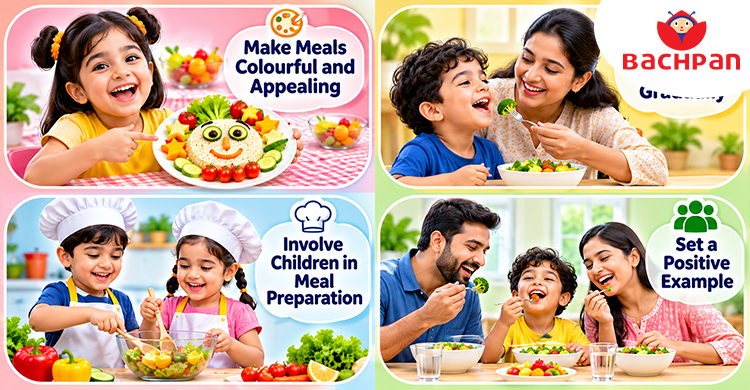
Involve Children in Meal Preparation
Let children wash vegetables, arrange fruit, mix ingredients, or help prepare simple snacks. You can also take them grocery shopping and let them choose between two healthy options. When children participate in food preparation, they get opportunities to explore new ingredients. Parents can also explore multiple healthy food ideas for kids at home to make daily meal preparation more enjoyable.
For more ideas, parents can explore these easy healthy recipes kids can cook at home and involve children in preparing simple snacks and meals.
Set a Positive Example
Children often learn eating habits by observing their parents. Enjoy fruits, vegetables, whole grains, and other nutritious food options together. Make family meals a relaxed experience where everyone can try different dishes. A good positive example can encourage kids to develop healthier food choices over time.
Healthy Eating Habits for Growing Children
Choosing healthy food for kids helps in their physical growth, provides energy for daily activities, and helps maintain overall health. These healthy eating habits for kids can make nutritious food a natural part of daily life and support a balanced diet for children.
Maintain Regular Meal and Snack Times
Try to follow a routine for breakfast, lunch, dinner, and snacks. It helps children understand when to expect their meals and reduces frequent, unplanned snacking. Keep healthy options ready for hungry moments. However, remain flexible when children are unwell, travelling, or following a different daily schedule.
Encourage Water Instead of Sugary Drinks
Make plain water the first choice for everyday hydration. Keep a water bottle and drink water with meals and after physical activity. Reduce sugary drinks, packaged sweetened beverages, and frequent fruit juices. Fruits and vegetables also contain water. A child’s fluid needs vary with age, weather, activity, and health.
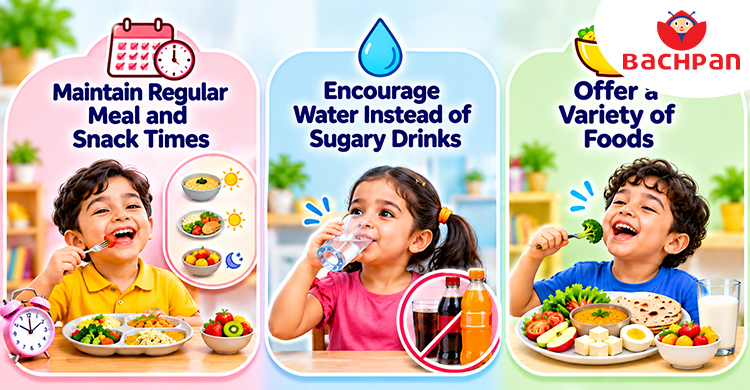
Offer a Variety of Foods
Avoid serving the same few dishes every day. Include seasonal fruits, green leafy vegetables, pulses, whole grains, dairy products, and suitable protein sources. Food variety helps children receive a wider range of nutrients and develop a more balanced approach to eating. This is particularly important when introducing healthy foods for preschoolers, as early food experiences can influence their eating preferences.
Parents can offer different nutritious snack options to keep children’s diets varied. Roasted makhana is one option worth considering. Read about the health benefits of makhana for kids and how it can be included in their diet.
FAQs About Healthy Food for Kids
There is no single list of the 10 healthiest foods for every child. However, useful choices include apples, bananas, oranges, spinach, carrots, broccoli, eggs, lentils, milk, and oats. Each provides different nutrients. These are examples of nutritious foods for kids that provide different nutrients. A varied diet is more beneficial than depending on only a few foods.
Children need enough protein, calcium, vitamin D, iron, and other nutrients for normal growth and development. Including foods that help children grow healthy and strong in everyday meals can support their nutritional needs. Milk, curd, paneer, eggs, lentils, fish, green vegetables, and whole grains can contribute to a balanced diet. However, no particular food can guarantee increased height. Genetics, overall nutrition, sleep, and health also matter.
A healthy diet for kids should include fruits, vegetables, whole grains, pulses, protein-rich foods, dairy products or suitable alternatives, and healthy fats. Children also need enough water. The right portions depend on their age, activity level, appetite, and individual nutritional needs.
Apples, bananas, oranges, papayas, and guavas are useful choices. They provide different combinations of vitamins, minerals, fibre, and carbohydrates. Seasonal fruits are also a good option. Serve them in age-appropriate pieces and offer whole fruit more often than packaged fruit drinks.
Healthy snacks for kids can include fresh fruit, homemade vegetable sandwiches, roasted makhana, boiled corn, yoghurt, and suitable portions of nuts. You can also serve boiled eggs, sprouts, or small dal chillas. Choose snacks according to the child’s age, appetite, allergies, and dietary preferences.
Conclusion: Make Healthy Eating a Part of Everyday Life
Choosing healthy food for kids is about building a balanced routine, not following a complicated diet. These best healthy foods for growing children can help provide the nutrients children need during their growing years. Parents can encourage better choices by offering variety, involving children in meal preparation, and setting a positive example. Remember that every child has different nutritional needs and food preferences. Start with their favorite healthy foods for kids. With patience and consistency, nutritious eating can become a natural part of everyday family life.