



Navratri Story for Kids: Why We Celebrate Navratri
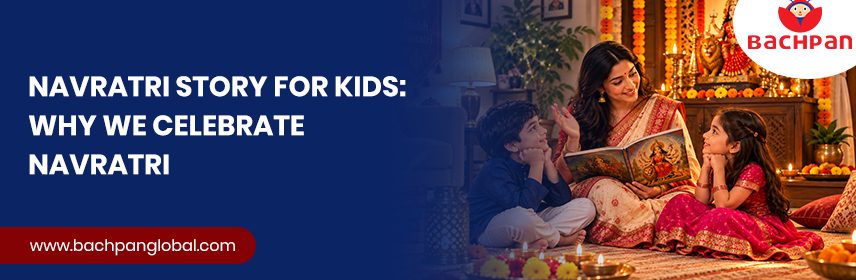
Festivals bring so much joy, colour, and delicious food into our lives! Among all the vibrant celebrations across India, this autumn festival holds a special place in every child’s heart. If you are looking for an engaging Navratri story for kids, you have come to the right place. Sharing these festive tales helps little ones connect with our rich culture, ethics, and heritage. In this simple guide written in English, we will explore the magic, joy, and importance of Navratri in a fun, relatable way that your child will love.
What Is Navratri?
Navratri is a vibrant Hindu festival celebrated across India with great enthusiasm and devotion. The word “Navratri” comes from two Sanskrit words—”Nav” meaning nine, and “Ratri” meaning nights. Celebrated over nine nights and ten days, the festival is dedicated to Goddess Durga and her nine forms. For little ones, this festival is a wonderful opportunity to enjoy traditions while understanding the true significance of Navratri and learning values like courage, goodness, and faith.
Navratri Story for Kids
Gathering around for bedtime tales is always special for little ones. Let’s dive into a captivating Navratri story for children in English that tells an inspiring tale of bravery, hope, and strength.
The Story of Goddess Durga and Mahishasura
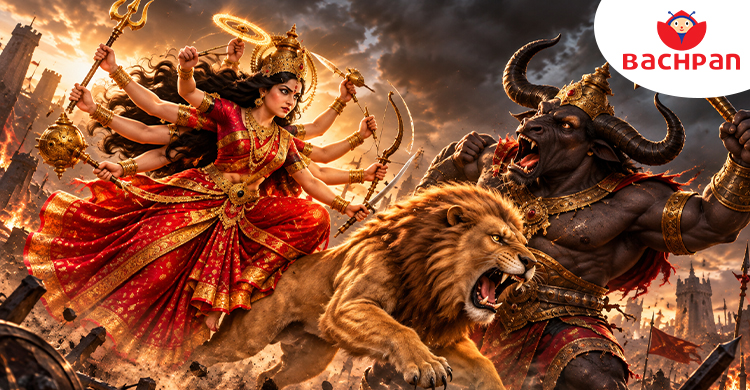
Mahishasura was a powerful demon who spread fear and chaos after receiving a boon that made him difficult to defeat. To protect the world, the gods united their powers to create Goddess Durga, a brave form of Shakti. Then, riding a lion, she fought Mahishasura and defeated him after a fierce battle. As a result, her victory represents the victory of good over evil and explains why we celebrate Navratri—to honour her heroism and divine power. Ultimately, this Goddess Durga story for kids shows how courage and strength can come together to overcome even the biggest challenges.
How Goddess Durga Defeated Mahishasura
The battle between Durga and Mahishasura continued for several days. Mahishasura used his powers and changed his forms to confuse his opponent, but Goddess Durga remained calm and fearless.
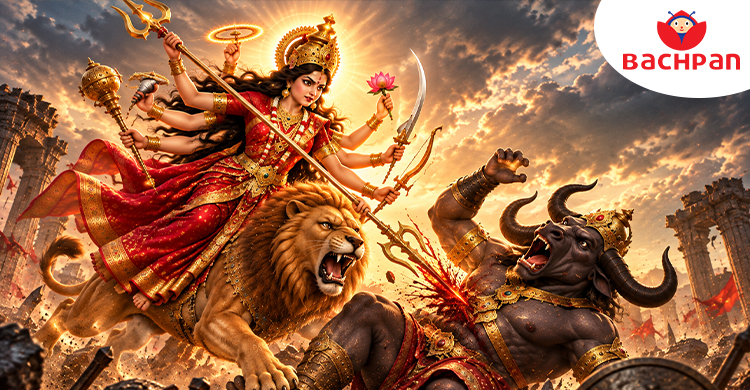
Finally, after a fierce battle, Goddess Durga defeated Mahishasura. Her victory brought an end to his wrongdoing and restored peace. People remember this Durga Maa story for kids during Navratri as a powerful reminder that unshakable resolve, truth, and moral integrity can overcome evil.
What Does the Victory of Durga Symbolize?
The victory of Goddess Durga represents the triumph of good over evil. In this Navratri story for kids, Mahishasura represents negative qualities like arrogance, greed, and wrongdoing, while Durga stands for resilience, wisdom, and Shakti.
The story teaches children that true power is not just about physical force. It means standing up for what is right, staying steadfast during difficult moments, and using our abilities to help others.
Why Do We Celebrate Navratri?
Have you ever wondered why we celebrate Navratri every single year with such delight? Beyond the dancing and lights, there are beautiful reasons behind this grand Navratri celebration.
To Celebrate the Power of Goddess Durga
We honour Goddess Durga to thank her for protecting us from harm and negative thoughts. Moreover, celebrating her divine power helps children understand the value of inner strength. Therefore, reading a simple Navratri story for kids helps young minds appreciate the loving, protective energy of divine mothers everywhere.
To Remember the Victory of Good Over Evil
The story of Durga and Mahishasura reminds us that good and evil cannot remain equal forever. With courage and determination, good can overcome wrongdoing. This connection explains why people associate Navratri with the victory of good over evil. Many traditions also celebrate this message through Dussehra or Vijayadashami, which follows Navratri.
Children can explore another familiar story about the victory of good over evil through these Ramayana stories for preschoolers, which introduce Lord Rama and important values in a child-friendly way.
To Celebrate Shakti and Courage
In Indian culture, Goddess Durga represents Shakti, which means divine energy, power, and bravery. The festival encourages children to understand that courage is not about never being afraid. It is about facing challenges even when something feels difficult. Durga’s story shows little ones that courage, confidence, and determination can make a difference.
To Teach Children Important Values
Festivals can become wonderful learning moments for children. The importance of Navratri is not limited to prayers and celebrations. Its stories can help children understand values such as kindness, courage, respect, patience, devotion, and standing up for what is right. A simple story can turn a festival lesson into something children remember long after the celebrations are over.
These values can also be encouraged through simple everyday habits. Explore these 10 good habits for kids to help children practise positive behaviours at home and school.
Why Is Navratri Celebrated for Nine Days?
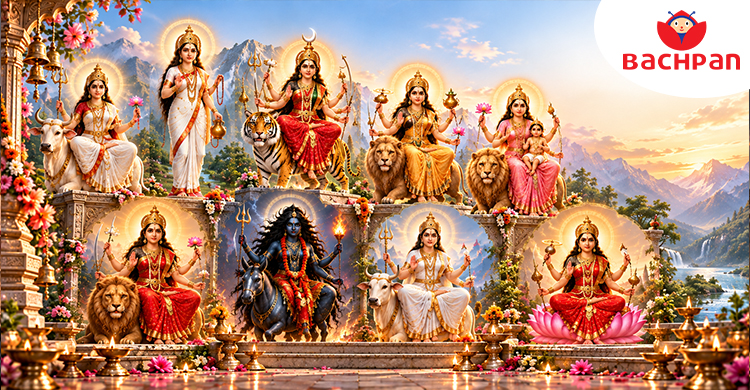
The festival spans the nine days of Navratri because the fierce battle between Durga Maa and the demon king lasted for nine nights. During these nine nights, families worship the nine forms of Goddess Durga, collectively known as Navadurga. Each form represents a unique virtue, blessing, and aspect of energy. Reading this Navratri story for kids in English with your family is a sweet way to introduce each divine form.
| Day | Form of Goddess Durga |
|---|---|
| Day 1 | Shailaputri |
| Day 2 | Brahmacharini |
| Day 3 | Chandraghanta |
| Day 4 | Kushmanda |
| Day 5 | Skandamata |
| Day 6 | Katyayani |
| Day 7 | Kalaratri |
| Day 8 | Mahagauri |
| Day 9 | Siddhidatri |
How Do People Celebrate Navratri?
The whole country lights up with colours and lamps during this festive season. Here is how families come together to make the Navratri festival for kids joyful, bright, and memorable while enjoying every Navratri celebration together. Parents and teachers can make the festival even more meaningful with simple, age-appropriate activities. Explore these Navratri celebration ideas for preschool kids for fun ways to celebrate together.
Navratri Puja and Prayers
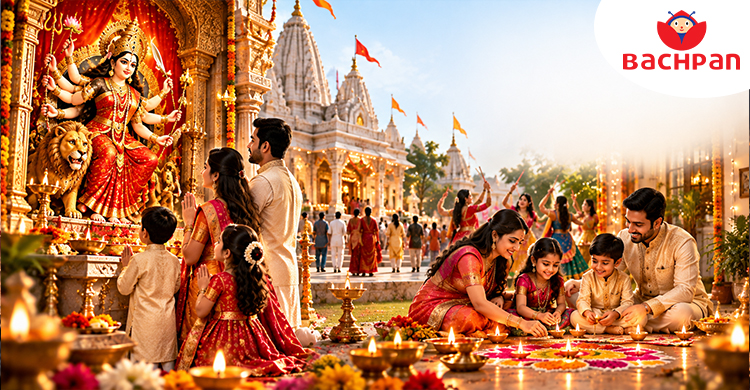
During Navratri, many families perform puja and offer prayers to Goddess Durga. Homes and temples are decorated with flowers, diyas, and other festive decorations. Children may also take part in simple prayers with their families. These moments help them experience devotion and understand the rich heritage of this major Hindu festival.
Garba and Dandiya
Music, colourful clothes, and lively dancing make Navratri celebrations especially exciting for children. Garba and Dandiya are popular traditional dances performed during the festival, particularly in Gujarat and many other parts of India. Clacking colourful wooden sticks together in rhythmic circles makes this a favourite festive activity for every child. It is a fun way to experience culture while making happy festival memories.
Children can enjoy the festive spirit through simple crafts, games, and other age-appropriate activities. Try these Navratri activities for preschoolers for more ideas.
Fasting and Traditional Foods
Many adults observe fasts, while kids enjoy special festive treats! Delicious dishes like Sabudana Khichdi, Kuttu Puris, and sweet delicacies are prepared. Sharing these special festive meals with family makes the Navratri festival for kids delicious and fun.
Visiting Temples and Family Celebrations
Families visit grand pandals and temples to see beautifully decorated idols of Durga Maa. During Durga Puja, children get to meet cousins, play games together, and enjoy local festive carnivals, building strong lifelong bonds with family and friends.
What Can Kids Learn From the Navratri Story?
Stories become even more meaningful when children can connect them with everyday life. The Navratri story and significance for kids offer several simple lessons that little ones can carry with them.
Good Always Wins Over Evil
The biggest lesson from the story of Goddess Durga and Mahishasura is simple: good can overcome evil. Kids can understand this through everyday examples. Telling the truth instead of lying, sharing instead of grabbing, and helping someone instead of ignoring them are all small ways of choosing good.
Stories with simple lessons can help children understand the difference between good choices and harmful behaviour. Explore these best short moral stories for kids for more value-based stories.
Be Brave and Strong
Goddess Durga faced a difficult challenge without giving up. Her story teaches children to be brave when things do not go their way. Being brave can mean trying something new, speaking up when something is wrong, asking for help, or trying again after making a mistake. Strength often begins with simply believing that we can face the next step.
Believe in Yourself
Goddess Durga’s story also reminds children about confidence. Every child has unique strengths and abilities. They may be good at drawing, dancing, solving puzzles, telling stories, making friends, or simply making someone smile. Learning to recognise these strengths helps children develop confidence and a positive attitude towards themselves.
Respect and Help Others
Navratri story for kids tells why we celebrate Navratri, which shows that strength is most meaningful when it is used for a good purpose. Children can learn to respect others, care for people around them, and offer help whenever they can. These small actions build empathy and kindness—values that matter every day, not just during a festival.
Navratri Quick Facts for Kids
Looking for quick facts to help your child understand the significance of Navratri? Here is a fast, fun summary table designed especially for curious young minds!
| Fact | Information |
|---|---|
| Festival | Navratri |
| Meaning | Nine nights |
| Celebrated For | Worshipping Goddess Durga and her forms |
| Duration | Nine nights and ten days |
| Main Message | Victory of good over evil |
| Famous Celebrations | Garba, Dandiya, Puja |
| Related Festival | Dussehra/Vijayadashami |
Frequently Asked Questions About Navratri
We celebrate Navratri to honour the victory of Goddess Durga over the demon Mahishasura, symbolizing the triumph of good over evil and celebrating motherly strength and devotion.
It is the story of Goddess Durga fighting the evil demon king Mahishasura for nine nights and defeating him on the tenth day to restore peace, truth, and balance to the world.
Goddess Durga is a supreme divine deity representing Shakti (power), courage, and protection. She was created by the gods to protect innocent beings from evil forces.
Mahishasura was a troubled demon king who could shape-shift into a buffalo. He caused trouble for everyone until Goddess Durga defeated him in battle.
Navratri is traditionally celebrated for nine nights to honour the nine forms of Goddess Durga, known as Navadurga. Each day is dedicated to one form, making the nine days an important part of the festival’s spiritual and cultural significance.
Children learn that kindness, self-belief, and perseverance matter. The story teaches them to make good choices and face tough situations with confidence rather than fear.
Conclusion
Navratri is much more than just a festival—it is a heartwarming celebration of courage, joy, and family togetherness. By sharing this Durga Maa story for kids and explaining why is Navratri celebrated for kids, you help your little ones grow up with strong moral values and cultural pride. As the nine festive nights conclude, the grand celebration leads right into Dussehra or Vijayadashami. Furthermore, as the celebration leads into Dussehra, children can continue the festive learning with these Dussehra activities for preschoolers. Wishing you and your family a blessed, joyful, and safe Navratri celebration filled with love and prosperity!