



25 Popular Nursery Rhymes for Kids with Lyrics Treasure
Nursery rhymes for kids are probably the first songs they fall in love with—and somehow, you end up loving them too!
You might start by singing one just to keep your kid engaged, and before you know it, you are both repeating it for the hundredth time.
These tiny rhymes turn everyday moments into mini concerts. Packed with rhythm, fun, and a little mischief, they are more than songs; they are the joyful soundtrack of growing up!
What Are Nursery Rhymes for Kids?
What are nursery rhymes for kids? They may seem like simple songs, but there is more hidden in their rhythm, words, and charm than you might expect.
Definition and Meaning
Nursery rhymes for kids are short, funny little songs your child picks up almost instantly—and suddenly, you are singing them too on repeat! Like “Twinkle Twinkle Little Star,” which starts playing in your head out of nowhere during bedtime.
They are simple, catchy, and full of rhythm that sticks in your head all day. While it feels like playtime, your child is learning words, memory, and language naturally.
Why Kids Love Nursery Rhymes
Kids love nursery rhymes because they feel like play, not study. What if your kid starts laughing while acting out “Humpty Dumpty” or happily joining the cow’s moon adventure in “Hey Diddle Diddle”?
These learning songs for kids are full of silly characters, simple words, and catchy rhythm that make them super easy to remember.
Role in Early Childhood Development
Nursery rhymes for preschoolers quietly do a lot more than just entertain; they actually shape early learning in such a fun way! Your child picks up new words, sharpens listening skills, and strengthens memory without even realising it.
And honestly, what if those silly little rhymes you hear on repeat today are actually helping your kid speak more clearly and confidently tomorrow?
Benefits of Nursery Rhymes for Kids
Nursery rhymes for kids open up a world of learning, laughter, and hidden growth that goes far beyond simple singing. Let’s discover the benefits of rhymes!
Improves Language and Vocabulary
Nursery rhymes make vocabulary sneak into your child’s brain like a friendly little thief! What if your kid suddenly says “tumbled” while dropping a toy, just because Humpty Dumpty did it first? Or starts acting like they are on a serious water mission after “Jack and Jill”?
These rhymes repeat simple words so many times that your child starts using them in the most unexpected (and funny) moments!
Enhances Memory and Listening Skills
Have you ever noticed that your child can remember every line of a rhyme but forgets where they put their toys? That’s what makes classic nursery rhymes so great!
Repetition helps their brains learn to listen closely and remember sequences. Over time, your child gets better at following instructions and remembering details.
Boosts Creativity and Imagination
What if your child starts to think that cows can jump over the moon or that clocks can talk just because of a rhyme?
That’s the creative side coming out! These fun stories make your child picture funny scenes, make their own versions, and turn simple lines into big adventures in their minds.
Develops Rhythm and Coordination
You know that moment when your kid starts to clap, tap, or nod along perfectly?
That’s what nursery rhymes do! The steady beat helps your child learn about beats and timing, and things like clapping or dancing help them get better at coordinating their movements.
In other words, they become a little performer at home!
Encourages Social Interaction
Nursery rhymes for kids are like little social magnets that pull everyone into the fun.
What if your child suddenly asks you to clap, sing, or repeat lines with them? That’s their magic at work. They naturally encourage interaction, turn-taking, and shared enjoyment, helping even shy kids open up and express themselves more easily with others.
25 Best Nursery Rhymes for Kids (with Lyrics)
Here are some of the best rhymes for kids that bring together fun, rhythm, and easy-to-follow nursery rhymes lyrics that make singing, learning, and bonding moments even more enjoyable.
1. Twinkle Twinkle Little Star
A calm bedtime favourite that gets your child looking up at the sky with wonder.
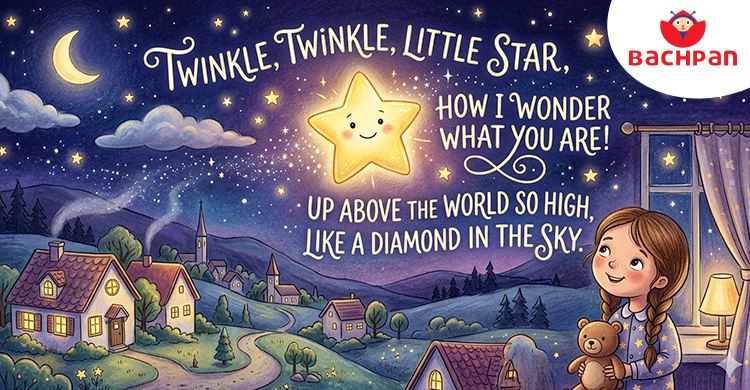
Twinkle, twinkle, little star,
How I wonder what you are,
Up above the world so high,
Like a diamond in the sky.
Twinkle, twinkle, little star,
How I wonder what you are.
2. Johnny Johnny Yes Papa
A playful rhyme kids enjoy acting out with expressions and funny voices.
Johnny, Johnny, yes Papa?
Eating sugar? No Papa!
Telling lies? No Papa!
Open your mouth—Ha ha ha!
3. Baa Baa Black Sheep
Simple and repetitive, perfect for early word learning.
Baa, baa, black sheep,
Have you any wool?
Yes sir, yes sir,
Three bags full.
One for my Master
And one for my Dame,
And one for the little Boy
Who lives down the lane.
4. Wheels on the Bus
A lively rhyme full of actions that kids love to copy.
The wheels on the bus go round and round,
Round and round, round and round,
The wheels on the bus go round and round,
All through the town.
The wipers on the bus go swish, swish, swish
Swish, swish, swish Swish, swish, swish,
The wipers on the bus go swish, swish, swish
All through the town.
5. Humpty Dumpty
A classic with a fun little story that kids enjoy imagining.
Humpty Dumpty sat on a wall,
Humpty Dumpty had a great fall,
All the king’s horses and all the king’s men,
Couldn’t put Humpty together again.
6. Jack and Jill
A storytelling rhyme with rhythm that sticks easily.
Jack and Jill went up the hill,
To fetch a pail of water,
Jack fell down and broke his crown,
And Jill came tumbling after.
7. Rain Rain Go Away
A go-to rhyme kids sing on rainy days.
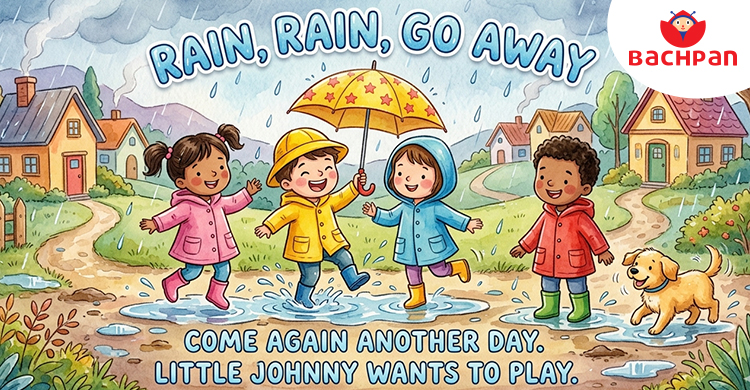
Rain, rain, go away,
Come again another day,
Little children want to play,
Rain, rain, go away.
Rain, rain, go away,
Come again another day,
All the family wants to play.
Rain, rain, go away.
8. Old MacDonald Had a Farm
Full of animal sounds—kids absolutely love joining in!
Old MacDonald had a farm, E-I-E-I-O,
And on his farm he had cows, E-I-E-I-O,
With a “moo moo” here and a “moo moo” there,
Here a “moo”, there a “moo”, everywhere a “moo moo”.
Old Macdonald had a farm, E-I-E-I-O,
And on his farm, he had some ducks, E-I-E-I-O
With a “quack, quack” here and a “quack, quack” there,
Here a “quack”, there a “quack”, everywhere a “quack, quack”.
9. Hickory Dickory Dock
A fun rhyme that playfully introduces time.
Hickory dickory dock,
The mouse ran up the clock,
The clock struck one,
The mouse ran down,
Hickory dickory dock.
10. Row Row Row Your Boat
A soothing rhyme that’s great for group singing.
Row, row, row your boat,
Gently down the stream,
Merrily, merrily, merrily, merrily,
Life is but a dream.
11. Five Little Ducks
A counting rhyme that kids enjoy acting out.
Five little ducks went out one day,
Over the hills and far away,
Mother duck said “quack quack quack,”
But only four little ducks came back.
12. London Bridge Is Falling Down
A rhythmic rhyme perfect for group play.
London Bridge is falling down,
Falling down, falling down,
London Bridge is falling down,
My fair lady.
13. If You’re Happy and You Know It
Gets kids clapping, stomping, and smiling instantly.
If you’re happy and you know it, clap your hands,
If you’re happy and you know it, clap your hands,
If you’re happy and you know it,
Then your face will surely show it.
14. Mary Had a Little Lamb
A sweet rhyme with a gentle, comforting rhythm.
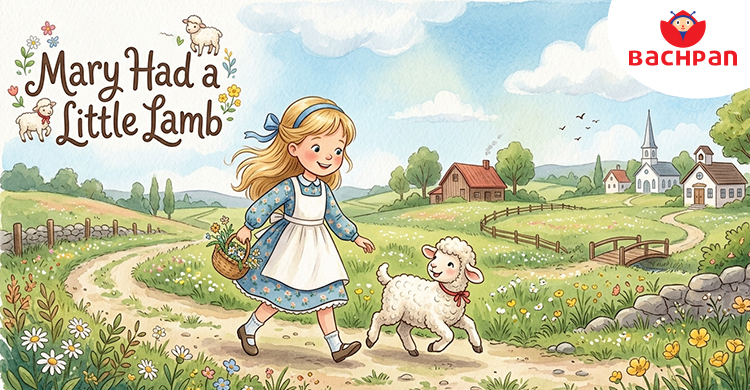
Mary had a little lamb,
Little lamb, little lamb,
Mary had a little lamb,
Its fleece was white as snow.
15. Clap Your Hands
A simple action rhyme perfect for toddlers.
Clap your hands, clap your hands,
Listen to the music and clap your hands.
16. Itsy Bitsy Spider
A fun rhyme with hand movements kids love copying.
The itsy bitsy spider went up the waterspout,
Down came the rain and washed the spider out,
Out came the sun and dried up all the rain,
And the itsy bitsy spider went up the spout again.
17. Ding Dong Bell
A short rhyme with a storytelling twist.
Ding dong bell,
Pussy’s in the well,
Who put her in?
Little Johnny Flynn.
18. Hey Diddle Diddle
Silly and imaginative, kids find it hilarious.
Hey diddle diddle,
The cat and the fiddle,
The cow jumped over the moon,
The little dog laughed to see such sport.
19. One Two Buckle My Shoe
A fun counting rhyme for early numbers.
One, two, buckle my shoe,
Three, four, shut the door,
Five, six, pick up sticks,
Seven, eight, lay them straight.
20. Pat-a-Cake
A classic clapping rhyme for bonding moments.
Pat-a-cake, pat-a-cake, baker’s man,
Bake me a cake as fast as you can,
Roll it, pat it, mark it with a B,
And put it in the oven for baby and me.
21. Teddy Bear Teddy Bear
A playful action rhyme that kids enjoy acting out.
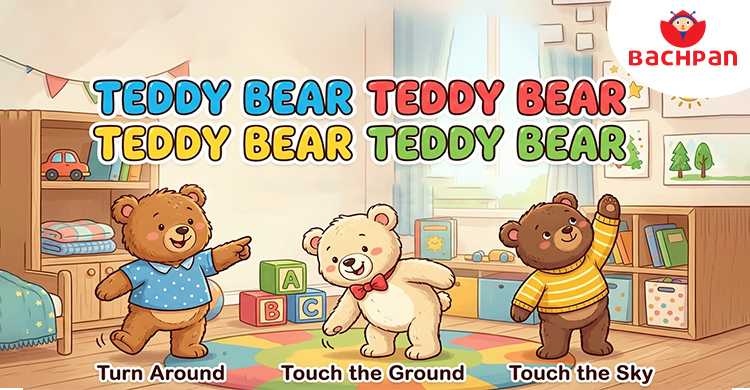
Teddy bear, teddy bear, turn around,
Teddy bear, teddy bear, touch the ground,
Teddy bear, teddy bear, jump up high,
Teddy bear, teddy bear, touch the sky.
22. Three Blind Mice
A classic rhyme with a strong rhythm.
Three blind mice, three blind mice,
See how they run, see how they run,
They all ran after the farmer’s wife.
23. This Little Piggy
A fun rhyme often used during playtime.
This little piggy went to market,
This little piggy stayed home,
This little piggy had roast beef,
This little piggy had none.
24. Ten in the Bed
A counting-down rhyme kids find funny.
There were ten in the bed and the little one said,
“Roll over, roll over,”
So they all rolled over and one fell out.
25. Hot Cross Buns
A simple musical rhyme great for beginners.
Hot cross buns, hot cross buns,
One a penny, two a penny, hot cross buns,
If you have no daughters, give them to your sons.
How to Teach Nursery Rhymes to Kids
Teaching popular nursery rhymes for kids can feel like opening a playful doorway into language, rhythm, and imagination… and there’s more to uncover ahead.
Use Actions and Gestures
Adding simple actions to short nursery rhymes for kids makes them a lot more fun. What if your child stretches their arms out like Humpty Dumpty or pretends to “fall” softly while laughing?
These small actions help your child link words with movement, which makes the rhyme stick in their mind.
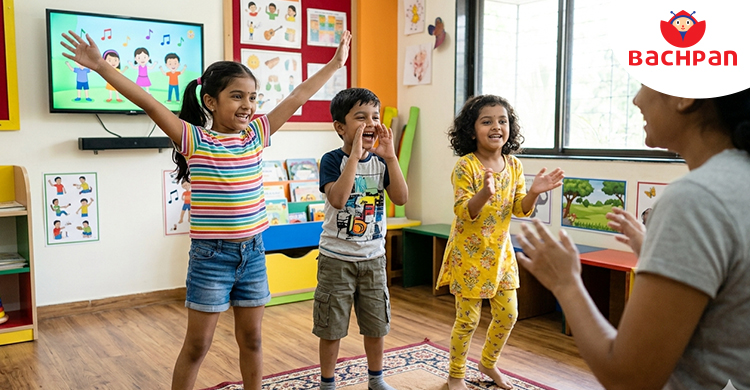
Sing with Music and Videos
Have you ever seen how your child lights up when a song starts playing?
That’s where English nursery rhymes come to play!
When you add music or fun videos, your kid doesn’t just listen, but they watch, move, and get fully involved, like dancing along with the story without even realising it.
Repeat Regularly for Better Memory
Let’s be honest, your child will happily ask for the same rhyme again and again! That’s actually a win.
Repeating nursery rhymes for preschoolers helps those words settle in their minds. Slowly, your kid starts finishing lines, singing along, and remembering everything without any pressure or effort.
Use Visual Aids and Props
What happens when you sing with an actual item in hand? Think of a little toy, a ball, or maybe even a cup!
Nursery rhymes become easier to understand when children can see what the words mean. It helps them connect stories to real-world experiences and enjoy learning more naturally.
Fun Activities with Nursery Rhymes
Fun activities through nursery rhymes can turn simple singing into playful moments full of movement, laughter, surprises… and much more!
Action-Based Learning Games
Ever watched your child convert a rhyme into an entire activity through games?
In action-based games, your child may actually be jumping, clapping, and performing actions like they are in a mini show. Popular nursery rhymes for kids make this even more fun, helping kids learn while staying active and engaged.
Role Play and Storytelling
What if your child suddenly becomes the “dancing cow” from Hey Diddle Diddle or pretends to be the energetic mouse from Hickory Dickory Dock?
That’s role play in action! Kids love acting out stories and even twisting them in their own way. Nursery rhymes spark imagination, helping them speak, express, and build confidence while pretending and storytelling.
Drawing and Colouring Activities
Provide your child with a crayon and tell them to draw what they understood from the rhyme; you will be amazed! Your child may draw an egg falling from the sky or a smiling star.
Nursery rhymes help children easily visualise words into images while enjoying themselves.
Group Singing Sessions
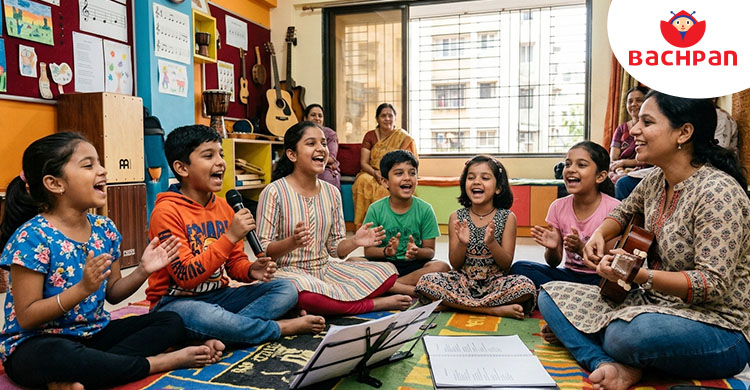
Imagine your child joining a group and suddenly becoming the loudest, happiest singer in the room, like they have been secretly rehearsing for a big concert at home! Thanks to the magic of group singing!
Nursery rhymes bring kids together so they sing, clap, and laugh in sync, sharing joyful moments and naturally building confidence.
Tips for Parents and Teachers
Dear parents, it’s time for some tips! These tips can make nursery rhymes for kids even more fun and meaningful in your everyday routine, where small efforts turn into big learning moments.
Choose Age-Appropriate Rhymes
Have you ever found yourself trying to sing a rhyme, only to find your child looking back at you, wondering what on earth you were doing?
Then that is your cue. Rhymes for preschoolers need to be relevant to their small world, using simple words, rhythms, and concepts they can relate to.
Keep Sessions Short and Fun
If you have ever tried stretching a rhyme session too long, you already know how it ends: your kid is suddenly interested in everything except the rhyme.
Therefore, ensure that you make it light and fun. A short period of time spent on short nursery rhymes for kids is all it takes.
Encourage Participation
What if your child starts taking over the rhyme mid-way, clapping loudly or filling in missing words?
That is what you want, right? For young children, rhymes are more effective if you allow them to participate in the process.
Mix Learning with Play
Learning does not have to be perceived as an entirely different activity; it can simply blend into playtime as your child giggles and moves about.
Everything that your little one does or hears, every funny movement, every dance they perform, will contribute towards learning all in a very natural and enjoyable way.
Common Mistakes to Avoid
Avoid these common mistakes to make learning effective, because sometimes the smallest habits make the biggest difference. Let’s find out what mistakes to avoid!
Forcing Kids to Memorise
Let’s be honest: forcing your child to memorise every line rarely works the way we hope. Instead of fun, it turns into pressure.
Let them enjoy the rhythm first. When learning feels light and natural, your child will slowly start remembering on their own, without any stress or pushing.
Choosing Complex Rhymes Too Early
Have you ever chosen a poem that sounded too mature for them, only to see your child stop listening entirely?
That’s usually the sign. Simple always wins in the beginning. When the words are easy and familiar, your child connects faster, enjoys more, and actually stays curious instead of feeling confused or left out.
Ignoring Interaction
If your child is just listening and not joining in, something’s missing. Nursery rhymes aren’t meant to be one-sided. Encourage them to clap, sing, or finish lines with you. The more they interact, the more confident and involved they become.
Overuse of Screens
We have all done it: played a video just to keep the child busy. But too much screen time can make rhymes passive instead of playful.
Try mixing it up with your voice, actions, and real interaction. Your child learns better when they see, hear, and participate with you directly.
Conclusion
We hope this guide helped you see nursery rhymes for kids in a whole new light—not just as simple songs, but as powerful little learning tools.
With the right approach, a bit of fun, and your involvement, these rhymes can turn everyday moments into meaningful learning experiences. So go ahead, sing along, laugh together, and enjoy these small moments, because that’s where the real magic of learning truly begins.
And if you are wondering how to shape your child’s values just as beautifully, don’t miss our read on Teaching Kids About Culture And Traditions For Better Growth.