



How to Bathe a Baby for the First Time with an Umbilical Cord

How to bathe a baby for the first time can feel a little nerve-racking, especially when that tiny umbilical cord stump is still there. You might wonder, What if I do it wrong? or Will my baby be comfortable?
Take a deep breath.
Think of it like giving your baby a gentle sponge bath rather than a full dip in water. With a few simple steps and a calm approach, you can keep your baby clean, safe, and happy while the cord heals. In this guide on how to bathe a baby for the first time, we’ll walk you through safe, simple steps to make the experience stress-free.
When Can You Bathe a Newborn with the Umbilical Cord Attached?
A newborn bath with the umbilical cord often leaves parents wondering about the right moment to begin. Is it safe right away, or should you wait a little longer?
Should You Wait Until the Umbilical Cord Falls Off?
It’s recommended to wait for the umbilical cord stump to fall off, usually within 1 to 3 weeks, before giving your newborn a full bath.
The American Academy of Pediatrics (AAP) advises keeping the area dry, safe, and infection-free. Until then, a gentle sponge bath works perfectly!
What Doctors Recommend for First-Time Baby Bath
Doctors recommend sticking to gentle sponge baths until your baby’s tiny umbilical cord stump falls off.
Lay your baby on a soft towel, use a warm, damp cloth to clean the face, neck, hands, and diaper area, and be careful to keep the stump dry!
Sponge Bath vs Tub Bath – What Is Safe for Newborns?
A sponge bath for a newborn can feel like a secret ritual of care, while a tub bath invites the full, watery adventure. Which one truly suits your little one’s first weeks?

Why a Sponge Bath Is Recommended Before the Cord Falls Off
A baby sponge bath before the cord falls off is recommended to keep your little one clean without getting the umbilical stump wet. Too much moisture can hinder healing and increase infection risk.
Gentle wipes help it dry naturally while keeping bath time safe, cozy, and stress-free for both you and your baby.
When Is It Safe to Switch to a Tub Bath?
Experts say it’s safe to switch to a tub bath once your baby’s umbilical cord stump has completely fallen off and the area has healed. At this point, you can immerse your baby in lukewarm water, making bath time more comfortable, fun, and easier to clean from head to toe.
Step-by-Step Guide on How to Bathe a Baby for the First Time with an Umbilical Cord
How to bathe a baby for the first time can be a calm and joyful experience. With simple steps and gentle care, you will soon find a routine that keeps your baby safe, cozy, and happy.
Step 1 – Gather All Baby Bath Essentials
Gather everything first. A newborn bath checklist can help you stay organised:
- Baby bath essentials: small tub or basin, soft washcloths, and towels
- Mild, baby-safe soap and shampoo
- A clean diaper and fresh clothes for after the bath
- A warm, safe place to lay your baby during sponge baths
Step 2 – Prepare Warm Water at the Right Temperature
- Check the baby bath water temperature before placing your newborn in it
- Safe water temperature for newborns is around 37–38°C (98–100°F)
- Use your elbow or a bath thermometer to test the warmth
- Fill the tub with just a few inches of water—enough to clean, not soak
Step 3 – Gently Clean the Baby Without Wetting the Cord
- Gently wipe baby’s face, neck, hands, and diaper area
- Take care to clean the baby’s umbilical cord area without letting water touch the stump
- Support your baby’s head and neck at all times
- Remember, umbilical cord care during bath is crucial to prevent infection and help it heal naturally

Step 4 – Dry the Cord Area Properly
- How to dry the umbilical cord: avoid rubbing; just lightly dab to remove moisture
- Make sure the area is completely dry before putting on clothes or a diaper
- Follow simple newborn cord care tips to prevent infection
Umbilical Cord Care Tips During Baby’s First Bath
Umbilical cord care for newborns is a tiny but important practice. That little stump is delicate and needs gentle handling—how you care for it now sets the stage for safe, healthy healing.
Keep the Cord Clean and Dry
When it comes to your baby’s umbilical cord, the trick is simple: keep it clean and dry. Gently wipe around it with a soft, damp cloth, pat it dry, and let it air out. No soaking, no rubbing—just a little care keeps your baby safe and happy!
Avoid Applying Powders or Oils
Think you can make bath time easier?
One tip: avoid powders or oils on your baby’s umbilical cord. They can trap moisture and irritate. Just keep the area clean and dry, let it air naturally, and watch it heal safely while you enjoy those tiny, precious moments with your newborn.
Signs of Infection Parents Should Watch
Keep an eye on your baby’s umbilical cord. If the skin around it looks red, hard, or swollen, or if there’s yellowish, smelly discharge, it could be a sign of infection. Your baby might also be extra fussy, sleepy, or even run a fever.
If you notice any of these, contact your pediatrician promptly—quick attention helps your baby heal safely.
Safety Tips for First-Time Baby Bath
Safe way to bathe a newborn for the first time involves more than water and soap. Gentle steps, careful timing, and tiny details make all the difference. You will discover them soon.
Never Leave Baby Unattended
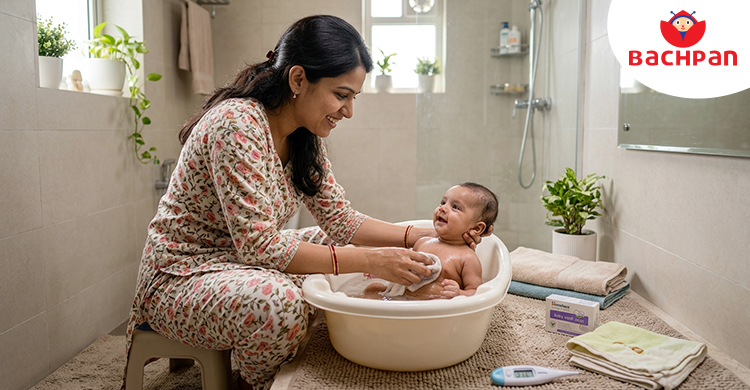
One of the most important baby bath safety tips is to never leave your little one unattended, even for a second.
Yes, even a “quick” step away can turn bath time into a tiny splash disaster. Keep a hand on your baby, and ensure everything you need is within reach. Think of yourself as their personal lifeguard!
Maintain Comfortable Room Temperature
Babies lose body heat quickly, so make sure the room feels warm and comfortable before bath time begins. Close the windows, reduce strong fan airflow, and keep a soft towel ready nearby.
A cozy environment helps your little one stay relaxed, calm, and happy instead of getting cold during the bath.
Use Mild, Tear-Free Baby Products
When choosing soap or shampoo, go for mild, tear-free baby products made for delicate skin. Harsh formulas can irritate your baby’s eyes and skin, one of the common first baby bath mistakes new parents may make. Gentle products keep bath time comfortable, safe, and far more pleasant for your little one.
Common Mistakes Parents Make While Bathing a Newborn
Even with the best intentions, parents sometimes stumble. Newborn bathing mistakes can sneak in unnoticed. A few simple missteps can change the whole experience, which we will uncover next.
Bathing Too Soon After Birth
One common mistake parents make is bathing a baby too soon. Knowing when to bathe a baby after birth is important—waiting at least 24 hours helps protect delicate skin, maintain body temperature, and preserve natural protective oils. Rushing this step can cause discomfort and unnecessary stress.

Soaking the Umbilical Cord in Water
We know it’s tempting to treat bath time like a mini swimming lesson, but don’t soak the umbilical cord in water! Stick to gentle sponge baths and gently pat the stump dry with a soft towel. Your baby will thank you later.
Using Harsh Soaps or Fragrances
Thinking of giving your baby that “grown-up” scented soap? Think again!
Your baby doesn’t need to smell like a flower garden just yet. Harsh or perfumed soaps can irritate delicate skin, so stick to mild, tear-free cleansers—and keep the giggles coming!
Conclusion
By now, you may have a better idea of how to bathe a baby for the first time—and noticed it’s half gentle care, half unexpected splashes!
With a few giggles, tiny faces of surprise, and some chaos, bath time can actually be fun. Keep the cord dry, go slow, and enjoy these messy, silly, and totally unforgettable moments with your little one. Now that you know how to bathe a baby for the first time, you can make this moment safe, calm, and enjoyable.
If you love these tiny parenting wins, you might enjoy discovering more ideas on https://www.bachpanglobal.com/blog/
FAQs on Bathing a Baby with an Umbilical Cord
Ans. It’s best to wait—the cord should stay dry, so stick to gentle sponge baths until it naturally falls off.
Ans. You can sponge bathe your newborn 2–3 times a week, or as needed, keeping the umbilical cord area dry and clean.
Ans. If the umbilical cord gets a little wet, gently pat it dry with a clean cloth and keep it exposed to air; watch for any signs of irritation.